Using the Illinois Digital Newspaper Collections
Each year, the Illinois Newspaper Project (INP)—a joint project of the History, Philosophy, and Newspaper Library (HPNL) and the Preservation Services Unit of the University Library—participates in the Archives Bazaar, which highlights special collections, museums, archives, and other cultural heritage organizations in Champaign County and is hosted by the Champaign County Historical Archives at The Urbana Free Library.
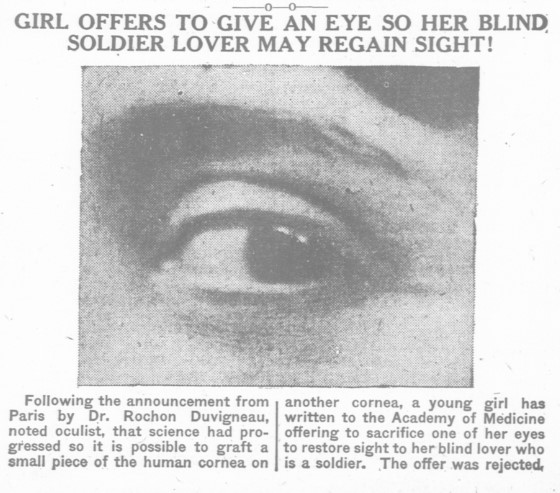
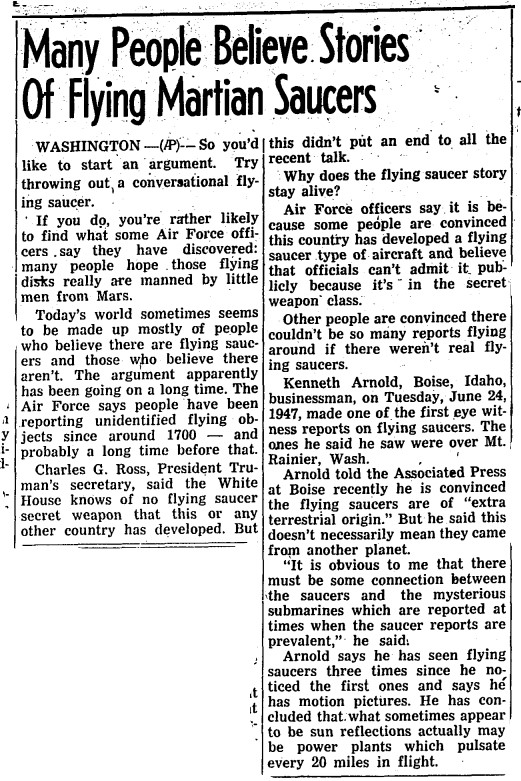
This year’s theme was the “bizarre Bazaar,” and the event was held at The Urbana Free Library on Saturday, September 20. While brainstorming newspaper content for the INP table, I initially considered conducting a deep dive of search results in the Illinois Digital Newspaper Collections for the keyword “bizarre” and highlighting how historical newspapers can be resources for mapping language evolution and trends. I eventually ruled this idea out…perhaps too boring, too academic, and not easily digestible in an open-house format.
I then considered highlighting a newspaper preserved and digitized by the Illinois Newspaper Project, The Day Book, conceived by newspaper mogul Edward Willis Scripps as an experiment in advertisement-free newspaper publishing. The Day Book often published sensational stories and wacky tabloid-like facts about people around the world. It also published many images and sketches, and visual imagery is good for newspaper outreach events. However, I ultimately decided this wasn’t bizarre enough, plus, I wanted to highlight the richness of the IDNC and its cross-search capability across all titles in the digital collection and not just highlight one specific newspaper.
So, I did what anyone would do—I pivoted to UFOs (unidentified flying objects, flying saucers, flying disks, flying discs, etc.).
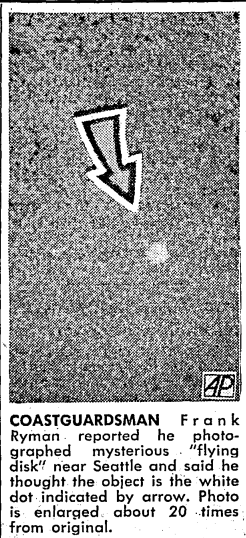
Originally creating a buzz in American newspapers in July 1947, flying saucers swept the nation as citizens made official claims of having witnessed blue lights; reddish objects; orange lights; spiral objects; shiny objects; flat objects; objects shaped like dinner plates, pancakes, cigars, and clocks; and occasionally, tiny little men. These flying objects were in the spotlight on-and-off from the summer of 1947 through the 1960s and had Americans captivated by (and anxious about) the idea of both alien beings and threats to national security in an era of tense global politics.
The sightings
Initial sightings began with pilot Kenneth Arnold’s claim of disk-shaped flying objects on June 24, 1947, over the mountains in Washington state. Around this same time, reports out of Roswell, New Mexico, reported sightings of “flying disks” (sometimes printed “discs”). News of these sightings headed east over the course of a few days, and, throughout that summer, sightings took place across the nation. “Disk fever” steadily continued for several years after, and there is no shortage of newspaper articles about flying saucer sightings through 1951.
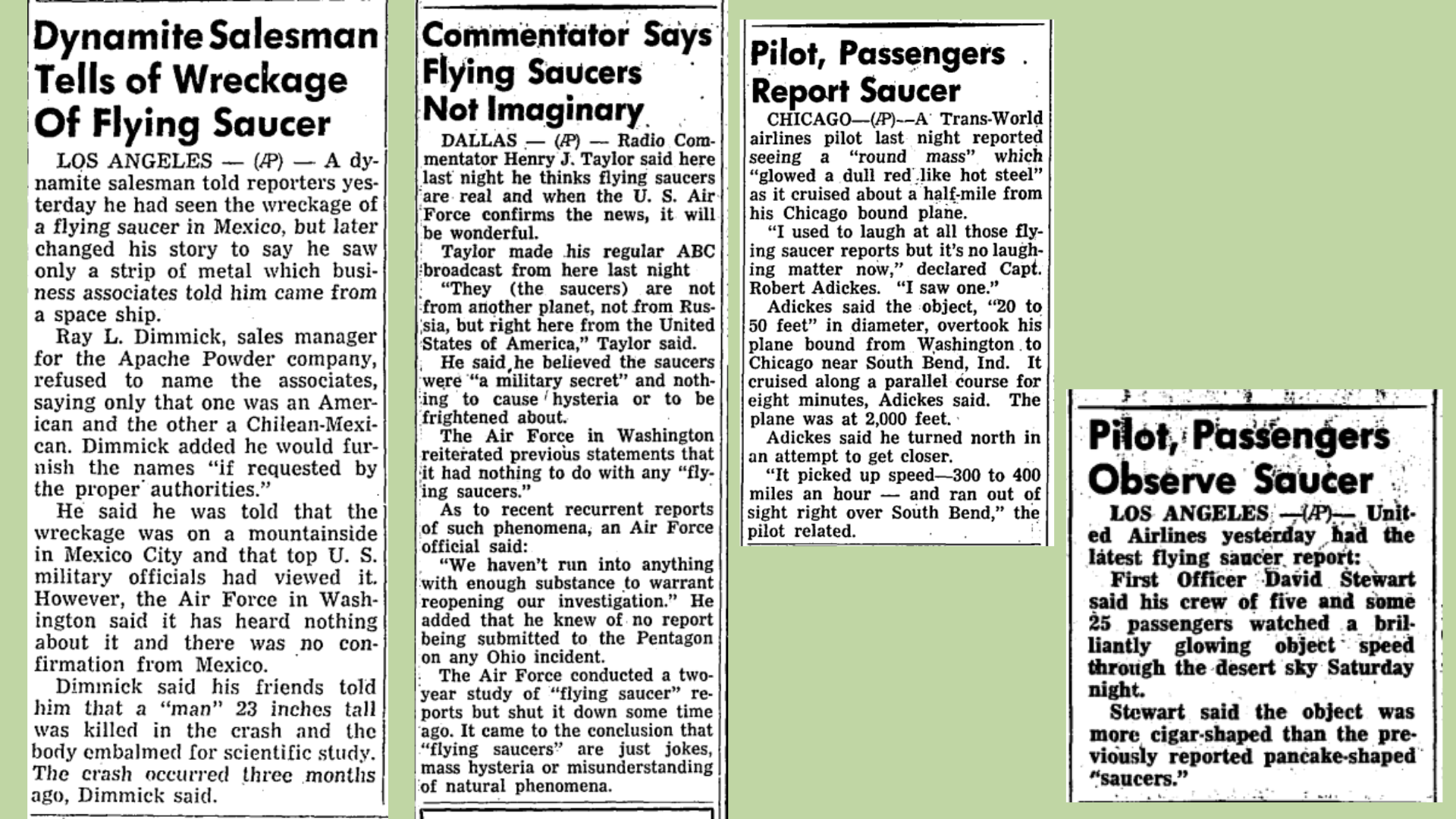
People quickly took the phenomena (/hysteria) in jest and flying disks soon entered social culture through jokes, advertisements, events, general goods and marketing, and hoaxes.
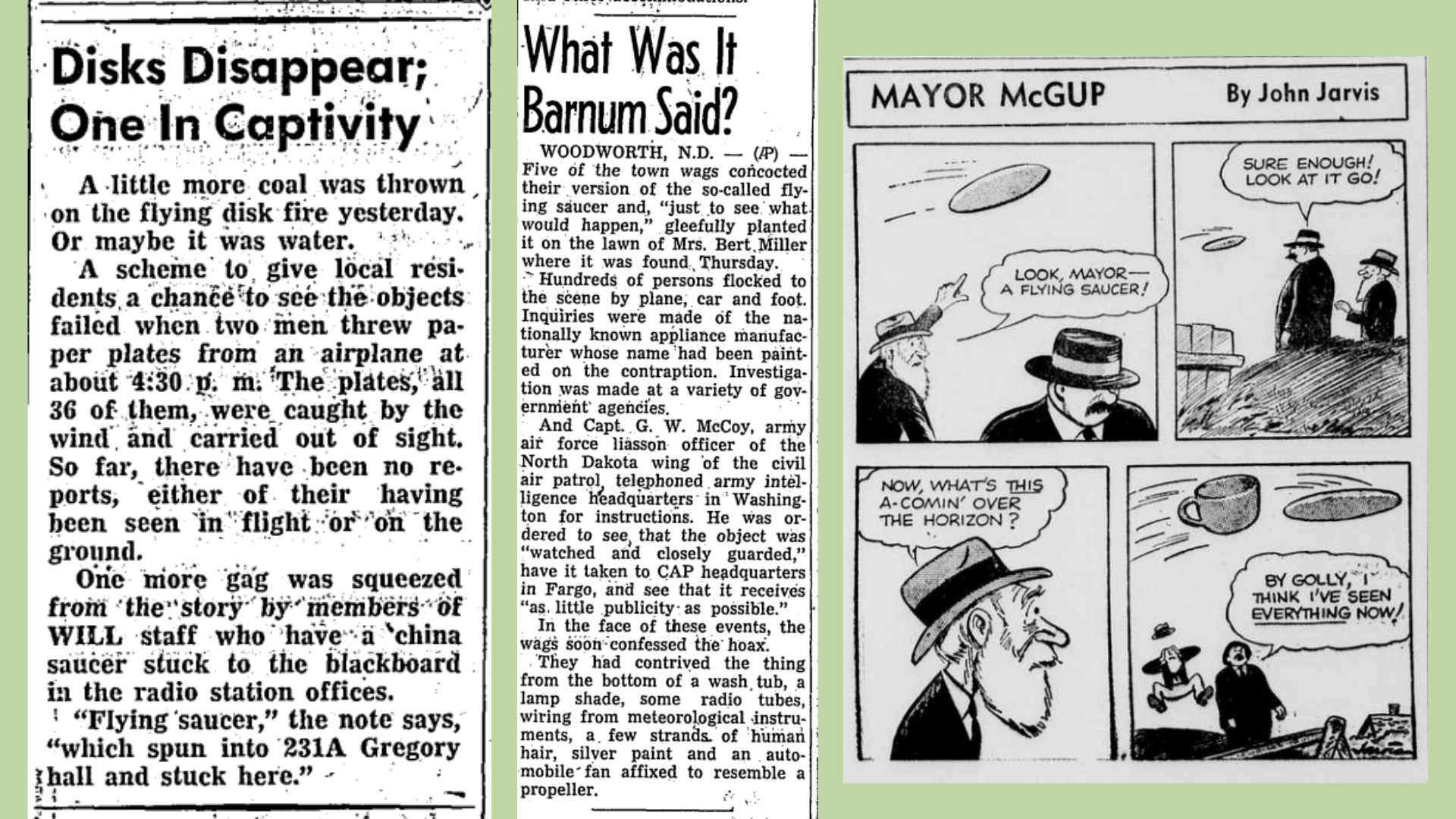
Illinois was no stranger to disk sightings. Citizens claimed to see flying disks in places such as Rockford, Galena, Kankakee, Peoria, Elgin, Freeport, and even Champaign-Urbana, as soon as July 1947 and into the 1960s.
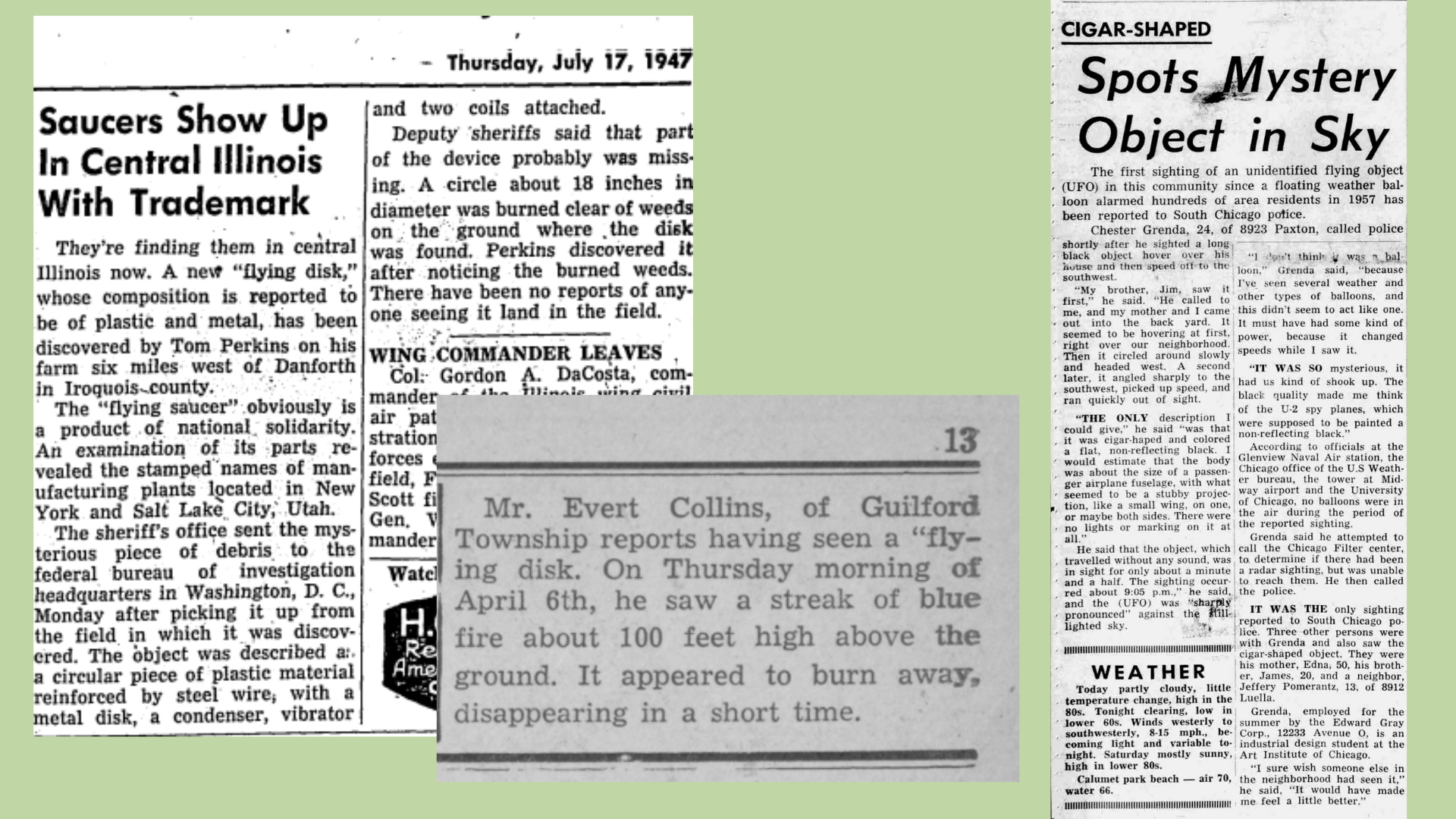
Researching the flying disk craze in the IDNC
While using the Illinois Digital Newspaper Collections (IDNC) to gather articles to highlight at this year’s Archives Bazaar, I initially performed a keyword search using the term “flying saucer,” which got 491 results, proving the most common term for UFOs for this time period:
| Search term | Number of results | Decade with most results |
| UFO | 5,520* | 1910s |
| unidentified flying object | 23 | 1960s (11 results) |
| flying disk | 16 | 1940s (9) |
| flying disc | 63 | 1950s (35) |
| flying saucer | 491 | 1950s (292) |
| Martians | 561 | 1920s (96), shortly behind was 1970s (93) |
| *large amount of unrelated results |
Search term: UFO
But wait, you may say: UFO had way, way more results than “flying saucer!” While indeed this search term did bring up the most results, unfortunately many of these were not about Unidentified Flying Objects. Instead, the results were caused by an interesting OCR error. OCR is optical character recognition, which is the process of converting a textual image into computer-readable text, and is produced during the digitization phase. When issues were digitized, the OCR software seems to have commonly misread the word “life” for “UFO” (they have very similar shapes!). Successful results for our intended topic began in the 1950s, but were more commonly found in articles from 1960s, 1970s, 1990s, and 2000s. Despite this OCR error throwing off the data, UFO was still the keyword term with the most relevant results, primarily because it was a term used from the 1950s to today, whereas the other terms, like flying disc/k, lost popularity by the 1960s.
Search term: Unidentified flying object
The second-lowest number of results, “unidentified flying object” hit its peak in the 1960s and was often in an article that also used the term “UFO.”
Search term: Flying saucer
“Flying saucer” was a very popular term, especially in the 1950s. The term primarily referred to the flying saucer craze, but some results imply that the term was popularized in the marketing world to refer to specialty goods and foods, probably as a result of the earlier sensation that captivated those across the nation.
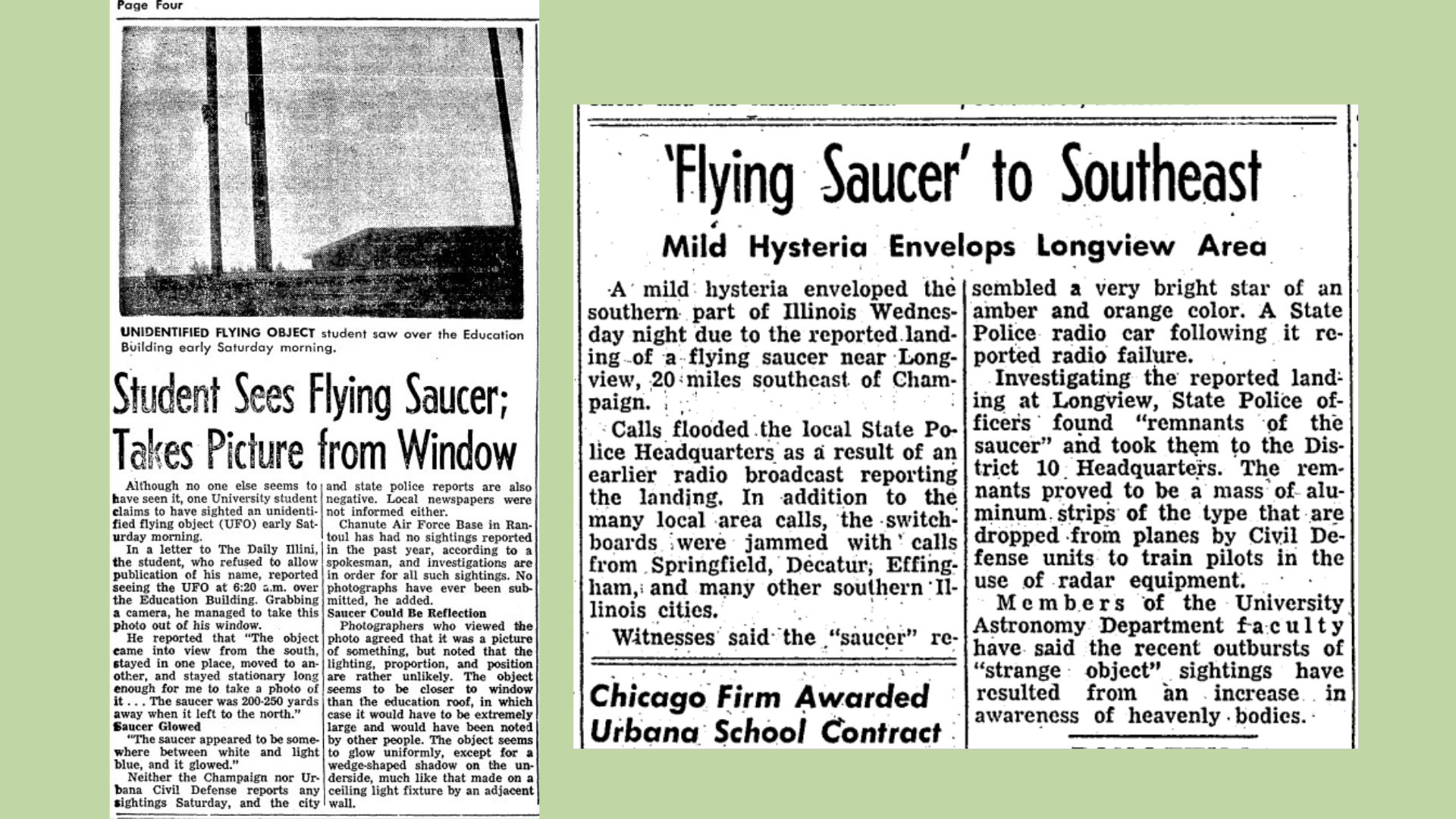
Search terms: Flying disc/disk
These terms were commonly printed at the onset of the flying saucer craze in the summer of 1947, with “disk” being a less commonly-used spelling of disc. However, by the 1952, newspapers instead favored the term “flying saucer.”
Search term: Martians
This was a popular term but was more so used in serialized fiction or in articles reporting on popular culture and was not commonly used during the flying disc craze that I was researching. This term did lead me down a few interesting rabbit holes, none of which were much related to my topic. I decided that this term was out of scope for the sake of this event.
The conclusion
Throughout the flying saucer phenomena of the 1940s, 1950s, and early 1960s, hundreds of people living in America claimed they saw unidentified objects in the sky, believing they were signs of extraterrestrial life or government or military spacecraft.
However, people–including, from the clippings I found, scientists, University of Illinois professors, and officials of the U.S. Air Force–discount that these flying objects were anything other worldly or sinister. Saucer sightings were chalked up to objects like meteors, planes, weather balloons (or “super balloons,” such was the case in Roswell, New Mexico), cold air, and a scientific phenomena called “swamp gas.”
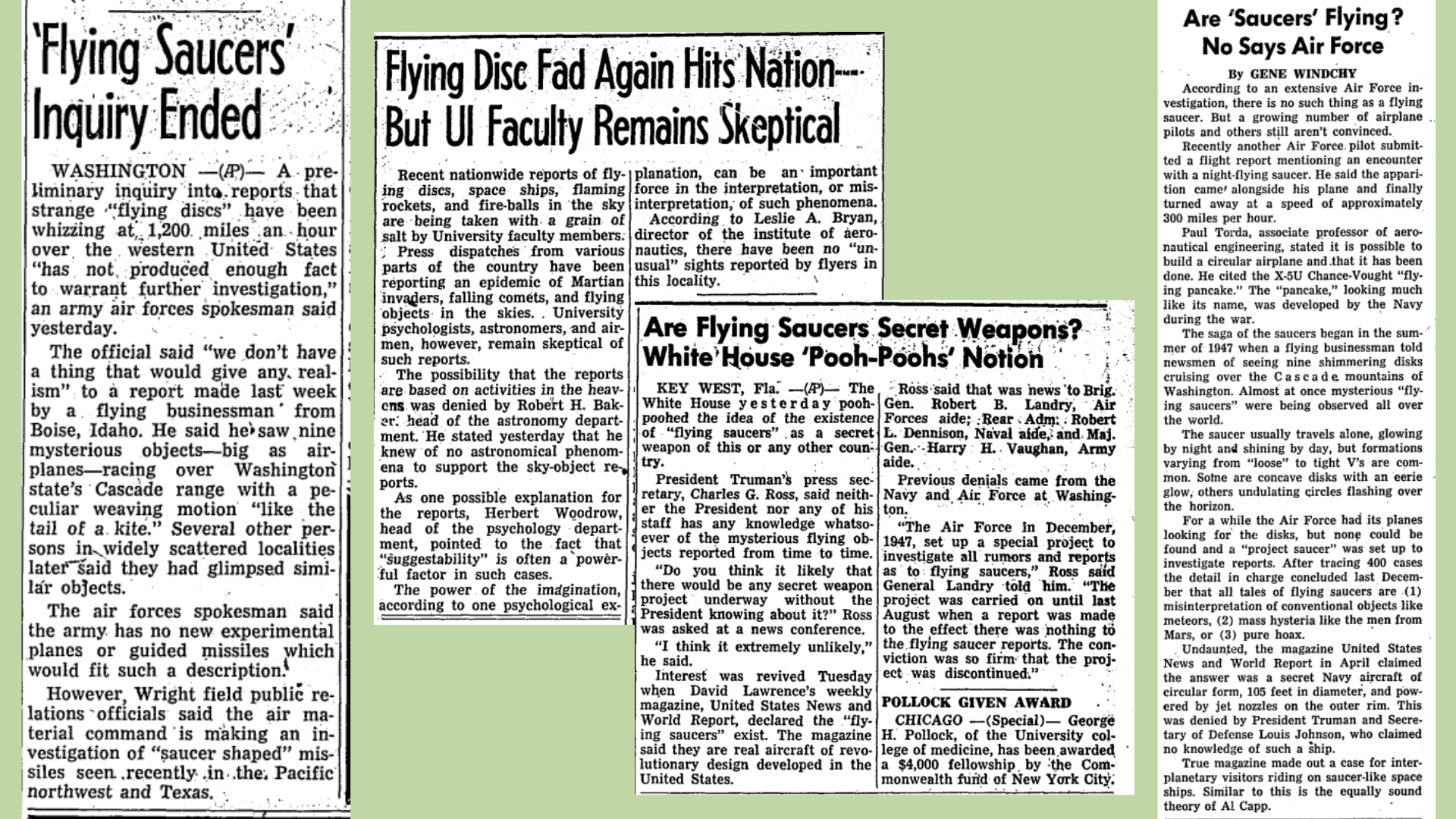
Though the initial flying saucer craze (which began June 1947) had primarily settled down by 1953, there were occasional sightings of mysterious objects in the sky through the mid-1960s. And, although there have been reported sightings since the 1960s, these seem to have been mostly isolated events and did not culminate in the national hysteria as seen in the earlier decades.
Much like a different celestial object, UFO crazes seem to appear every few decades…perhaps we’ll be due for another soon. For now, enjoy these additional clippings (linked citations below images):