Using the Illinois Digital Newspaper Collections: Women’s Labor in Wartime and the Women’s Land Army of America

March is Women’s History Month and to celebrate, this month’s HPNL blog post explores an aspect of women’s history through the use of digitized newspapers. 

As Illinois is a state rich with labor history, I was originally going to focus this post on women in Illinois labor movements and their roles in pioneering and supporting the organization of, and participation in, labor strikes in Illinois. Women’s roles in labor rights, union organization, and reform are well known in this state, and figures such as Jane Addams and “Mother” Mary Jones are sufficiently represented in historical newspapers. Alongside these figures, I wanted to consider the many unnamed women, such as those who fought for rights during the 1910 Chicago Garment Strike, as there are many articles about them, but then my interests turned elsewhere… 

Using the Illinois Digital Newspaper Collections, this blog post highlights how women’s labor evolved during the first and second world wars.  

Women’s labor in wartime 
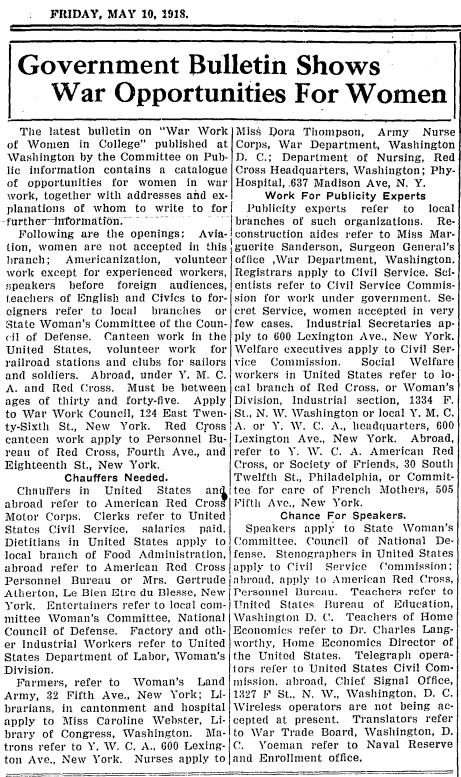
“Government Bulletin Shows War Opportunities for Women,” Daily Illini, May 10, 1918, p.5 [link]
Despite coming off the heels of decades of labor conflict and milestones—in part due to the visible and invisible labor of women, including working class and immigrant women and those organizing in union auxiliary chapters—in the era of the World Wars, many middle-class women were still working in the domestic sphere.  

However, the onset of war forced men overseas or into different positions. Women were employed to fill these absences, and at the same time, fill an increased demand for the production of certain goods. These realities posed a problem for American production, and, throughout the country, women were encouraged to work in traditionally male-dominated industries such as manufacturing and agriculture. Wartime also saw an emergence of new needs, and in response, women labored in ammunitions factories and built war equipment like ships, planes, and tanks, among other work. 

This was not an American phenomenon, of course, as women throughout Europe were filling empty factory roles while men left to serve in the war. Many American newspapers reported on the status of British, French, and German female laborers in agriculture and factory work, such as munitions factories, as early as 1914. 

In America, over 1 million women worked in war industries during WWI, and over 6 million worked in war industries during WWII. Continue reading “Using the Illinois Digital Newspaper Collections: Women’s Labor in Wartime and the Women’s Land Army of America”
Digital Newspaper Dive: The Flying Saucer Phenomena of Post-war America

Using the Illinois Digital Newspaper Collections

Each year, the Illinois Newspaper Project (INP)—a joint project of the History, Philosophy, and Newspaper Library (HPNL) and the Preservation Services Unit of the University Library—participates in the Archives Bazaar, which highlights special collections, museums, archives, and other cultural heritage organizations in Champaign County and is hosted by the Champaign County Historical Archives at The Urbana Free Library.  

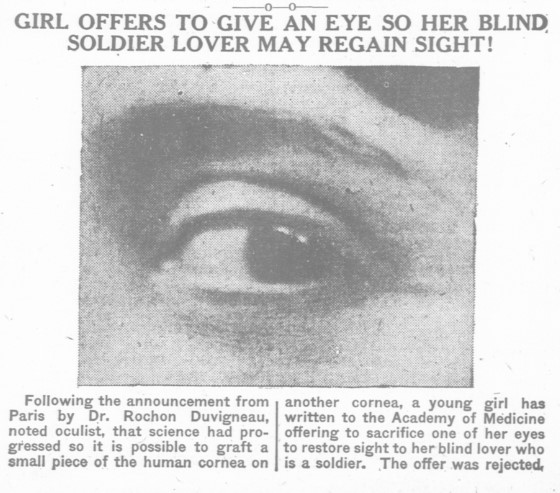
Clipping from the Day Book, October 12, 1916, p.20

This year’s theme was the “bizarre Bazaar,” and the event was held at The Urbana Free Library on Saturday, September 20. While brainstorming newspaper content for the INP table, I initially considered conducting a deep dive of search results in the Illinois Digital Newspaper Collections for the keyword “bizarre” and highlighting how historical newspapers can be resources for mapping language evolution and trends. I eventually ruled this idea out…perhaps too boring, too academic, and not easily digestible in an open-house format.

I then considered highlighting a newspaper preserved and digitized by the Illinois Newspaper Project, The Day Book, conceived by newspaper mogul Edward Willis Scripps as an experiment in advertisement-free newspaper publishing. The Day Book often published sensational stories and wacky tabloid-like facts about people around the world. It also published many images and sketches, and visual imagery is good for newspaper outreach events. However, I ultimately decided this wasn’t bizarre enough, plus, I wanted to highlight the richness of the IDNC and its cross-search capability across all titles in the digital collection and not just highlight one specific newspaper.

So, I did what anyone would do—I pivoted to UFOs (unidentified flying objects, flying saucers, flying disks, flying discs, etc.). 

Continue reading “Digital Newspaper Dive: The Flying Saucer Phenomena of Post-war America”

Using the IDNC: Researching Black newspapers, labor, and business

The Black Press 

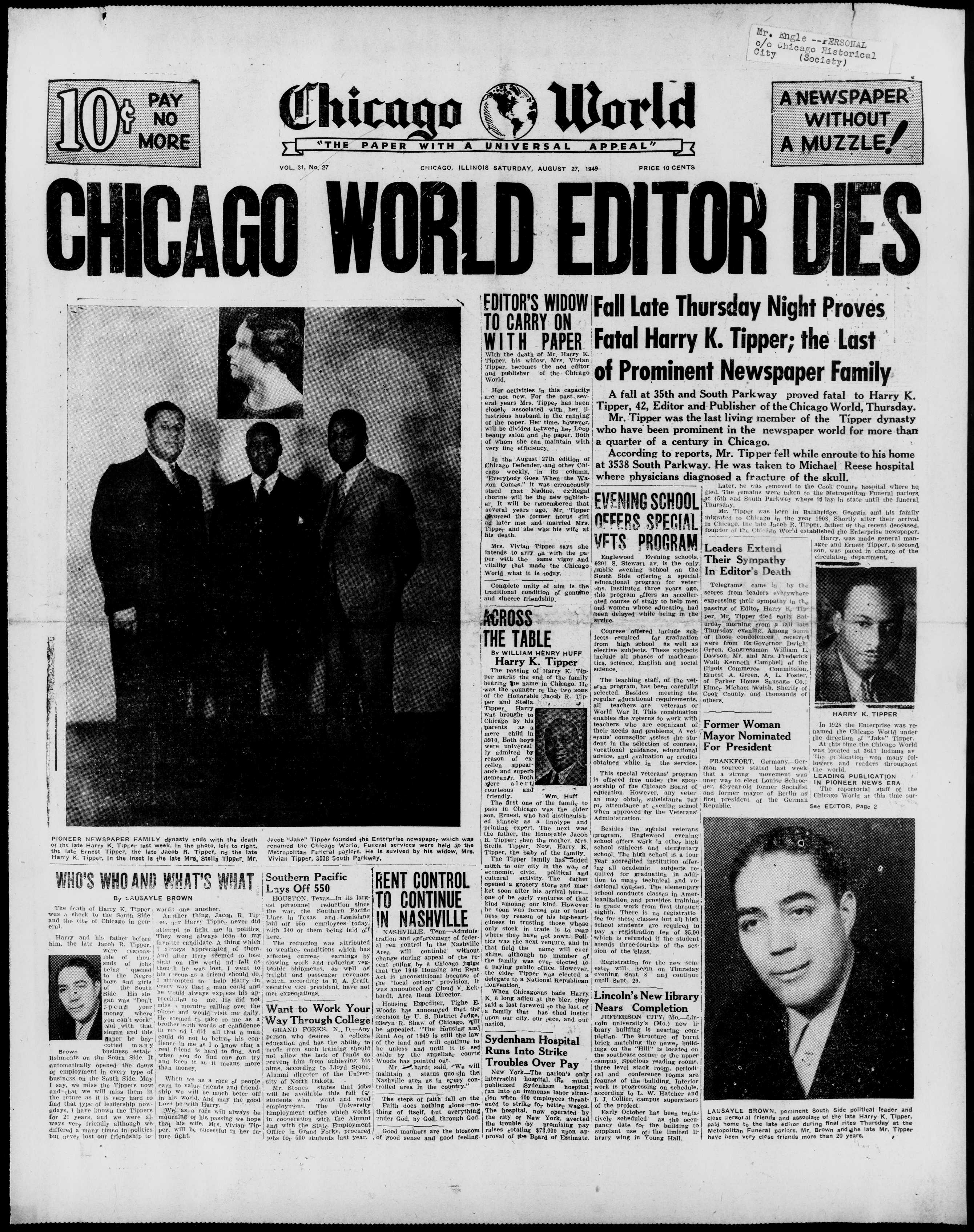
Chicago World (Chicago, Ill.), August 27, 1949 

In honor of Black History Month, the Illinois Newspaper Project (INP) is using the Illinois Digital Newspaper Collection (IDNC) to understand Black labor history (rights, unions, and movements) and Black-owned business in Illinois through historical newspapers. We’re highlighting the mastheads of (and people behind) Black newspapers as well as advertisements for Black-owned businesses found within newspapers. A special photograph issue (published December 5, 1943) of the Chicago Sunday Bee specifically highlights Willard S. Townsend, a Black labor leader and first African-American to hold office in a national union, and printed photographs of Black labor leaders present at a Congress of Industrial Organizations (CIO) meeting in Philadelphia.

Did you know that the Illinois Digital Newspaper Collections (IDNC) has a collection of Black newspapers? In order to preserve the cultural and print heritages of Black papers and their readers, the Illinois Digital Newspaper Project (IDNP) has centered past digitization projects around historical Black newspaper printed (primarily) in Illinois.  


Continue reading “Using the IDNC: Researching Black newspapers, labor, and business”

Archives Bazaar: All Aboard the Preservation Train

Preserving Railroad History: An Invitation

Since 2017, The Urbana Free Library has hosted an event called the Archives Bazaar, where cultural heritage organizations from the Champaign-Urbana area—including special collections libraries, historical societies, archives, museums, and independent collectors—congregate to exhibit materials found in their collections. Archives bazaars exist to promote the preservation of our cultural heritage and to promote the use of archival collections by highlighting popular, “hidden,” or interesting collections within an institution. Bazaars are a chance for organizations and repositories to leave the stacks and connect with people in the community (not just the scholarly researchers one may think of when one thinks of archives!). It’s a way for us to say, enthusiastically, “Isn’t preserving history neat?” and “Please come use our collections!”

This year, The Urbana Free Library’s Archives Bazaar has a central theme on the history of the Illinois Central Railroad. 2024 marks the 100-year anniversary of the Illinois Central depot in Champaign, Illinois. The Illinois Newspaper Project, jointly administered by HPNL and the University Library’s Preservation Services Unit, will table at the Bazaar to showcase the Illinois Digital Newspaper Collections (IDNC) and to promote our newly-published (and very first!) research guide featuring articles about the Illinois Central Railroad found in the Illinois Digital Newspaper Collections. Continue reading “Archives Bazaar: All Aboard the Preservation Train”