Blog

Banned Books Week

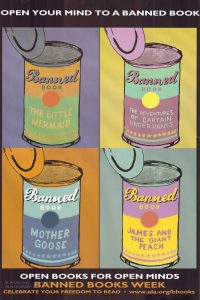
"Open Your Mind To A Banned Book," 2003.
“Open Your Mind To A Banned Book,” 2003.

This week is the 31st annual Banned Books Week, an event when the American Library Association and numerous other sponsors encourage the reading of banned and challenged books.  The week was first inspired by the success of the Banned Book Exhibit at an American Booksellers Association (ABA) convention in 1982, which featured almost 500 banned and challenged books.[1] Continue reading “Banned Books Week”

“Capturing our Stories” Librarian Oral Histories Project Added to ALA Archives’ Digital Holdings

As part of her 2007-08 presidential term, Loriene Roy initiated an oral history program for retiring librarians, “Capturing Our Stories.” So far this program, which is still on-going, has produced 35 recordings with full transcripts, which have now been added to the ALA Digital Archives and made available to researchers online.

Librarians interviewed range from school librarians to public library directors to catalogers, from California to New York. One librarian of note interviewed is Sanford Berman, author of Prejudices and Antipathies, famous criticism of the sexism and racism inherent in the Library of Congress subject headings of the 1970s. Berman’s personal papers are also held in the ALA Archives.

[ensemblevideo contentid=nG8i4Nk2Nk-V5dFHlK6rqg]


Explore the full holdings of these oral histories here.

If you’re interested in helping with the “Capturing Our Stories,” you can find more information at the project website.

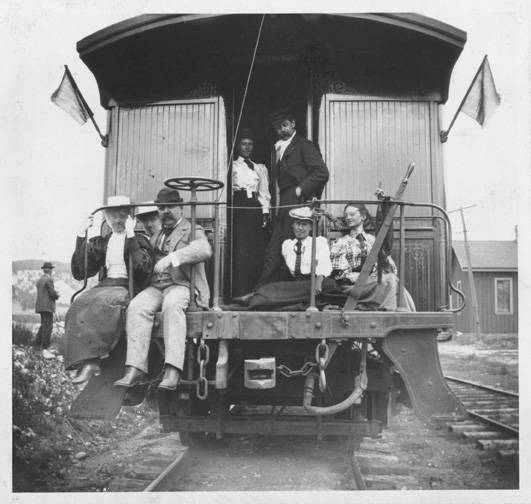
“To meet him was to always meet an old friend”: F. W. Faxon

In honor of the upcoming American Library Association Conference:

A TOAST TO THE TRAVEL COMMITTEE
(Tune: “Lord Goffrey Amherst was a soldier of the King.”)

Oh, here’s to Mr. Faxon and our jolly A. L. A.
And the travel committee too,
And here’s to Mr. Phelan, who has left us by the way,
And forsaken our merry crew,
And here’s to Mr. Brown, who came direct from Brooklyn town;
To chaperone the party was his cue.
And here’s to Mr. Wellman, who’s our leader all the way,
and last, but not least, HERE’S TO YOU.

Chorus: A. L. A., A. L. A.,
‘Tis a name that’s known
From sea to sea,
A. L. A., A. L. A.;
From the A. L. A. are we. [1] 

ala-9901014-5-004
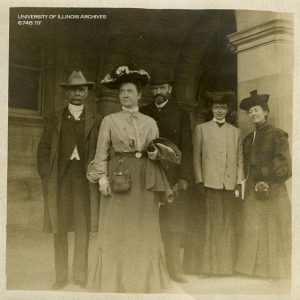
A Group of Librarians in Colorado
Record Series 99/1/14

Continue reading ““To meet him was to always meet an old friend”: F. W. Faxon”

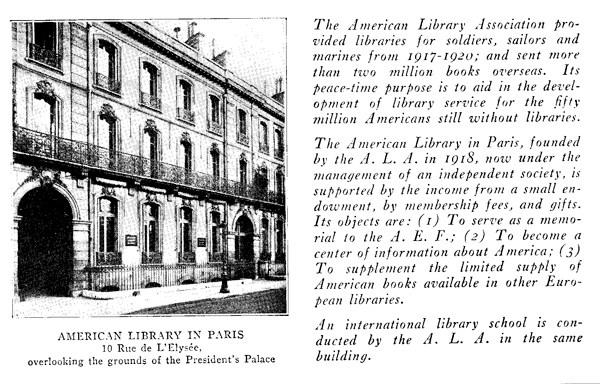
American Library in Paris

As described by Director Dorothy Reeder, the American Library in Paris was a “war baby, born out of that vast number of books sent to the A. E. F. by the American Library Association in the last war.  When hostilities ceased, it embarked on a new mission, and has served as a memorial to the American soldiers for whom it has been established.”[1] Continue reading “American Library in Paris”

A Testimony of Friendship

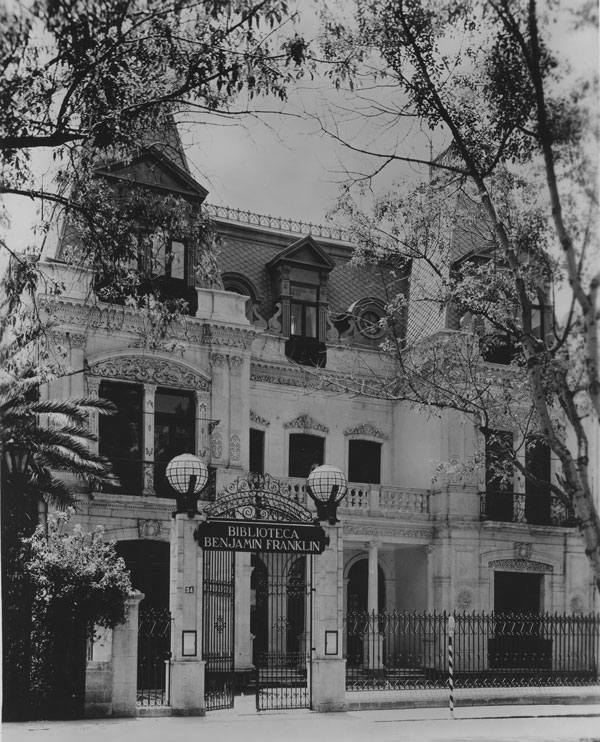
Biblioteca Benjamin Franklin, January, 1944

On April 13, 1942, General Manuel Ávila Comacho, President of the Republic of Mexico, spoke at the formal dedication of the Biblioteca Benjamin Franklin in Mexico City.  The dedication of the library, made possible by a grant from the Coordinator of Inter-American Affairs to the American Library Association, was attended by Mexican officials, American embassy staff, and Mexicans and Americans active in the library organization.  Presentations and receptions occurred throughout the week for library organizers and contributors, university representatives, and the public. Continue reading “A Testimony of Friendship”

Libraries During the Great Depression

The Works Progress Administration (later called the Works Projects Administration, or WPA) was created in May 1935 as part of the new Deal to provide jobs to the unemployed during the Great Depression. In addition to building public roads and supporting community arts projects, the WPA, with help from the ALA Library Extension Board, supported public libraries by sponsoring bookmobiles and providing workers for demonstration projects that extended library services to rural communities. Continue reading “Libraries During the Great Depression”

A Book for Every Man

New York City, New York Book Collection, February, 1919
Record Series 89/1/13

Within a few weeks of America’s entrance into World War I, the American Library Association undertook an enormous campaign to send books and other reading materials to American forces at home and abroad. Continue reading “A Book for Every Man”

Have Books, Will Travel

The beginning of the Twentieth century marked the start of expansion for American libraries. A nationwide movement to establish county library systems began in 1898.  This coincided with the spread of branch libraries, which began to appear in large cities in the early 1890s. The growing number of library buildings was due in large part to Andrew Carnegie, who built libraries in 1,412 communities. The first part of the century also saw a broader range of services as librarians reached out to groups that had previously been ignored by the library: children, immigrants, minorities, soldiers, the sick and the handicapped, the working class, and isolated rural community dwellers. Continue reading “Have Books, Will Travel”