By Molly Banwart
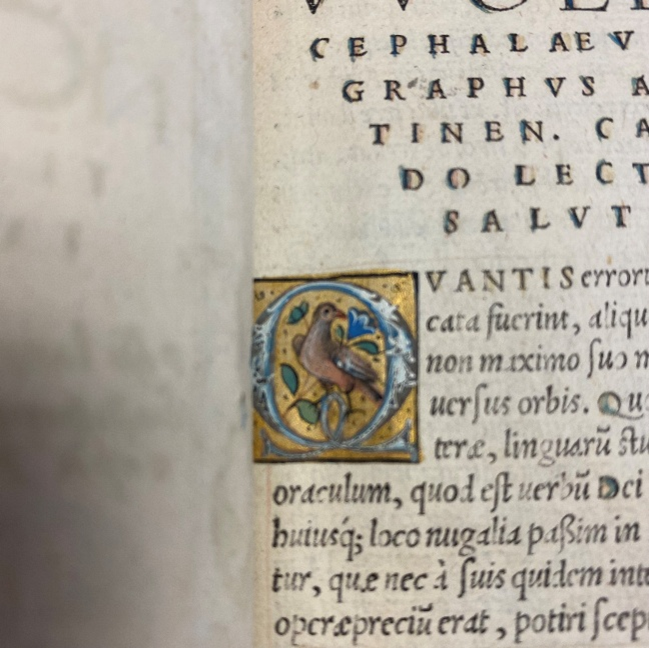
Illumination of texts didn’t end with manuscripts! Early printed books continued the tradition, and some illumination can be used to find out an item’s provenance.
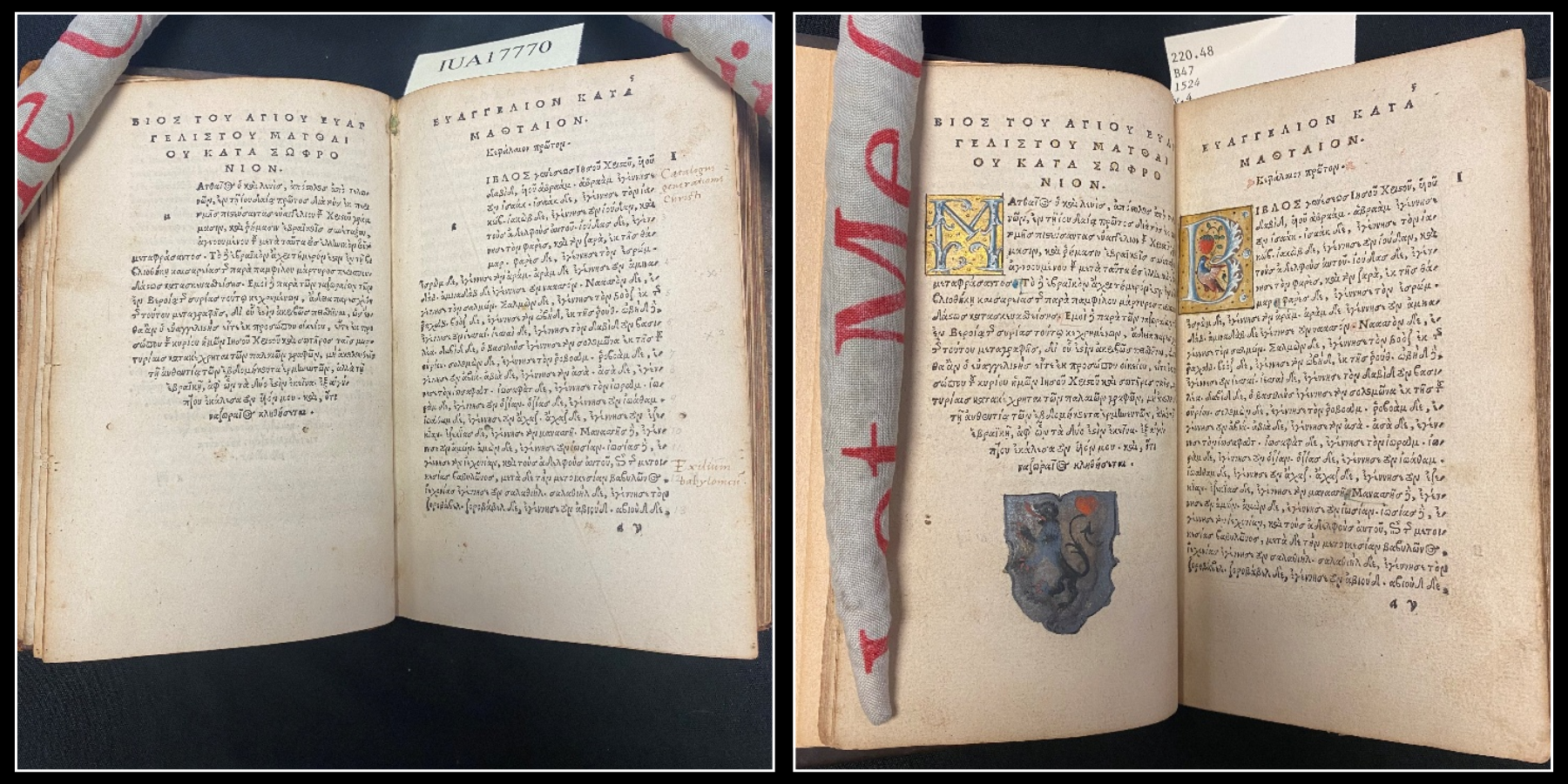
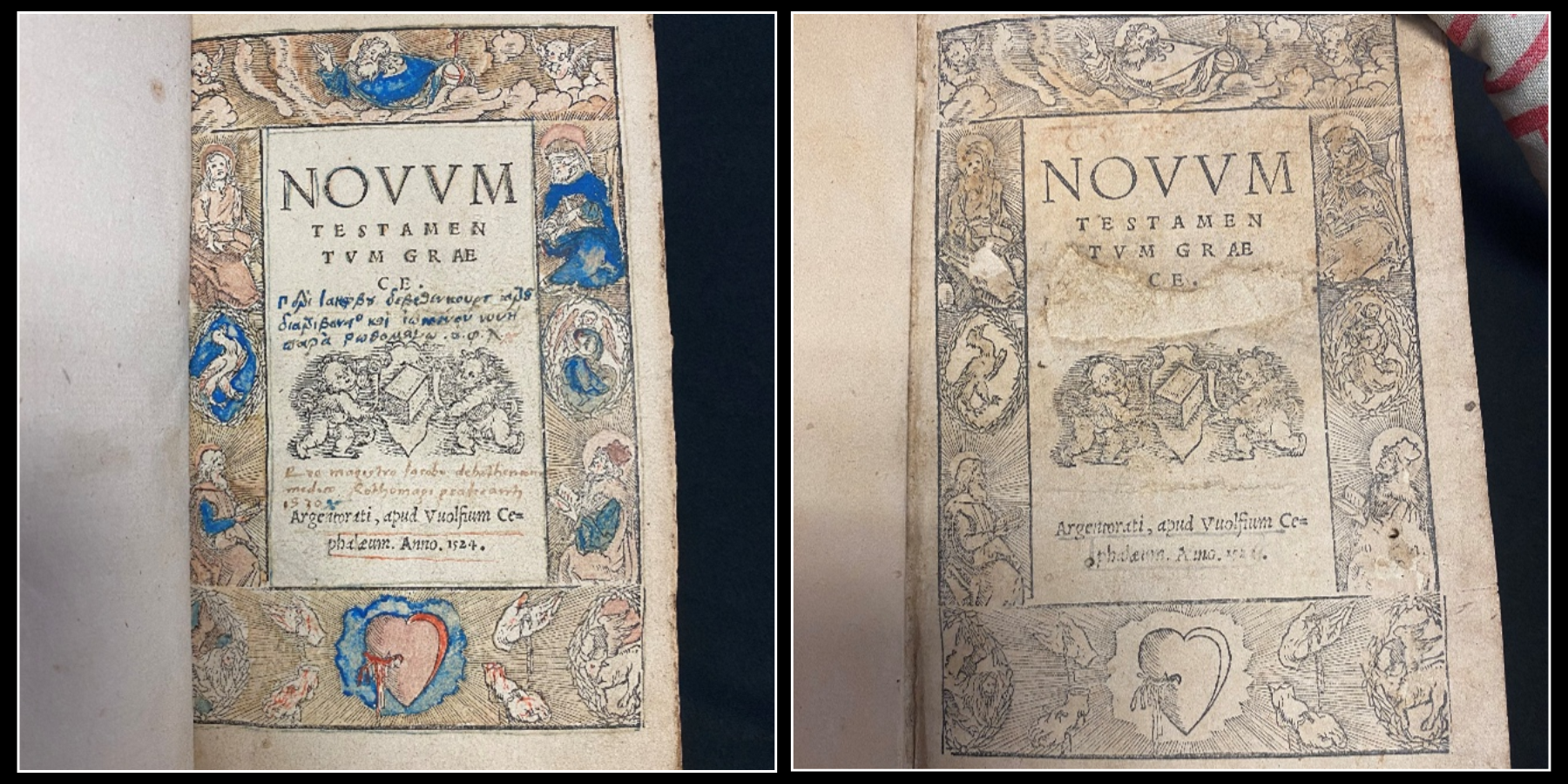
In recent cataloging discoveries, we’ve come across two copies of the 1524 New Testament in Greek. One copy (IUA17770) has stayed close to its original state with minimal alterations made to the item: it retains its modest wood-cut title page, scattered contemporary marginalia, and unadorned capital spaces with guide letters. Many early printed books left a space with smaller guide letters placed inside so that owners (and their illustrators and/or illuminators) could know what the large initial should be and decorate over the guide, allowing owners to customize their books to their liking.
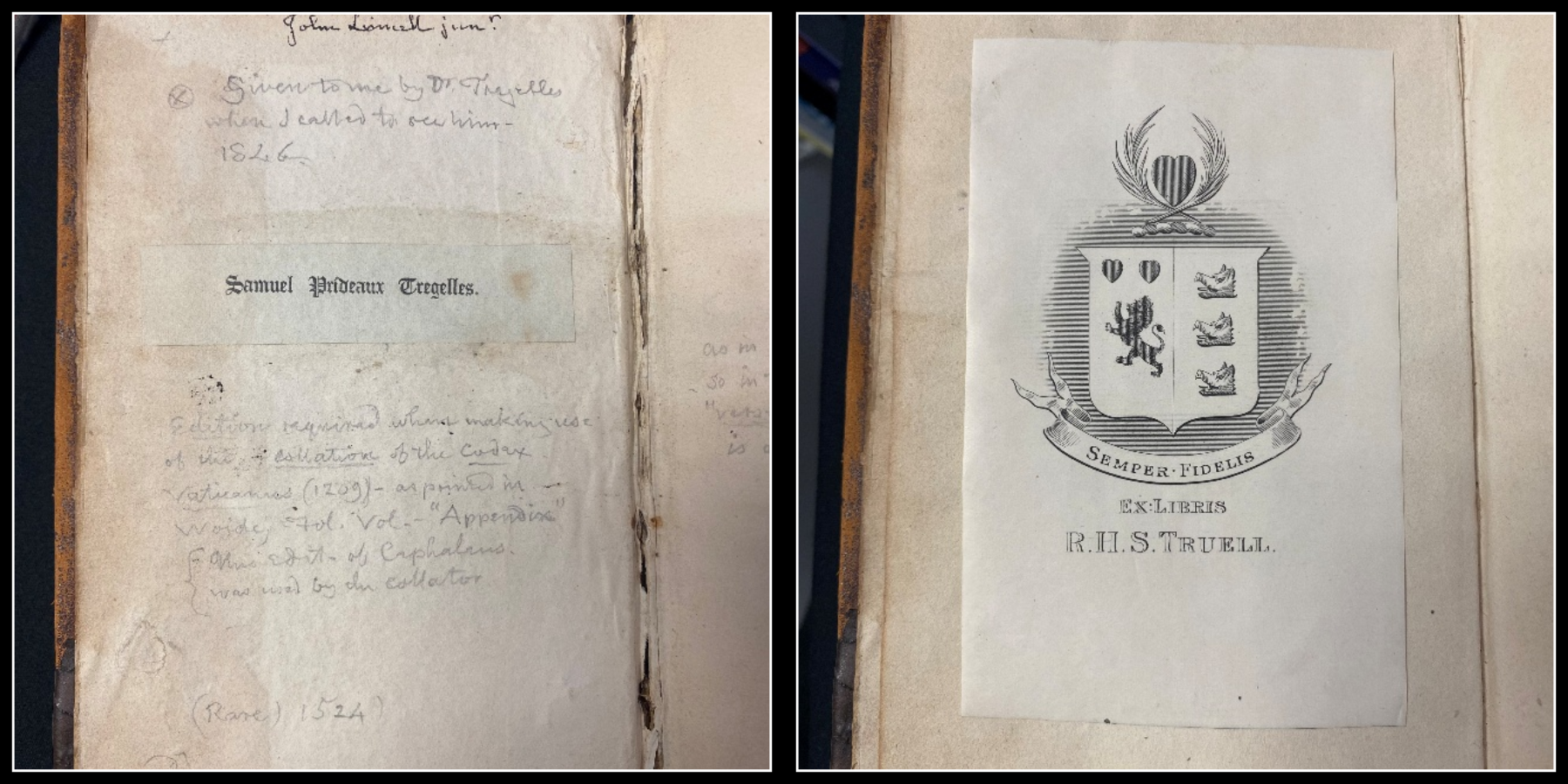
Our plainer copy includes the armorial bookplate of Robert Holt Truell, who lived in Ireland from 1797-1870, and Samuel Prideaux Tregelles (1813-1875), an English theologian and biblical scholar.
The owner of our other copy (220.48 B471524) did decide to customize his book: finely illuminating the initials with florals, fruits, and figures while using many striking colors. The title page in this copy was also colored in red and blue, and this color combination continued throughout the text to mark up sections and include notes in Greek. These additions of inscriptions, rubrication, manicules, underlining, and bracketing were all done in a contemporary hand, presumably that of the owner, Jacques de Béthencourt.
Béthencourt inscribed the title page in both Greek and Latin, signing his name, his place of residence, Rouen (Rothomagi in Latin, Ρωθόμαγω in Greek), and the year, 1539. The Béthencourt family coat of arms was also added in silver illumination to the bottom of leaf A4 verso. Having two copies in different states of customization help visualize and bring to life the book culture of 16th century France.
Béthencourt himself is a historical figure of interest: he is now most notable for his coining of the term “venereal disease.” Sexually transmitted infections at the time were colloquially known as Morbus Gallicus, or “The French Malady,” and Béthencourt resented its association with his fellow Frenchmen. Instead, he believed the term should be named Morbus Venereus (Malady of Venus) or lues venerea (venereal disease), believing it stemmed from “illicit love.” He made these claims in his own book Nouveau Cartme de penitence or the “New Book of Penance,” which was published in 1527.