By Dana Miller, Emmey Harris, and Izzy Sauer
This spring, RBML archival processing staff have been hard at work improving the arrangement and description of some of our smaller collections, including the Henry DeWolf Smyth papers, the Amos Paul Kennedy Jr. collection, and the AIDS Advocacy ephemera collection. Read on to see how two of our graduate students and archivist reflect on their experiences processing these collections, and to learn a bit more about what’s now available for research!
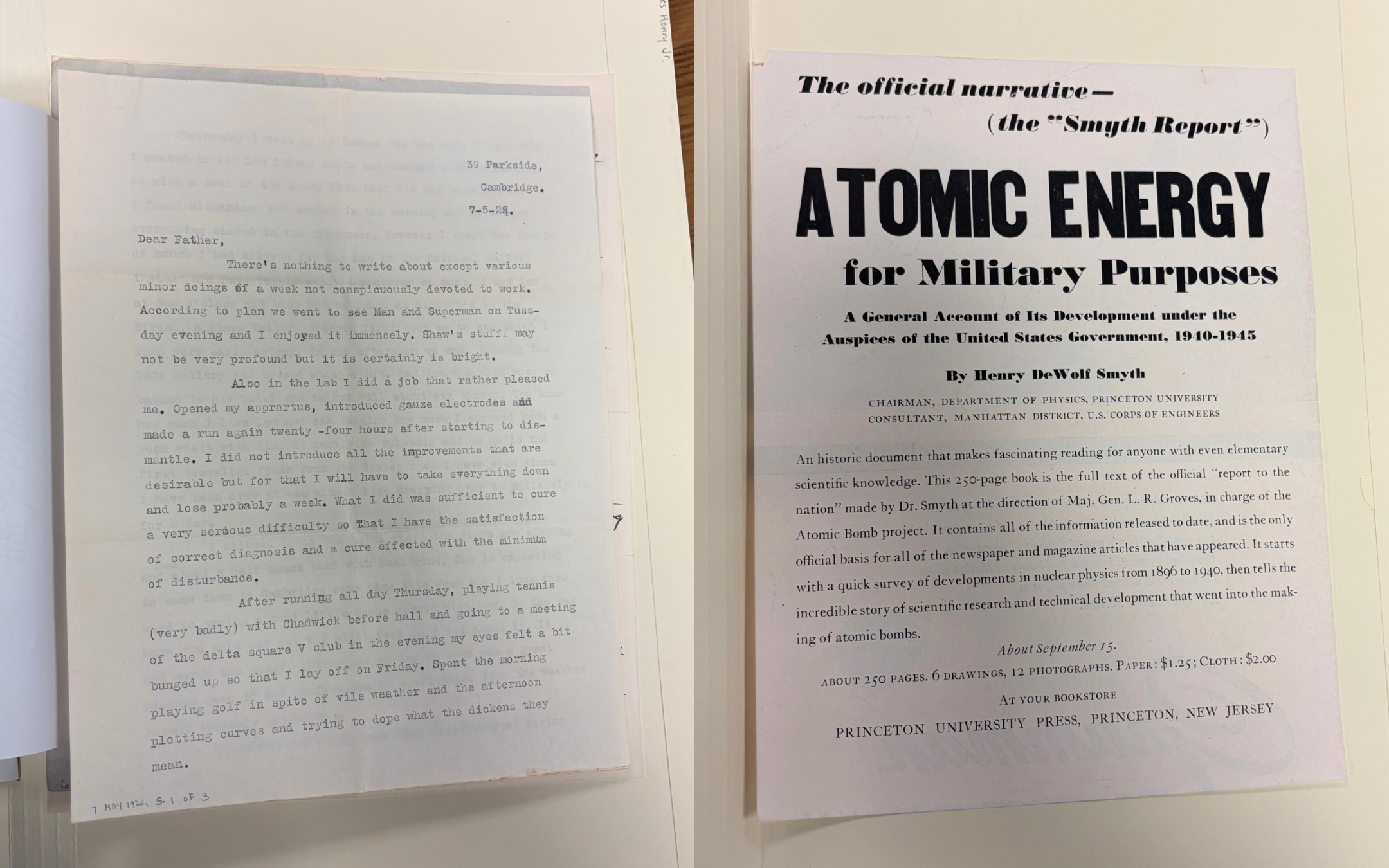
Henry DeWolf Smyth papers, 1921-1986 (MSS00125)
“This semester, I processed the Henry DeWolf Smyth papers in my role as Archival Processing Graduate Assistant at RBML. Smyth (1898-1986) was an American physicist, known for his work on the Manhattan Project, the US military project that developed the first nuclear weapons. In 1945, he authored the government’s official public report on the atomic bomb.
As I processed this collection, I considered how to organize the materials in a way that would be most helpful to researchers. It was fascinating to learn more about Smyth as I explored the collection and wrote the finding aid descriptions. A large portion of the collection consists of letters Smyth wrote to his family in the 1920s and 1930s. It was interesting to see the more personal side of such an important figure as he navigated student life and family dynamics. I am glad I had the opportunity to help make Smyth’s life and career more accessible to researchers.”
— Emmey Harris, Graduate Assistant
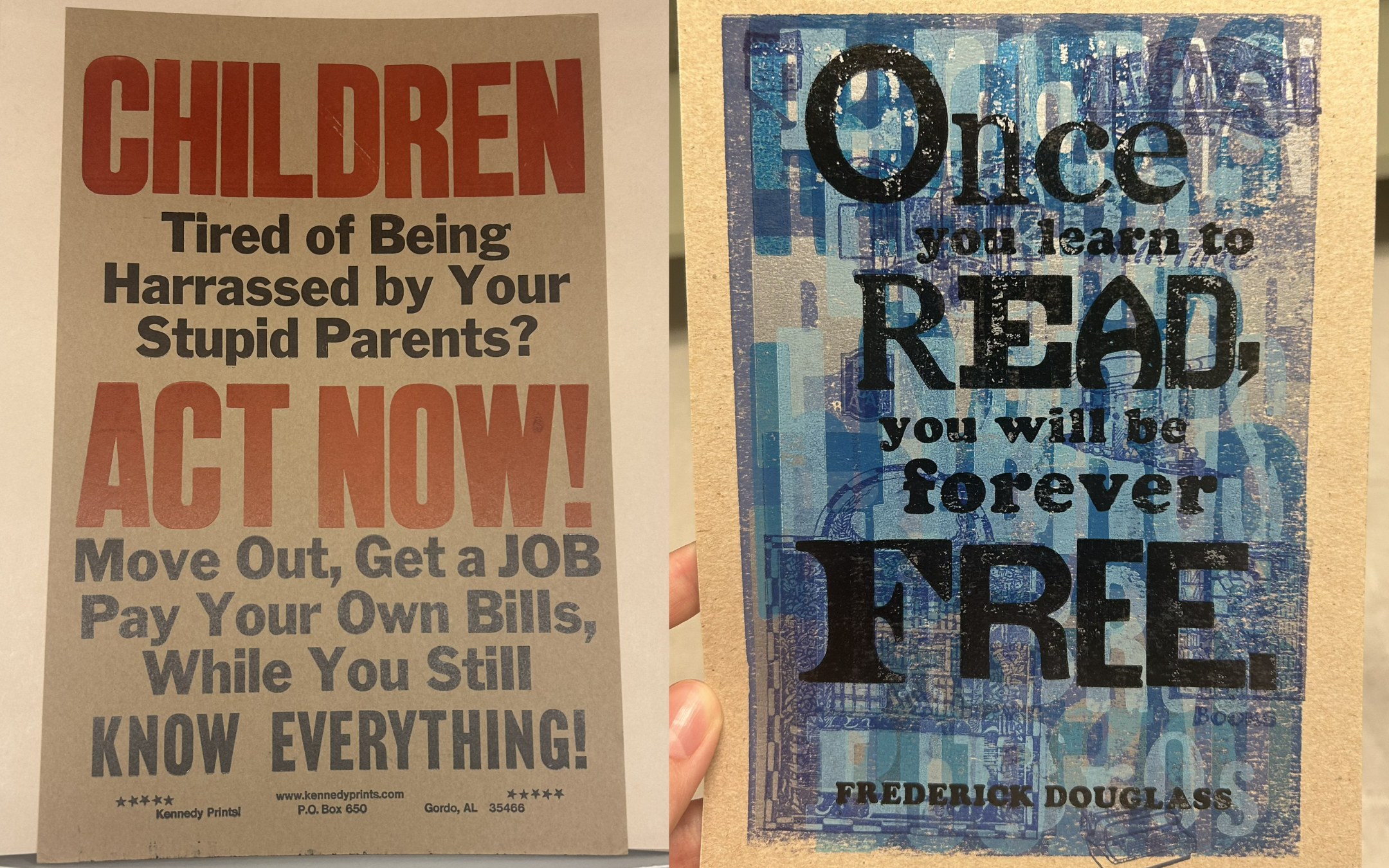
Amos Paul Kennedy Jr. collection, circa 1992-2026 (MSS00100)
“The Amos Paul Kennedy Jr. collection has recently been rearranged by year of accession!
As Kennedy continues to send the library materials to add to the collection, the new arrangement schema aims to accommodate new accessions while allowing patrons to access materials in a rough chronological order and within subseries specified by format. The collection consists of letterpress artwork printed on a variety of formats, such as road maps, handheld fans, posters, and postcards. There is also a substantial number of periodicals and promotional materials which Kennedy contributed to or has work featured in.
Along with passionately addressing political issues related to race and equality, Kennedy commonly infuses his own sense of humor into his work. The diversity of materials in this collection and its new arrangement schema allowed the processing experience to be totally unique! Kennedy’s work is clearly rooted in a passion and joy for printing, and handling and rearranging the materials in the collection quickly became a fun experience!
To ensure the long-term preservation of the materials, the collection is housed at the item-level, meaning many items are stored in individual folders except for some duplicate or corresponding prints. Although this made processing the collection a bit tedious, it was easy to stay motivated knowing that the work I was doing would ensure access to the collection long after I finished. [S]tay tuned for future accessions!”
— Izzy Sauer, Graduate Hourly
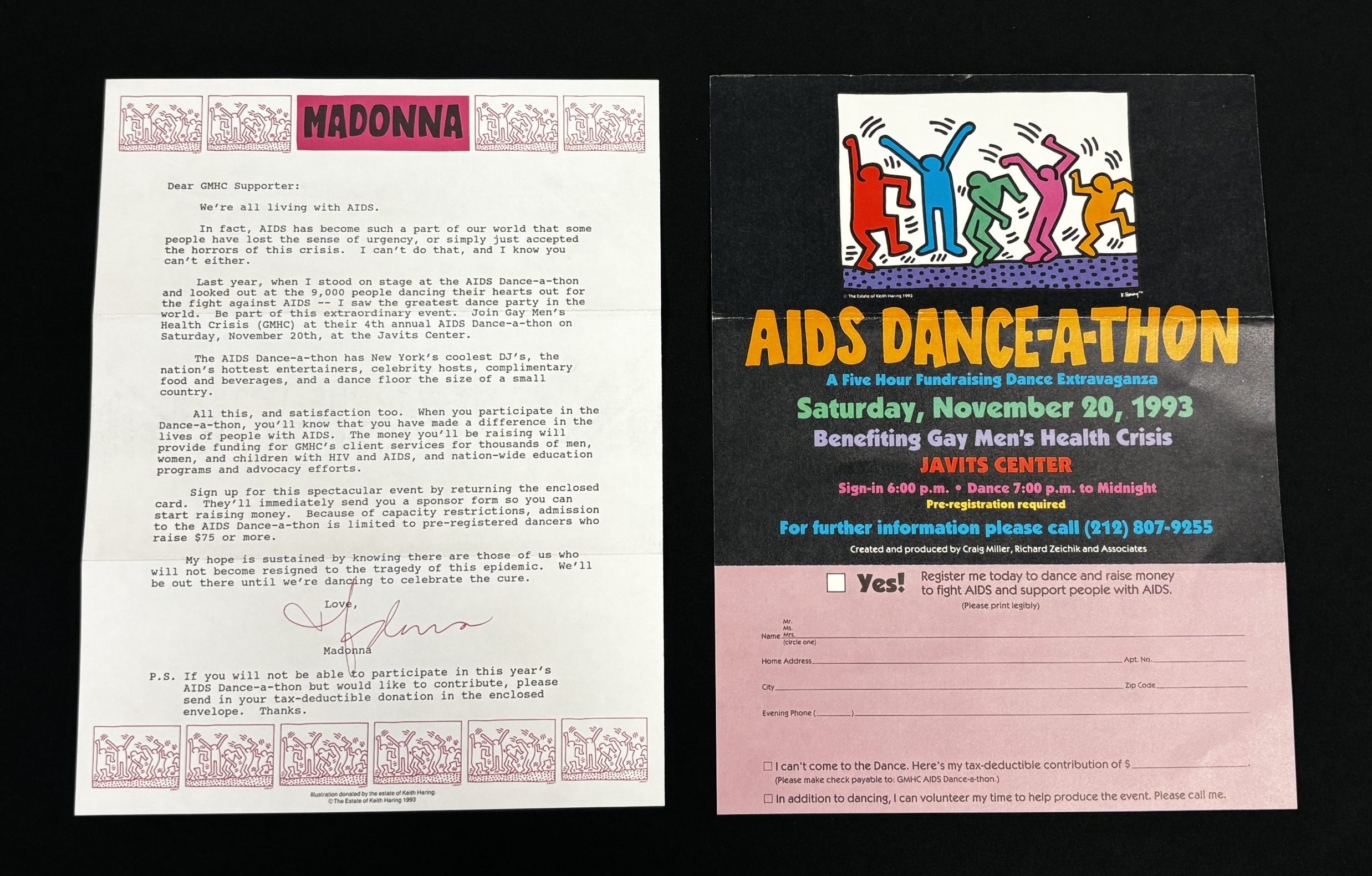
AIDS Advocacy ephemera collection, 1985-1997 (MSS00124)
“The AIDS Advocacy ephemera collection documents late 20th-century efforts to advocate for the awareness and research of Acquired Immunodeficiency Syndrome (AIDS), particularly in the New York art world. Materials include charitable event announcements and invitations; catalogs of art for sale; and informational flyers, newsletters, and booklets; which together document the activist work of more than 10 different organizations. The collection as a whole was assembled by New York art lawyer Jerald Ordover (1927-2008), who provided legal services for many artists, art dealers, and arts organizations throughout his 50-year career.
While processing this collection, I was able to learn a lot about the different organizations that worked to raise awareness of the AIDS epidemic, as well as funding for research and for the care of those impacted by the disease. One that especially caught my eye was the Village Nursing Home (now part of VillageCare), which opened in 1988 as a day care facility to offer “rehabilitation, socialization, and recreation” to people with HIV/AIDS. I was also intrigued by the number of celebrity tie-ins to the fundraising events the organizations hosted, which called on the talents and influence of familiar faces such as Lily Tomlin, Harvey Fierstein, and Madonna.
I am glad to have been able to process this small-but-mighty collection on such an important topic!”
— Dana Miller, Archives & Literary Manuscript Specialist