ACDC News – Issue 04-19


Stirring extension in Australia.

Thanks to staff associate Liz Kellaway for alerting us to a journal article that has stirred discussion in Australia about ingredients of effective agricultural extension. In the Australian Journal of Experimental Agriculture researcher F. Vanclay described 27 principles for agricultural extension in promoting natural resource management. It’s a hard-hitting list, including these examples:

• Non-adoption is not the cause of land degradation, rather practices actively promoted by extension in the past have significantly contributed to degradation.
• Farming is a socio-cultural practice and adoption is a socio-cultural process. • Profit is not the main driving force of farmers.
• Farmers’ attitudes are not the problem.
• Farmers construct their own knowledge.
• Farmers have legitimate reasons for non-adoption.
• Effective extension requires more than the transfer of technology; it requires an understanding of the worldviews of farmers.
• The 80-20 rule is a self-serving delusion. (referring to a story in extension circles that 20% of farmers produce 80% of the agricultural wealth).
• Representation is not participation.
• The best method of extension is multiple methods.

Reference: Social principles Author: Vanclay, F.


New book about North American agricultural journalists.

Fencelines, deadlines & headlines is the title of a new book in honor of the 50th anniversary of the national professional association now known as North American Agricultural Journalists (NAAJ). Don Muhm, a veteran agricultural reporter, coordinated and published this 240-page history. It ranges broadly across the development of NAAJ, the careers of legendary agricultural writers, ethics in agricultural reporting, global dimensions, the farm beat today and the challenges ahead.

“Today in this world, all of us are connected through our food supply,” said 2003 NAAJ President Jerry Perkins. In that context, Muhm suggested that having on duty a corps of educated, responsible agricultural reporters is vital to helping understand our modern, one-world society.

Reference: Fencelines, deadlines & headlines
Author: Muhm, Don
The book is printed by and available from McMillen Publishing, PO Box 887, Ames, Iowa 50010.
Online: www.mcmillenbooks.com


Consulting communicators.

A ground swell of interest? Professional communicators who work within extension services, advisory services and agricultural research organizations have talked about the “consulting communicator” role for at least a half-century. You will find, for example, dozens of documents about this role if you conduct a “subject” search on that term in the ACDC collection. They stretch from 1954 to date. And you can find hundreds of documents about related topics, using “subject” search terms such as <roles communicators>, “communication planning” and “campaign planning.”

Two 1976 reports we added recently to the ACDC collection noted “a ground swell” for training programs in basic communications planning. A small swell, apparently. The role of “consulting communicator” remains elusive, overwhelmed it seems by pressures on communicators to apply skills, on order, from clientele.

Reference 1: Recommendations for improved contribution of extension communication specialists
Reference 2: Background statement


Are agricultural journalists “blindfolded” by their affinity with farming?

Shouldn’t be, according to research among editors of three Dutch agricultural magazines. Wageningen University researcher Maartje Lof conducted the study initiated by the Dutch Organisation of Agricultural Journalism. Guild members wanted to know “whether they dared to write things farmers might not like to hear about issues concerning people outside agriculture.”

“We are journalists, not PR officers,” the interviewed editors said. Lof concluded that agricultural journalists should place more importance on informing their readers about what society is asking of agriculture and why.

This summary appeared in IFAJnews, newsletter of the International Federation of Agricultural Journalists.

Reference: Write More About Society Views, Says Research
Author: Noorduyn, Leonore


History of the Missouri Ruralist. 

In a 1958 master’s thesis at the University of Missouri, Billy C. Brantley traced the origin, development and influence of the Ruralist from 1902 through 1955. His analysis highlighted influences in improving family life and farming methods, promoting better schools and roads, preventing rural crime and encouraging youth programs.

Reference: History of the Missouri Ruralist
Author: Brantley, Billy C.


A glimpse of our purpose.

Sometimes it seems few researchers, and others, are interested in documents more than a few days, months or years old. That’s when we recall a point made by Pierre R. Crosson of Resources for the Future:

“Knowledge accumulates; it is never used up.”

This insight would suggest that the future of agriculture-related communicating, as a field of serious pursuit, rests upon skilled integration of what is known of today – and of the past. ACDC pursues a vision of helping you span both dimensions.


So you would like to review articles in the journal published by ACE.

This Center contains more than 1,100 journal articles from what is now identified as the Association for Communication Excellence (formerly Agricultural Communicators in Education and American Association of Agricultural College Editors). However, the search is not straightforward because those articles appear in journals of three different titles.

  • Current title: Journal of Applied Communications (1990 to date)
  • Replaced: ACE Quarterly (1978-1989)
  • Replaced: AAACE (1919-1977)

Here’s how you can identify articles from those ACE journals. On the “Database Search” page, use “Journal” searches on each of the three titles. Let us know if you have problems or questions.


Communicator activities approaching.

November 17-19, 2004
“60 Years of Communicating Agriculture.” Annual convention of the National Association of Farm Broadcasters (NAFB) in Kansas City, Missouri USA.
Information: www.nafb.com


Want to see some Gold Award entries? 

The Association for Communication Excellence in Agriculture, Natural Resources and Life and Human Sciences (ACE) recently posted entries that earned Gold Awards in the 2004 Critique and Awards program. Yu can see entries in writing, photography, graphic design, publishing, electronic media, distance education and instructional design, integrated communication programs and information technology.

Reference: http://www.aceweb.org/award/index.html


Best wishes and good searching.

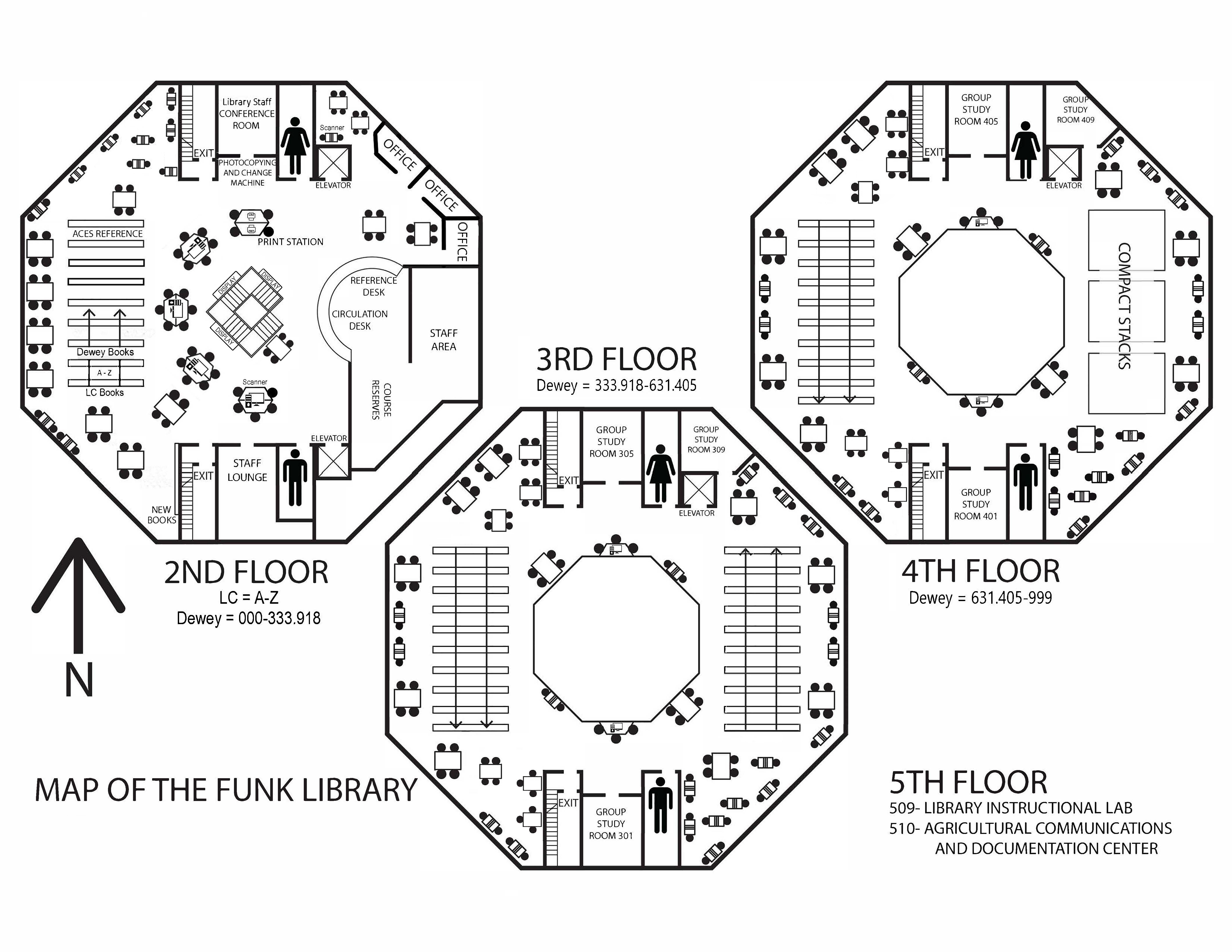
Please pass along your reactions, suggestions and ideas for ACDC. Feel free to invite our help as you search for information. And please suggest (or send) agricultural communications documents we might add to this unique collection. We welcome them in hard copy (sent to Ag Com Documentation Center, 510 LIAC, 1101 S. Goodwin Avenue, Urbana, IL 61801) or electronic form (at docctr@library.uiuc.edu )

November, 2004

ACDC News – Issue 04-18


Farm chemical advertising – mirroring the times.

A 40-year analysis of pesticide advertising in two midwestern U.S. farm magazines identified changing images in response to changes in the socio-cultural setting. Researchers traced changes in pictorial metaphors and brand names used in advertisements during three eras – science, control and environment/nature – between 1948 and 1998.

The current trend? They found “pesticide advertisements in agricultural media create connotations and associations between pesticides and land stewardship ethics.” Biotechnology represents a “new green area for agricultural advertising.”
Author: Flora, C.B. and Kroma, M.M.
An abstract of the article was posted online at: http://ipsapp008.kluweronline.com/ips/content/ext/x/j/4478/I/25/A/3/abstract.htm


How to build coalitions.

We recently added to the ACDC collection a useful resource for education campaign planners. “How to build long lasting and effective coalitions” is the title of this “skill sheet” from the Endangered Species Coalition.

The resource offers suggestions within the context of three coalition models: endorsement, associate and partner.

Reference: How to build long lasting and effective coalitions
The resource was posted on: http://www.stopextinction.org/team/team.cfm?id=67&c=2


An invisible agricultural social science.

If you want to see where the communications discipline fit into the social science community of U.S. agriculture colleges 17 years ago, we can suggest a window for your view. Look through a document we added recently to the ACDC collection: “Proceedings of Phase I Workshop: Social Science Agricultural Agenda Project.”

This 377-page proceeding did not recognize agriculture-related communications as a rural social science. Instead, “The…areas of concern include agricultural economics, rural sociology and anthropology, agricultural history, the social science aspects of home economics, agricultural law, agricultural political science and the like.”

Ironically, reports from all four workgroups called for communications teaching and research to address information deficiencies through effective delivery and use of agricultural information/knowledge.

Reference: Proceedings of Phase I Workshop: Social Science Agricultural Agenda Project


Raising the profile of rural journalism.

“Created in 2001 and staffed in August 2004, the Institute for Rural Journalism and Community Issues is a multi-disciplinary, multi-institutional, multi-state effort, based at the University of Kentucky. Its job is to help local news organizations set the public agenda for their communities and cover regional issues, and interpret rural issues for national media.”

According to announcement documents we have added to the ACDC collection, a two-year, $250,000 grant from the John S. and James L. Knight Foundation will permit:
” A major survey of rural media
” A popular rural journalism Web site
” A class in rural journalism
” Training for rural journalists
” A conference bringing together national experts and rural journalists.

Veteran journalist Al Cross has joined the School of Journalism and Telecommunications as interim director of the Institute. A new Web log, “Rural Blog,” went online August 9.

Reference: Creation of the Institute
Information about the Institute and links to the Web log were posted online at: http://www.uk.edu/CommInfoStudies/IRJCI/welcome2.html


Examining news models for national development.

Margaretha Geertsema recently explored five models for appropriateness in post-Apartheid South Africa:
” The Western model of journalism
” Development journalism
” Development communication
” Development support communication
” Public journalism

This analysis included a description of each model, plus a review of literature identifying perceived strengths and limitations of each. Geertsema argued for implementing in South Africa a combination of public journalism and development journalism “to help with community connectedness and nation building. The traditional Western press model does not offer a constructive framework for change and reconciliation…”

Reference: New news for a new South Africa?
Author: Geertsema, Margaretha
Posted online at:http://list.msu.edu/archives/aejmc.html (September 2003, Week 5)


Development – no longer what happens “over there.” 

It is “as much in our back yards,” argued Edna Einsiedel in Redeveloping Communication for Social Change. “There is a ‘First World’ in the so-called South as there is a ‘Third World’ in our midst. … Our work as development communicators puts us squarely in the midst of a commitment to and interest in questions of equity and equality, sustainability, and issues of social justice and social change.”

Reference: Border crossings: gender, development and communication http://web.aces.uiuc.edu/agcomdb/view.asp?ID=C19604
Author: Einsiedel, Edna


Agricultural writing of 500 years ago.

An article last year in the Journal of Business Communication revealed some agricultural writing of an English family between 1509 and about 1750. The Gawdy Papers, located in the British Library, highlight generations of activities of the Gawdy family of Norfolk. Papers include correspondence and other documentation about land acquisition and management, crop and livestock production and marketing, commodity prices, collection of rent and other agribusiness interests.

Reference: Gawdy papers
Author: Richardson


Communicator activities approaching.

October 17-20, 2004
Annual convention of Communication Officers of State Departments of Agriculture (COSDA) in Nashville, Tennessee USA.
Information: www.nasda.org/cosda/annual.htm

October 20-24, 2004
Annual conference of the Society of Environmental Journalists in Pittsburgh, Pennsylvania USA.
Information: www.sej.org/confer/index1.htm

November 4-6, 2004
Annual workshop of the National Market News Association in Baltimore, Maryland USA.
Information: www.ams.usda.gov/nmna

November 17-19, 2004
“60 Years of Communicating Agriculture.” Annual convention of the National Association of Farm Broadcasters (NAFB) in Kansas City, Missouri USA.
Information: www.nafb.com


Great idea for the dieter.

In closing, we share this piece of food journalism reported in a journal article about on-air bloopers. According to researcher Raymond Schuessler, announcer Ed Herlihy once advised listeners: “Another delicious combination for these hot days is a Kraft chilled grease sandwich with a choke.”

Reference: Bloopers
Author: Schuessler, R.


Best regards and good searching.  

Please pass along your reactions, suggestions and ideas for ACDC. Feel free to invite our help as you search for information. And please suggest (or send) agricultural communications documents that we might add to this unique collection. Send

hard copies to:
Ag Com Documentation Center
510 LIAC Library
1101 S. Goodwin Avenue
Urbana, IL 61801
or electronic copies to:
docctr@library.uiuc.edu

October, 2004

ACDC News – Issue 04-17


Traveling the rocky (gendered) road of rural cooperatives. 

Pressures toward consolidation and squeezed profit margins are challenging farmers to retain the democratic roots of cooperatives, according to a recent article in the Journal of Applied Communication Research. Author L.M. Harter studied organizational communications in the Nebraska Cooperative Council, a support organization for more than 100 cooperatives. The Council provided “a particularly rich context in which to explore traditionally feminine ways of organizing (i.e., cooperative enactment) in a historically male-dominated arena (i.e., agriculture).” Findings explored “intersections between the social construction of masculinity(s), the agrarian frontier myth, and tensions embedded in the discourse of cooperative organizing.”

Reference:Masculinity(s), the agrarian frontier myth, and cooperative ways of organizing: contraditions and tensions in the experience and enactment of democracy
By: Harter, Lynn M.
Published: May 2004


Students produce a weekly Webzine for a rural county.

Dateline Pickens is a lively learning laboratory for – and valued service by – journalism students at the University of Alabama. It features what journalism professor Bailey Thomson describes as “service journalism,” focusing on local aspects of issues such as health care, job creation, education and the environment.

“His goal is to bring good journalism to a county that often is overlooked by the state’s media,” according to a news report that we added to the ACDC collection. The site has been up nearly two years and draws good readership as it helps students learn real world journalism “in a place that has good stories to tell if only someone will take the time to report them.”
The news report was posted on:http://pjnet.org/2003_10_01_pjnettodayarchive.html.


Farm newspapers – voice of the farmers?

You cannot assume so, according to a recent article by John J. Fry in Agricultural History. The article examined four Midwestern farm newspapers between 1885 and 1920. The author concluded, “Farm newspapers are better seen not as expressing the ideas of farmers, but providing a forum for reformers and farmers to debate proposed changes to country life.”

School consolidation provided an example of this role, according to Fry. Farm papers promoted consolidation, in line with Country Life Movement arguments that consolidated schools would improve rural education. Farm readers “chose to listen to some of the recommendations of progressive reformers and not to others.”

Reference: Good farming – clear thinking – right living
By: Fry, John J.
Published: 2004

The doctoral dissertation upon which this article was based has been posted online at the following URL:http://wwwlib.umi.com/dissertations/search.
Reading, reform, and rural change : the midwestern farm press, 1895 to 1920
By: Fry, John J.
Published: May 2002


Horrendous food PR crisis.

They’re nothing new, according to case analyses by Lael M. Moynihan. The author described what two food marketers did when “the unthinkable happened” more than two decades ago:

” Some consumers around Detroit, Michigan, reported they had found razor blades in Ball Park Franks, a popular meat product marketed by Hygrade. October 1983.
One Belgian man died and a Connecticut woman became seriously ill as a result of botulism attributed to canned salmon. February and April 1982.”

Reference: Horrendous PR crises: what they did when the unthinkable happened
Moynihan, Lael M. (Media History Digest 8(1) : 19-25).


Welcome to John Sanders, new graduate assistant in the Agricultural Communications Documentation Center.

John’s appointment began August 16. A master’s candidate in the Graduate School of Library and Information Science, he brings to the Center an academic background (bachelor and master levels) in urban and regional planning. His research experience includes an international comparative study of rural communities and an innovative comprehensive plan for rural development land-use ordinance and regulation. So in addition to his core responsibilities in the Center, he will contribute in special ways to the parts of our collection that address the communications aspects of rural community development. More than 10 years of experience in retail marketing also will help John serve the Center in unique ways.


Still roaming off the beaten paths.

As you know, we regularly monitor journals known to contain literature about the communications aspects of agriculture, food and related fields. But we continue to find pleasure (and good materials) off the beaten paths. For example, here are a few recent sources:

  • Journal of the West
  • Social Problems
  • People’s Daily
  • Media Ethics
  • Philosophy and Social Action
  • Media History Digest
  • Slovak Spectator
  • Media International Australia

If you are curious about the kinds of materials we find in such journals, use the “Database Search” page to conduct “Journal” searches, by title. You will see citations of the documents we have entered from each journal.


Face-to-face meetings – gone by the wayside? 

No way, reported Den Gardner in a recent issue of Agri Marketing. In fact, he quoted the communications manager of Case IH as saying in reference to the farm equipment firm’s recent award winning event for media: “Face-to-face communications are more important than ever because we use this method less and less.”

“The point is that companies need to stay engaged with their customers,” Gardner observed. “And you can’t do it by phone, e-mail and voicemail all the time. … You can’t do that with online teleconferences, Web-casting, and other techno-gizmos being promoted today as the way to do business.”

Reference: Face-to-face meetings – gone by the wayside?
By: Gardner, Den
Published: Jun 2004.


“Spent all my money getting here
And now I can’t get away.” 

These words by Jack Bryant in his song, “Sunny Cal,” captured part of the hardship, disappointment and homesickness of farm families that migrated to California during the Great Depression. We recently added to the ACDC collection a brief report from the U.S. Library of Congress about the perceptions and experiences of migrant workers between 1929 and the early 1940s. This summary included web links to reports, popular songs and other sources of information.

Reference: The Migrant Experience
By: Fanslow, Robin A.
Published: Apr 6 1998

The report was posted online at: http://memory.loc.gov/ammem/afctshtml/tsme/html
Note: At the time of publication the above URL was not in service.


Communicator activities approaching

September 30, 2004
Deadline for submission of abstracts for papers and other presentations at the U.S. Agricultural Information Network (USAIN) Biennial Conference and International Association of Agricultural Information Specialists (IAALD) XI World Congress on May 15-21, 2005, in Lexington, Kentucky USA.
Information: www.ca.uky.edu/aic/Submit_Page.htm

October 1, 2004
Deadline for submission of research and professional papers to be considered for presentation in the Agricultural Communications Section of the Southern Association of Agricultural Scientists (SAAS) conference during February, 2005, in Little Rock, Arkansas.
Information: http://aaaeonline.ifas.ufl.edu/regions/southern/saas2005/callpaperssaasagcom05.pdf

October 17-20, 2004
Annual convention of Communication Officers of State Departments of Agriculture (COSDA) in Nashville, Tennessee USA.
Information: www.nasda.org/cosda/annual.htm


Best regards and good searching.  

Please pass along your reactions, suggestions and ideas for ACDC. Feel free to invite our help as you search for information. And please suggest (or send) agricultural communications documents that we might add to this unique collection. Send

hard copies to:
Ag Com Documentation Center
510 LIAC Library
1101 S. Goodwin Avenue
Urbana, IL 61801
or electronic copies to:
docctr@library.uiuc.edu

September, 2004

ACDC News – Issue 04-16


Internet competing with traditional farm media?

Not necessarily, according to results of a study reported (2000) in International Food and Agribusiness Management Review. Researchers examined the use of information sources through a mail survey of 10,500 farms with sales in excess of $100,000. They reported:

“…Internet use tends to be associated with producers who have more favorable views of information sources. In five different models, Internet use increased the probability that producers had a favorable view of the information source. Based on these results, it appears that the Internet might be a complement rather than a substitute for traditional information sources, or an indicator of producers who find traditional information sources useful. Likewise, crop farms and livestock farms tend to have different attitudes toward information sources”

Reference: On the “Database Search” page of this web site, use a title search (Sources of information) or author search (Gloy) for the full citation. The article was posted online at: www.ifama.org/nonmember/OpenIFAMR/Articles/v3i2/245-260.pdf


On suppressing dissent about pesticides.

An analysis reported in Philosophy and Social Action examined the exercise of power by supporters of pesticides to silence and discredit scientist critics. Brian Martin presented several cases of attacks on critics of pesticides as illustrations of the concept of “suppression of dissent.”

“It is impossible to say how great an effect suppression of dissent has upon any particular debate, because few studies have been made of the phenomenon and it is difficult to know how deeply the patterns of power, of which suppression is a reflection, affect scientific work. In a scientific culture in which dissent is systematically discouraged, prohibition may become internalized as inhibition…. There is plenty of evidence to show that power politics does play a major role in the operations of science, but in science textbooks and media reporting this is still seen as an aberration rather than a regular occurrence.”

Reference: Use a title search (Critics of pesticides) or author search (Martin) for the full citation. The article was posted online at: www.uow.edu.au/arts/sts/bmartin/pubs/96psa.html


Using producer focus groups to guide information programs. 

Through input to focus groups, Iowa grain and livestock producers offered 10 suggestions for helping them make informed decisions about fertilizer and pesticide use that would offer environmental benefits. We have added to the ACDC collection an 11-page summary of procedures and findings.

Recommendations from producers identified message content they need, plus information channels and information delivery methods they prefer. Other findings provided insights about how producers make decisions in balancing efficiency of crop production and environmental benefits. Results of these four focus groups offered guidance for an Integrated Farm and Livestock Management Demonstration Program in Iowa.

Reference: Use a title search (Producer focus groups) or author search (Schultz) for the full citation. The report was posted online at: www.agriculture.state.ia.us/iflm/focusgroups.pdf


Offer alternative names.

Commenting about the role of citizens in agricultural science, Elizabeth Ann R. Bird observed:

“What you name something is important…What you name it in the context of scientific inquiry is going to shape both that inquiry and the results. So one of the ways to engage the politics of science is to figure out where the values are implicit and how things are named, and to offer alternative names.” For example:

” Is manure a waste to be disposed of or, instead, a resource to be used?
” Is sustainable farming an added labor cost or a resource that producers can use to gain more value from their farms while reducing input costs?

Reference: Use a title search (What is the role of citizens) or author search (Bird) for the full citation. The presentation was posted online at:www.csare.org/pubs/role.htm.


Attitudes toward functional health properties of GM foods.

Results of a consumer survey in Canada suggest, “…many Canadian consumers will avoid GM foods, regardless of the presence of functional health properties.” Findings reported in the Agribusiness article also revealed that consumers seem more accepting of functional foods derived from genetically modified plants than from genetically modified animals.

Reference: Use a title search (Consumer response to functional foods) or author search (Larue) for the full citation.


Don’t try to fit every dairy farmer into a single system.

University of Wisconsin Extension heard that advice from Wisconsin dairy producers who took part in focus groups. A summary of results (2000) revealed that producers recognize the University as a unique source of unbiased, high quality information.

However, producers recommended that Extension pay more attention to the needs of small and medium-sized dairy farm operators and cautioned against “trying to fit everyone into a single model of dairy farming.” They also invited help in developing better marketing skills and options.

Reference: Use a title search (Farmer recommendations) or author search (Ostrom) for the full citation. The summary was posted online at:www.pats.wisc.edu/pdf%20documents/recs00.pdf


Sincere thanks to Elena Padilla who served as graduate assistant in the Agricultural Communications Documentation Center during the past year. 

This month Elena completed her master’s degree in library and information science, so will be embarking on a new phase of her career. As academic coordinator of the Center, she spearheaded an excellent year of progress in adding documents, processing newly contributed collections, enhancing the web site, and settling into our new home in the ACES Funk Library.


Communicator activities approaching

September 26-29, 2004
“Tippecanoe and Technology Too.” National Extension Technology Conference
(NETC) at Purdue University, West Lafayette, Indiana.
Information:http://www2.agriculture.purdue.edu/netc2004

September 29-October 2, 2004
Annual conference of the Canadian Farm Writers’ Federation in Windsor,
Ontario.
Information:http://www.cfwf.ca

October 17-20, 2004
Annual convention of Communication Officers of State Departments of
Agriculture (COSDA) in Nashville, Tennessee.
Information: www.nasda.org/cosda/annual.htm

October 20-24, 2004
Annual conference of the Society of Environmental Journalists in
Pittsburgh, Pennsylvania.
Information:www.sej.org/confer/index1.htm


Best regards and good searching.  

Please pass along your reactions, suggestions and ideas for ACDC. Feel free to invite our help as you search for information. And please suggest (or send) agricultural communications documents that we might add to this unique collection. Send

hard copies to:
Ag Com Documentation Center
510 LIAC Library
1101 S. Goodwin Avenue
Urbana, IL 61801
or electronic copies to:
docctr@aces.uiuc.ed

September 2004

ACDC News – Issue 04-15

Covering “the quirky side of farming life.”  

That’s how newspaper reporter Richard Chin put it in a feature article about Farm Show, a farm paper published in Minnesota. “It focuses almost entirely on new and sometimes wacky equipment, inventions, products, problem-solving ideas, money-saving shortcuts and money-making schemes invented for and often by farmers…. Imagine, in other words, a combination of Popular Mechanics, Consumer Reports and Ripley’s Believe It or Not for the combine and tractor set.”

In any case, Farm Show has about 175,000 paid subscribers and has been doing its thing for 27 years. This feature described the development, operations and editorial approach of it.

Reference: Use a title search (Farm Show newspaper) or author search (Chin) for the full citation. The report was posted on:www.coafes.umn.edu


Wireless broadband for isolated rural communities  

A 2003 report from the Alliance for Public Technology and the Benton Foundation included news about a wireless broadband service for 152 communities across Alaska. Most of them could not access the Internet via local dial-up service. This technology is similar to commercial quality WiFi, where the signal is pushed out from a central point and accessible via wireless connections in the surrounding area. “The wireless platform is a critical component in serving these Alaskan communities.”

Reference: Use a title search (Broadband world) for the full citation. The report was posted on www.benton.org


Six theses and dissertations added.  

We have added to the ACDC collection six recent theses and dissertations that involve the communications aspects of agriculture, food and natural resource management. They include:

  • Chad S. Davis, Cognitive and affective responses of West Texas Hispanics/Latinos to agricultural news: a comparison of four English and Spanish presentation methods. Dissertation for Doctor of Education, Texas Tech University, Lubbock. 2003.
  • Jason D. Ellis, High school students’ perceptions of food safety. Thesis, Master of Science, Iowa State University, Ames. 2003.
  • Susan Grantham, An ounce of prevention: the effects of critical thinking disposition and message frames on behavioral intent for low-involvement risks. Dissertation for Doctor of Philosophy, University of Florida, Gainesville. 2003.
  • David H. Segrest, Jr., Evaluating the effectiveness of the Texas Parks & Wildlife Hueco Tanks State Historic Site orientation/conservation video. Thesis for Master of Science, Texas Tech University, Lubbock. 2003.
  • Leslie A. Simon, The assessment and design of an agricultural communications curriculum at the masters level: a Delphi study. Thesis for Master of Science, University of Florida, Gainesville. 2003.
  • Kamy R. Williams, Areas of food safety concerning Lubbock, Texas, residents and their preferred information sources.Thesis for Master of Science, Texas Tech University, Lubbock. 2003.

Reference: Use title or author searches for the full citations. The Documentation Center has these in print, but not electronic, format.


Also, here are 10 ACE research papers  

Presented at the recent Association for Communication Excellence in Agriculture, Natural Resources, and Life and Human Sciences (ACE) conference in Nevada:

  • Eric A. Abbott, An in-depth look at Internet adoption and use by Iowa farm families: implications for communicators.Contact: eabbott@iastate.edu
  • Robert Agunga, James J. Connors and Hsing-Ying Chen, A study of the Ohio State University College of Food, Agricultural and Environmental Sciences’ Ecological Paradigm Model. Contact: agunga.1@osu.edu
  • Steven G. Hill, Metaphoric criticism as a tool for agricultural communicators: archetypal and conceptual metaphoric theory. Contact: shill@ksu.edu
  • Lisa K. Lundy, Tracy A. Irani, Ricky Telg and Nick Place, Are we on the right road? A formative evaluation of the Roadmap to Effective Distance Education Instructional Design. Contact: lkj@ufl.edu
  • Emily B. Rhoades, Scaling the rural-urban digital divide: agricultural trade magazine publications’ use of the Internet to reach rural audiences. Contact: ebbisdorf@mail.ifas.ufl.edu
  • Amanda Ruth, Denise Bortree, Ross Ford, Saundra Braun and Kelly Flowers, A new direction for agricultural media relations: meeting journalists’ information needs through the Web. Contact: amruth@ufl.edu
  • Amanda Ruth and Emily E. Eubanks, Reporting mad news: framing of the mad cow media coverage. Contact: amruth@ufl.edu
  • Ricky Telg and Tracy Irani, Integrating critical thinking into agricultural communication curricula. Contact: rtelg@ifas.ufl.edu
  • Mark Tucker, Stan Ernst and Coreen E. Henry, Demystifying the puzzle of applied communication research. Contact: tucker.9@osu.edu
  • Larry R. Whiting, Mark Tucker and Sherrie R. Whaley, Level of preparedness for managing crisis communication on land grant campuses. Contact: whiting.2@osu.edu

Reference: Contact authors (above) or check with us at the Documentation Center about gaining access to abstracts or full texts.


Ahhh. The functional food advertisements of yesteryear.  

An article that we added recently to the ACDC collection from Media History Digest helps us understand early years of food advertising. The featured food advertisements trace back 217 years. Some of the more interesting ones from the late 1800s offered great medicinal values. Would they be called “functional foods” today? For example:

  • A “new waste-repairing bread and gem flour for dyspepsia, diabetes, lung troubles and nervous debility.”
  • A baby food “already digested” for babies to “maintain their vigor in the summer months.”
  • Imperial Granum, the Great Medicinal Food. “A superior nutritive in continued fevers and a reliable remedial agent in all diseases of the stomach and intestines.”
  • An improved root beer. “…a delicious temperance beverage. All admit of its superiority for weak and sickly children.”

Reference: Use a title search (Food ads of yesteryear) or author search (Reitz) for the full citation.


Communicator activities approaching:

September 26-29, 2004
“Tippecanoe and Technology Too.” National Extension Technology Conference (NETC) will take place at Purdue University, West Lafayette, Indiana.
Information: www2.agriculture.purdue.edu

September 30-October 3, 2004
Annual meeting of the Canadian Farm Writers’ Federation in Windsor, Ontario.
Information: www.cfwf.ca

October 17-20, 2004
Annual convention of Communication Officers of State Departments of Agriculture (COSDA) in Nashville, Tennessee.
Information: www.nasda.org

October 20-24, 2004
Annual conference of the Society of Environmental Journalists in Pittsburgh, Pennsylvania.
Information: www.sej.org


Best regards and good searching.  

Please pass along your reactions, suggestions and ideas for ACDC. Feel free to invite our help as you search for information. And please suggest (or send) agricultural communications documents that we might add to this unique collection. Send hard copies to: Ag Com Documentation Center510 LIAC Library1101 S. Goodwin Avenue Urbana, IL 61801 or electronic copies to: docctr@library.uiuc.edu

August 2004


ACDC News – Issue 04-14


Getting the urban media to listen  

“With farm-media relations already at a low ebb, industry insiders believe there may be worse to come,” Owen Roberts wrote in a recent issue of Better Farming (Ontario, Canada). “That makes communications strategies and media relations more important than ever.”

The article described recent examples of libel suits and media criticisms of farming methods. It cited concerns about future antagonisms that new technologies such as nutraceuticals could create. And it described several efforts being launched, including speak-up groups, media relations initiatives and communications training for producers and others.

Reference: Use a title search (challenge for agriculture) or author search (Roberts) for the full citation. The article was posted on: www.betterfarming.com


Invest more to advertise extension programs and literature  

 That advice emerged from a study reported recently in the Journal of Extension. Research among Oklahoma (USA) farmers who use and do not use the Extension Service analyzed their preferred information sources and identified effective means of communicating with non-users.

Researchers concluded, “CES [Cooperative Extension Service] should invest more resources to advertise programs and literature using public forums that reach a larger audience than is currently served. It is the land-grant university’s responsibility to reach non CES users farmers through whatever means necessary to fulfill the mission of the Morrill Act.”

Reference: Use a title search (Comparison of farmers) or author search (Kelsey) for the full citation. The article was posted onwww.joe.org/joe/2004april/a8.shtml


A call for digital collaboration. 

The Agriculture Network Information Center (AgNIC) consortium recently prepared a white paper identifying roles and opportunities for collaboration between the E-Extension development effort and AgNIC.

“The purpose of this paper is to suggest that these two groups have a considerable body of common interest. Further, that by working together where there are overlapping interests it is possible to create a Digital Land Grant Information System.”

Reference: Use a title search (Digital land grant information system) or author search (Gardner) for the full citation. The paper was posted on: http://laurel.nal.usda.gov:8080/agnic/members/mgardner/news_item.2004-01-23.3210


Communicators provide focus for land reform efforts  

The Kyrgyzstan Land Reform Project is getting valuable guidance from research among those on the land. We recently added to the ACDC collection a report of findings about knowledge levels, attitudes and practices of farmers and rural leaders regarding land rights issues. Eric Abbott of Iowa State University designed the study, conducted during early 2004, through a Chemonics International project funded by the U.S. Agency for International Development.

Results helped assess the impact of a first phase of the Land Reform Project. In addition, findings identified the kinds of information that farmers need next in their efforts to “take advantage of one’s ownership of land or the ability to acquire additional land.”

Reference: Use a title search (Knowledge, attitudes and practices) or author search (Abbott) for the full citation


Concerns of consumers about shopping online for groceries.  

An article by Mike Kempiak and Mark A. Fox summarized some findings of research reported about this topic during 2000 to 2002. Among the main concerns that consumers identified at this stage of e-grocery shopping:

  • Quality of produce
  • Delivery – timeliness, convenience, methods
  • Desire to see and touch the food bought
  • Online security and privacy
  • Download time of graphic displays

Authors also examined experiences and trends in e-grocery business models, ranging from pure-play online stores to e-marketing by established bricks-and-mortar supermarkets.

Reference: Use a title search (Online grocery shopping) or author search (Kempiak) for the full citation. The article was posted at: www.firstmonday.com


“Whither the Flavr Savr tomato?” 

“That question, headlined in California Agriculture magazine, highlighted the fact that biotech horticultural crops have “all but disappeared” from supermarkets in the U.S. This brief article reported how field testing of genetically engineered horticultural crops has plummeted while field crops – such as soybeans, corn, canola and cotton – have been “wildly successful.”

Peck urged journalists to interact and engage with their communities of interest. “We can no longer put out newspapers by phone, e-mail, government reports and unnamed sources,” even in an era of corporate pressures to write “really, really fast.” Peck illustrated the growing complexity of issues by observing, “the ag beat isn’t about tractors anymore but about biogenetic engineering.”

Reference: Use a title search (above) for the full citation. The article was posted (May 17, 2004) at agnet-archives.


Vastly different images of rural America.  

Findings of a recent content analysis show that broadcast and print media portray “vastly different images of rural America.” Among the results:

  • More than three-fourths of network television news stories about rural America focused on crime.
  • Land use issues such as urban sprawl received the most attention in major newspapers and news magazines “while television ignored these issues entirely.”
  • News reports in print or in television rarely linked rural life to agriculture.
  • “Currier and Ives-like portrayals of rural charm were balanced by depictions of an economically challenged or socially marginal environment.”

Reference: Use a title search (Study: broadcast, print outlets) for the full citation. The report was posted on: www.wkkf.org


Providing a free and instant service  

“I believe that’s hard to replace,” said Jeff Nalley, president of the National Association of Farm Broadcasters, in a recent report to U.S. soybean growers about the role of farm broadcasting. Pointing to an increasing flow of agricultural information, he observed:

“It’s true that there are volumes of information available on the internet today, but what farmer has the time to sit and read for hours on end? That’s my job. I believe they need someone that they can trust, who understands what their needs are, who can go and find that information and present it to them in a concise and a timely fashion. …I believe farm broadcasting is a trusted source of information that producers are actually going to need more as this industry continues to evolve.”

Reference: Use a title search (Q&A with Jeff Nalley) for the full citation.


Special cows in South Texas.  

We close this issue of ACDC News with a livestock question. It came to our attention through the custodians of the Bulwer-Lytton Fiction Contest, with which you may be familiar. Here’s the interview question that a sports writer of the Press-Democrat (Sonoma County, California) put to Jeff Kent, second baseman of the San Francisco Giants in March 2001:

“How does a kid from Huntington Beach wind up castrating cows in South Texas?”:

You can see dozens more featured examples of bad published writing at www.bulwer-lytton.com/sticks.htm. Fortunately, most of them do not involve agriculture.


Communicator activities approaching:

September 26-29, 2004
“Tippecanoe and Technology Too.” National Extension Technology Conference (NETC) will take place at Purdue University, West Lafayette, Indiana.
Information: www2.agriculture.purdue.edu

September 30-October 3, 2004
Annual meeting of the Canadian Farm Writers’ Federation in Windsor, Ontario.
Information: www.cfwf.ca


Best regards and good searching.  

Please pass along your reactions, suggestions and ideas for ACDC. Feel free to invite our help as you search for information. And please suggest (or send) agricultural communications documents that we might add to this unique collection. Send

hard copies to:
Ag Com Documentation Center
510 LIAC Library
1101 S. Goodwin Avenue
Urbana, IL 61801
or electronic copies to:
docctr@library.uiuc.edu

July 2004


ACDC News – Issue 04-13


Producers should pay less attention to the technology of electronic commerce  

Instead, they should think of e-commerce as “a new way of doing business, a new way of farming.” So advised a specialist cited in a report that we have added from the W. K. Kellogg Foundation about the impact of e-commerce on agriculture. The report examined what Internet access and e-commerce may mean to farms of various sizes, and to the future of food systems.

Reference: On the ACDC search page, use a title search (Impact of e-commerce) for the full citation. The report was posted on:www.wkkf.org


News from Washington “can’t just be recorded  it has to be reported,”

Said Ken Root in a recent issue of Chats newsletter from the National Association of Farm Broadcasters. He was describing challenges that NAFB reporters faced in hunting for answers to tough questions during their annual “Washington Watch” event. In one case, there “wasn’t a single sound bite from a man who is paid not to give you what you want.”

Reference: Use a title search (Farm broadcasters) or author search (Root) for full citation.


Sending wrong messages about food safety.  

Television cooking programs show lots of “negative food handling behaviors,” according to results of a study reported in Food Protection Trends. Researchers recorded and reviewed 60 hours of television food and cooking programs aired during June 2002 and 2003. The programs, mostly on Food Network Canada, had been produced in Canada, United Kingdom and United States.

Findings revealed 916 poor food-handling incidents, or about 13 negative behaviors aired for every positive one. Authors identified the most common food safety errors and recommended improvements in television food and cooking programs.

Reference: Use a title search (Spot the mistake) or author search (Mathiasen) for full citation. The abstract was posted on: fsnet-archives, (May 25, 2004).


Despite the unique decentralizing features of the Internet  

Governments continue to be capable of controlling information flows in rural development. So indicated the results of field research in Indonesia (1998), Peru (1999) and Vietnam (1998). Robin Van Koert found “the level of interactive use of [electronic media] in rural development appears, to a large extent, to be determined by the state of democracy in a nation-state.” Governments used political or economic restrictions to control information flows.

Reference: Use a title search (Impact of democratic deficits) or author search (Van Koert) for the full citation. The report from First Monday journal was posted at www.firstmonday.org


Lots of NPAC resources.  

“AAACE was changed forever by the formation of NPAC,” said Mason E. Miller in a recent issue of ACE Signals newsletter from the Association for Communication Excellence in Agriculture, Natural Resources, and Life and Human Sciences. He described the remarkable professional development program, National Project in Agricultural Communication, which served ACE members and others from 1953-1960, and beyond.

If you are interested in NPAC we can report that the Agricultural Communications Documentation Center contains much of the material generated from that program. You can identify it through online ACDC searches such as:

Title search. Use terms such as:
The First Seven Years, 1953-60
Written communication training program
Writers workbook
Diffusion process
Guide communication training program
Campaigns in agricultural extension programs
Subject search. Use the term:
“National Project in Agricultural Communication”
Journal search. Suggested terms:
AGRICOM
AgriSearch
Search
Communique

How civic journalists may save the media.  

Get out and get connected with your communities, the editor of The Spokesman-Review (Spokane, Washington) urged journalists in a speech that we have added to the ACDC collection. Chris Peck described a “coming transformation, perhaps even revolution, in the newsrooms of America’s newspapers, TV stations and online news operations.”

Peck urged journalists to interact and engage with their communities of interest. “We can no longer put out newspapers by phone, e-mail, government reports and unnamed sources,” even in an era of corporate pressures to write “really, really fast.” Peck illustrated the growing complexity of issues by observing, “the ag beat isn’t about tractors anymore but about biogenetic engineering.”

Reference: Use a title search (Transformation from within) or author search (Peck) for the full citation. The speech was posted on: www.pewcenter.org


Like playing in a parade band.  

“Telling the cooperative story is like playing in a parade band,” a colleague once told Susie Bullock, executive director of Cooperative Communicators Association (CCA). “The song is the same, but the audience changes as the band moves down the street.”

She made this point in a recent article about how cooperative communicators can deal with the challenges of change, adding that issues cooperatives face and tools communicators use change along with audiences.

Reference: Use a title search (Executive directors) or author search (Trinkl) for the full citation.


1920 salaries of agricultural college editors  

Here are results of the first salary survey conducted by the American Association of Agricultural College Editors (AAACE). Findings were reported in mid-1920:
Editors
Range: $2,000-$3,500 a year
Mean: $2739

Assistant editors
Range: $1,200-$2,400 a year
Mean: $1,850


Communicator activities approaching:

July 18-21, 2004
Marketing and Communication Excellence Conference of the National Rural Electric Cooperative Association (NRECA) in Columbus, Ohio. For electric cooperative marketers, communicators and member services staff.
Information: www.nreca.org

July 20, 2004
“Driving the focus of primary industries in S.A.” Luncheon meeting Of Rural Media South Australia in Brisbane.
Information: www.ruralmediasa.com

July 23-25, 2004
Professional development program of Agricultural Relations Council (ARC) in Tampa, Florida. This gathering immediately precedes the Agricultural Communications Summit.
Information: www.agrelationscouncil.org

July 25-28, 2004
“Spring break this summer.” Agricultural Publications Summit involves members of the Livestock Publications Council (LPC), American Agricultural Editors’ Association (AAEA), American Business Media – AgriCouncil (ABM) and National Agricultural Communicators of Tomorrow (ACT). Meeting in Tampa, Florida.
Information: www.ageditors.com


Best regards and good searching.  

Please pass along your reactions, suggestions and ideas for ACDC. Feel free to invite our help as you search for information. And please suggest (or send) agricultural communications documents that we might add to this unique collection. Send

hard copies to:
Ag Com Documentation Center
510 LIAC Library
1101 S. Goodwin Avenue
Urbana, IL 61801
or electronic copies to:
docctr@library.uiuc.edu

July 2004


ACDC News – Issue 04-12


Agricultural social scientists as interlopers  

“Economists within [national agricultural research systems] are often perceived as interlopers in an establishment traditionally ‘owned’ by technical scientists.” The comment caught our eye in a conference report about the role of social sciences within the Consultative Group on International Agricultural Research. CGIAR is an association of public and private sector donors that support a network of international agricultural research centers.

If some economists consider themselves interlopers in agricultural research systems, then this conference reflected communications researchers as absent altogether. Economics and sociology earned mentions in the report as social sciences. Communications scholarship did not, as such, despite many references to mainstream areas of communications research. Examples:

  • Understanding the perspectives of farmers regarding the management of natural resources and needs for research.
  • Fostering farmer participation in diagnosing development issues and experimenting with solutions to them.
  • Identifying the decision-making structures and processes into which information must be channeled if it is to influence research agendas.
  • Establishing and maintaining effective linkages within the agricultural research community and with the user, donor and other publics to which it relates.

Reference: Use a title search (Social science in the CGIAR) or author search (Collinson) for full citation.


Real disparities in rural versus urban access.  

A recent assessment in Bulgaria revealed “real disparities between rural and urban areas in terms of their access to both computing and connectivity.” This situation exists despite the fact that Bulgaria has the highest telephone density of any Eastern European country and “has been renowned for its technological innovative expertise, especially skilled software and computer engineers.”

The report explained how large areas of rural Bulgaria may have access to telephone lines, but the systems are likely to be poor and antiquated because they involve analogue equipment. It offered suggestions for improvement as the government privatizes the nation’s telecommunications system.

Reference: Use a title search (Bulgaria assessment) for the full citation. The report was posted on: http://www.usaid.gov/info_technology


Business brokers – a key to rural e-commerce.  

It takes more than electronic technologies to develop electronic business networks, according to Jason Henderson in a report that we added recently to the ACDC collection. Also required:

  • A rural business culture that prizes cooperation
  • Funding support for development and sustained success
  • The presence of a broker

“Brokers bring owners together and help identify a common goal or objective for the network,” the author explained. “They can come from many sources: community colleges, extension services, nonprofit organizations and trade groups among others.”

Reference: Use a title search (Networking with e-commerce) or author search (Henderson) for the full citation. The report was posted on: www.kc.frb.org


Passing of “a giant among agricultural communicators.”  

That is how a colleague described Roy Battles who died April 20 at the age of 92. The career of this native Ohio farm boy involved pioneering efforts in farm broadcasting and agricultural public relations. Among his many contributions and honors:

  • Participant in the first national conference of the National Association of Radio Farm Directors (1945). President of that organization (1950).
  • Inducted into the Farm Broadcaster Hall of Fame (1990)
  • One of the founders of the Agricultural Relations Council (1953). President of that organization (1970).
  • Longtime member of the judging panel of the Oscars in Agriculture program, which recognizes excellence in agricultural reporting.

Reference: Use title searches (“Ode to Roy Battles” and “Farm broadcasting: the first sixty years”) or a subject search (Battles) to identify information about him.


The teaspoon theory of farming.  

We recently added to the ACDC collection a classic piece by Steven Berntson about the family farmer’s dilemma in the Midwest USA. Writing for the Sunday Register (Des Moines, Iowa) in 1986, Berntson sketched this dilemma through the attitudes and operating styles of two farmers:

  • Peter Plugalong buys little new, minimizes expenses, stays debt-free, works hard, expects no guarantees from a year of effort beyond the experiences and pleasure of it, and substitutes labor for capital. “If I farmed just one acre of ground, I might farm it with a teaspoon, if I could.”
  • Fred Getahead farms big with late-model equipment to get the work done fast, whittles time and labor in any way he can, uses automated grain storage, studies the markets, operates from spreadsheets and has debts – big ones – that are hurting in a time of cost-price squeeze.

Beyond Berntson’s vivid description of these styles, he analyzed them in terms of the future of family farms

Reference: Use a title search (Hayseed and the BTO) or author search (Berntson) for full citation.


Parity – an enduringly strong message appeal.  

Nothing seems to have the staying power of the parity concept, as a message strategy to demonstrate that farmers should be getting higher prices for their products, that their purchasing power has slipped badly. Parity is the price farmers would receive if farm prices had increased at the same rate as expenses, using 1910-14 as a base period.

Many farmers watch parity ratios with interest. Some farm organizations publish them regularly.

Reference: For the current source of information concerning parity messages, check U.S. Department of Agriculture statistics at www.usda.gov/nass. Within that site, use the search system to enter terms such as “2004 parity price.”


Still want to be a journalist?  

We close this issue of ACDC News with several more food, health and other assorted headlines cited in “So you want to be a journalist.”

“New study of obesity looks for larger test group”
“Hospitals are sued by 7 foot doctors”
“Cold wave linked to temperatures”
“Red tape holds up new bridges”
“Man struck by lightning faces battery charges”

Communicator activities approaching:

July 18-21, 2004
NRECA Marketing and Communication Excellence Conference in Columbus, Ohio USA. Sponsored by the National Rural Electric Cooperative Association for electric cooperative marketers, communicators and member services staff.
Information: www.nreca.org

July 23-25, 2004
Professional development program of Agricultural Relations Council (ARC) in Tampa, Florida. This gathering immediately precedes the Agricultural Communications Summit.
Information: www.agrelationscouncil.org

July 25-28, 2004
“Spring break this summer.” Agricultural Publications Summit involves members of the Livestock Publications Council (LPC), American Agricultural Editors’ Association (AAEA), American Business Media – AgriCouncil (ABM) and National Agricultural Communicators of Tomorrow (ACT). Meeting in Tampa, Florida.
Information: www.ageditors.com


Best regards and good searching.  

Please pass along your reactions, suggestions and ideas for ACDC. Feel free to invite our help as you search for information. And please suggest (or send) agricultural communications documents that we might add to this unique collection. Send hard copies to: Ag Com Documentation Center 510 LIAC Library 1101 S. Goodwin Avenue Urbana, IL 61801 or electronic copies to: docctr@library.uiuc.edu

June 2004


ACDC News – Issue 04-11


On the lagging access to broadband in rural U.S.

“The incredible growth of Internet access across the country has been fairly even between urban and rural areas,” according to an October 2003 report that we have added from The Main Street Economist. “Growth in broadband use, on the other hand, has been far less even. From 2000 to 2001, high-speed connections grew 9.4% in urban areas but just 4.9% in rural areas. Currently, less than 5% of towns with up to 10,000 residents have access to broadband. And areas that are both small and remote rarely have access to high-speed services.”

The author described several new technologies that may serve as alternatives to traditional wire lines.

Reference: On the “Database Search” page of this web site, use a title search (Update on rural broadband) or author search (Abraham) for the full citation. The article was posted on: www.kc.frb.org


Insights of agricultural editors needed more than ever.  

“The developments in biotechnology only skim the surface of the revolution that is occurring in information,” said Martin Maleska of Primedia Inc. at the National Agri-Marketing Association (NAMA) conference in Kansas City, Missouri, during April. “With the proliferation of information, what’s needed more than ever is the insight of knowledgeable, experienced people, such as our agricultural magazine editors, to help provide insight to our readers as to what that information can mean to them and how they can best use it.”

Elsewhere in the report, editors of some Primedia agricultural magazines offered brief perspectives on the adoption of biotechnology in agriculture.

Reference: Use a title search (Commentary: biotech advantages) or author search (Brandon) for the full citation. The commentary was posted on: http://deltafarmpress.com/news


What triggers the media. 

Some stories about food safety and other public health risks “take off” spectacularly in the media. In a book chapter about understanding responses to risk, Peter Bennett cited nine “media triggers” that have been identified by research. Situations that raise questions of blame may be the most important among them, he said.

Reference: Use a title search (Understanding responses) or author search (Bennett) for the full citation.


Ag radio for Afghan farmers.  

Radio remains the most popular and effective means of communications throughout Afghanistan. More than 80 percent of Afghan livelihoods are derived from agriculture. So now, after restrictions of recent years, radio stations of that nation are looking to agricultural programming to help achieve food security, improve nutrition and boost incomes. We have added to the ACDC collection a report of a recent workshop on agricultural journalism for radio reporters in Afghanistan.

Reference: Use a title search (Ag radio reaches out) for the full citation. Posted on: www.usaid.gov


Testimony to the extension concept.  

L. Mishra, former dean of extension education in India, shared these enduringly timely insights in a 1997 Journal of Extension Education article that we added recently to the ACDC collection:

  • Extension education lives in villages not in the college campus.
  • Extension believes in the group approach and joint effort to achieve goals.
  • A piece of successful extension work acts as a “spark plug” with radiating effect.
  • Extension lives in the heart of people.

Reference: Use a title search (Glimpse of past) or author search (Mishra) for the full citation.


The time is ripe 

To ensure that women in developing countries can enter the information age, according to an international study for the U.S. Agency for International Development. In a 120-page analysis, authors Nancy Hafkin and Nancy Taggart examined gender aspects of the Digital Divide. They identified ways in which new information technologies can improve the lives of women and their families through employment opportunities, political empowerment, reduced isolation and other benefits.

Reference: Use a title search (Gender, information technology) or author search (Hafkin) for the full citation. The study was posted on: www.usaid.gov


Bringing communications literature into the agriculture mainstream.  

Day by day, year by year, communications is gaining visibility and focus within the body of agricultural literature. We are pleased to report that the Agriculture Network Information Center (AgNIC) now includes an “agricultural communications” subject area.

AgNIC is a collaborative alliance involving the National Agricultural Library of the U.S. Department of Agriculture, land-grant universities and associations. It seeks to provide access to quality agriculture-related information and resources by the Internet. Several years ago AgNIC approved our proposal to establish and maintain an agricultural communications subject area, with the Ag Com Documentation Center as a key resource. The University of Illinois, as partner site, provides primary support for this subject area.

Take a look at “AgCom on AgNIC” www.agnic.org via the search option, using the term “communications.” It features more than 120 live links to sources of information about agricultural communications. And it is a work in progress. We welcome your reactions and suggestions – and your cooperation – in helping users gain easier and greater access to research and other information about the communications aspects of agriculture.


Recognizing contributors.  

The ACDC web site now features communicators who have contributed personal collections to the Center during the past 23 years. Through biographical sketches on individual pages, you can learn about the careers of nine contributors. This project began during March and will continue as we gather information to recognize those who are serving their profession in this important, enduring way.

Reference: Go to the “Our Collection” page and use the live links to visit pages that feature individual contributors.


A salary review  

In closing, here is a question for those interested in the communications programs of U.S. agriculture colleges.

Question: What salaries did agriculture college editors receive in 1920?

Please forward your estimate of average salary level to docctr@library.uiuc.edu. We will report the answer in a future issue of ACDC News.


Communicator activities approaching:

June 20-24, 2004
“ACE’s High in Nevada.” 2004 International Meeting of the Association for Communication Excellence in Agriculture, Natural Resources, and Life and Human Sciences (ACE) at Lake Tahoe, Nevada USA.
Information: www.aceweb.org

June 23-24, 2004
Agricultural Communications Summit, held in conjunction with the ACE convention (above). The summit will provide an opportunity for facilitated discussion and planning to position the profession for success in the preparation of tomorrow’s agricultural communicators.
Information: www.ag-communicators.org

June 23-26, 2004
Summer meeting of National Association of Farm Broadcasters (NAFB) in Milwaukee, Wisconsin.
Information: Pam Jahnke at 608-441-3746.

July 18-21, 2004
NRECA Marketing and Communication Excellence Conference in Columbus, Ohio USA. Sponsored by the National Rural Electric Cooperative Association for electric cooperative marketers, communicators and member services staff.
Information: www.nreca.org


Best regards and good searching.  

Please pass along your reactions, suggestions and ideas for ACDC. Feel free to invite our help as you search for information. And please suggest (or send) agricultural communications documents that we might add to this unique collection. Send

  • hard copies to:
    Ag Com Documentation Center
    510 LIAC Library
    1101 S. Goodwin Avenue
    Urbana, IL 61801
  • or electronic copies to: docctr@library.uiuc.edu

June 2004


ACDC News – Issue 04-10


On the lagging access to broadband in rural U.S.

Join your colleagues at the Agricultural Communications Summit, held in conjunction with the 2004 ACE International Meeting in Lake Tahoe, NV, on June 23 and 24. The summit will provide an opportunity for facilitated discussion and planning to position the profession for success in the preparation of tomorrow’s agricultural communicators. For more information, visit www.ag-communicators.org


Crop producers use more than a scientific framework

In deciding how to face severe plant disease outbreaks and economic stresses.

“It is clear that educators who assume that all farmers make decisions through a scientific mental causal mode are likely not correct in that assumption,” concluded the authors of a recent article in Agriculture and Human Values.

Minnesota producers who took part in this study also used institutional and spiritual frameworks to decide about diversifying their cropping systems. “Institutional” frameworks involved basing decisions more on personal experience or the experience of relatives and peers than on science. “Spiritual” frameworks involved, for example, considering crop rotations within the biblical context of letting the ground rest.

Reference: Use a title search (Farmer perspectives on cropping) or author search (Corselius) for the full citation.


Connecting with telecom in Africa

And without financial support from telecom companies, international development agencies or local authorities. A countrywide network of tele-based information centers (telecenters) in Ghana relies, instead, on a business model.

A recent case report in Telecommunications Policy described how these centers focus on the currently most profitable service – telephony. Many of the centers complement the revenue from the telecenters by combining several types of businesses, such as su-su (a type of informal banking service), renting of videocassettes, gift shops and restaurants. In a region poorly served by telecommunication services, telecenters are helping local communities gain access. The report described five kinds of impact on the communities involved.

Reference: Use a title search (Tele-centres as a way) or author search (Falch) for the full citation.


As information systems become more centralized.  

Nearly 25 years ago Daryl Hobbs, a rural development specialist, examined implications of increasingly centralized information systems (e.g., media, education). He observed, “When viewed in the context of increased centralization of decision making…a consequence is that people become better and better informed about matters over which they have less and less control.” As a corollary, he said, people increasingly lack information about local matters they can control.

“A few years ago in a small Iowa community, an attempt was being made to identify community problems through interviews with residents. One of the most frequently identified problems was that of drug abuse. Those in charge of the project were curious and began seeking information about the extent of drug abuse. They found that none of the local authorities could recall any cases. It then occurred to the project leaders that perhaps community residents were extrapolating to the local situation from frequent national TV public service announcements concerning drug abuse.”

Hobbs encouraged the use of community self-studies that involve local residents in all phases of doing the survey.

Reference: Use a title search (Community perspective) or author search (Hobbs) for the full citation.


Consumer attitudes toward COOL.  

Here are some of the documents we have added about results of recent U.S. consumer surveys regarding country-of-origin labeling of food:


Even one person out there – better than a thousand signs.  

The headline of an article in Birdscapes caught our eye: “Blue vest, a smile, and a small brown bird.” It turned out that the article described how a volunteer docent in a blue vest and straw hat was helping protect a tiny endangered bird, the western snowy plover, on California’s central coast. Docents learned outreach techniques to help them inform beach goers of the importance of staying clear of the birds’ nesting area in the dunes.

“I was amazed at the positive response we got from the public,” said the Wildlife Refuge manager on site. “Even one person out there, greeting the people, answering their questions, and addressing their concerns, is better than a thousand signs.”

Reference: Use a title search (Blue vest) or author search (Stockton) for the full citation. The article was posted on http://library.fws.gov/birdscapes/fall03/wetensp.html


Compelled to tell farmers what they should do  

“The important issue is that some agricultural scientists feel compelled to tell farmers what they should do,” observed Andrew Hall and Silim Nahdy in an analysis of efforts in Uganda to strengthen agricultural research. They found disappointing results in national efforts to involve farmers in research projects. Four problem areas appeared:

  • Researcher/farmer power relationships
  • The professional identity of scientists
  • The skill base and available human resources
  • Perceptions concerning the validity of research methods (e.g., on-farm trials)

Authors noted “the tendency of institutionalized science to perpetuate these problems” that are not unique to Uganda.

Reference: Use a title search (New methods and old institutions) or author search (Hall) for the full citation.


How to build trust.  

We close this issue of ACDC News with a comment by George Gaskell during a recent presentation on risk perception and genetically modified foods. He expressed the thought at an international conference organized by the European Commission in Brussels, Belgium.

“…trust…is not built by working on the other – it has to be earned by working on oneself.”


Communicator activities approaching:

June 12-15, 2004
“Run for the Gold.” 2004 Institute of Cooperative Communicators Association (CCA) in Louisville, Kentucky USA.
Information: www.communicators.coop

June 20-24, 2004
“ACE’s High in Nevada.” 2004 International Meeting of the Association for Communication Excellence in Agriculture, Natural Resources, and Life and Human Sciences (ACE) at Lake Tahoe, Nevada USA.
Information: www.aceweb.org

July 25-28, 2004
“Spring Break This Summer.” Agricultural Publication Summit involves members of the Livestock Publications Council (LPC), American Agricultural Editors’ Association (AAEA), American Business Media – Agri-Council (ABM), Agricultural Relations Council (ARC) and National Agricultural Communicators Of Tomorrow (ACT). Meeting in Tampa, Florida.
Information: www.ageditors.com


Best regards and good searching.  

Please pass along your reactions, suggestions and ideas for ACDC. Feel free to invite our help as you search for information. And please suggest (or send) agricultural communications documents that we might add to this unique collection. Send

  • hard copies to:
    Ag Com Documentation Center
    510 LIAC Library
    1101 S. Goodwin Avenue
    Urbana, IL 61801
  • or electronic copies to: docctr@library.uiuc.edu

May 2004