ACDC News – Issue 07-12

A call for revitalizing extension services.

After more than a decade of “gradual disinvestment” in extension services, the Government of Australia is reconsidering that strategy.  A new committee recommendation to the House of Representatives calls for “developing a national extension framework to revitalize extension services.”

This recommendation came during February from the Standing Committee on Agriculture, Fisheries and Forestry as part of a major inquiry into rural skills training and research.  We entered two news releases into the ACDC collection. You can use them to gain access to the full committee report if you wish.

Title:  Skilling rural Australia
Posted at http://www.aph.gov.au/house/committee/primind/ruralskills/media/rsmed21.pdf

Title:  Committee investigates ways to reinvigorate agricultural extension
Posted at http://www.aph.gov.au/house/committee/primind/ruralskills/media/rsmed04.pdf


Six agricultural outlook reports focused on communications.

Some communications aspects of rural development and food trends came under consideration at the 2007 Agricultural Outlook Forum.  This annual gathering sponsored by the U. S. Department of Agriculture took place March 1-2 in Arlington, Virginia.

Here are six presentations that may hold special interest for communicators:

  • “Using broadband to make rural Michigan a better place to live and work”
  • “A look at telecommunications, healthcare and community facilities to make rural town more viable”
  • “Food icons: labeling and health claims, future of food marketing”
  • “Private sector research in nutrition marketing”
  • “Understanding the consumer through technology: scanner data, consumer panels, and analysis”
  • “Future directions in consumer-based marketing and promotion: micro-level promotion and price optimization technology”

You can see them at: http://www.usda.gov/oce/forum/2007%20speeches/index.htm


Helping citizens connect with agriculture around them.

Citizens of Switzerland are learning about agriculture through one of the most creative communications efforts we have seen for such purpose. This wide-ranging public education effort includes, for example:

  • “Agriculture creates culture,” a colorful booklet portraying Swiss agriculture
  • “Swiss farmers – keeping the land alive,” an 11-minute video in DVD format
  • An advertising series featuring known personalities
  • Opportunities (including directories) for Holidays on a Farm, Brunch on a Farm, School Classes on a Farm
  • Color postcards featuring farm animals and scenes

The Swiss Federal Office for Agriculture, Swiss Farmers’ Union, Association of Swiss Milk Producers and other sponsoring bodies are involved.  We appreciate receiving sample campaign materials from Markus Rediger, managing director of Agricultural Information Center LID.

Title:  Agriculture creates cultures


Nutrition labels on fresh beef boosted sales and improved consumer attitudes in a recent test.

A report we added from Beef magazine described consumer responses in two Indiana supermarkets. Consumers responded to on-pack labels that included nutrition and health information.  Poundage and dollar sales increased during the test period.  Also, interviews before and after the labeling test revealed an increase in the share of consumers who said they believed beef was healthier than they had previously thought.

Title:  Nutrition labeling spurs beef sales
Posted at: www.beef-mag.com/mag/nutrition_labeling_beef_sales/index.html


What about the conceptions of science in agriculture textbooks?

A disturbing study that found poor conceptions of science in high school chemistry textbooks prompts questions about the concepts found in those for teaching science literacy related to agriculture.  Researcher Fouad Abd-El-Khalick examined 14 chemistry textbooks from five connected series, some dating back to the 1960s.

He and his associates found in such texts much that left them concerned.  For example:

  • That a scientific law is a proven fact that will never change
  • That the sun rising each day is an example of a scientific law
  • That scientists rely only on their data to reach conclusions
  • That science is rational, objective or free of cultural influence
  • That there is a step-by-step procedure for doing science, a “scientific method”

Moreover, “over the past 40 years, these textbooks did not change or became worse in how they presented nature of science, and that’s shocking.”

Title:  Study finds textbooks lacking in how they teach conceptions of science
Posted at http://www.news.uiuc.edu/news/07/0411textbooks.html


Banish the phrase “healthy food.”

“Healthy food” is on the 2007 List of Banished Words at Lake Superior State University in Michigan.  Joy Wiltzius nominated it for banishment after someone told her the tuna steak she had for lunch “sounded healthy.”  Wiltzius replied:  “If my lunch were healthy, it would still be swimming somewhere.  Grilled and nestled in salad greens, it’s ‘healthful’.”

You can see other nominations for the 2007 List of Banished Words at:

http://www.lssu.edu/banished/current.php


Communicator activities approaching

July 2-5, 2007
“Environmental and rural sustainability through ICT.”  Joint conference of the European Federation of IT [Information Technology] in Agriculture (EFITA) and the World Congress on Computers in Agriculture (WCCA) at Glasgow Caledonian University, Glasgow, Scotland.
Information:  www.efitaglasgow.org

July 28-August 1, 2007
“Writing, photography, design: the AMS trifecta.”  Agricultural Media Summit in Louisville, Kentucky.  Organized jointly by American Agricultural Editors’ Association (AAEA), Agri Council of American Business Media (ABM), Agricultural Relations Council (ARC) and Livestock Publications Council (LPC).
Information:  www.agmediasummit.com

August 22-25, 2007
Annual conference of the Association of Food Journalists in Minneapolis, Minnesota USA.  Information: www.afjonline.com

September 8-9, 2007
“Food and morality.” Theme of the 2007 Oxford Symposium on Food and Cookery at St. Catherine’s College, Oxford, England.  Information: www.oxfordsymposium.org.uk


Not our field of expertise, but…

Sometimes we receive requests that are considerably removed from agriculture-related communications.  Recently, for example, we received a request for information about cassava peeling machines.

The ACDC collection contains some information about cassava, but only about human communications involved in researching, producing, marketing and using it.  In this case, we settled for suggesting other ways to find information about such machines.


Do you have thoughts, examples or suggestions related to any topics featured in this issue? 

Please send them to us by return e-note.
Get in touch with us:

  • When you cannot locate information you need about agricultural and rural communicating.
  • When you see in this collection interesting items you cannot find, locally or online. Tell us the titles and/or document numbers.  We will help you gain access.

And please suggest (or send) agricultural communications documents we might add to this unique collection.  We welcome them in hard copy (sent to Ag Com Documentation Center, 510 LIAC, 1101 S. Goodwin Avenue, Urbana, IL 61801) or electronic form at docctr@library.uiuc.edu

Best regards and good searching.

June 2007

ACDC News – Issue 07-11

Highlights of a National Summit on Journalism in Rural America.

The following reports offer some useful insights from a recent conference sponsored by the Institute for Rural Journalism and Community Issues.  The gathering took place April 20-21 at the Shaker Village of Pleasant Hill, Kentucky.


Chat rooms replacing coffee shops and feed mills?

A headline in the Washington Post earlier this year suggested that tip-seeking farmers are swarming to online forums.

“Online message boards and chat rooms are replacing rural coffee shops and feed mills as places for farmers to talk farming and trade tips as more of rural America goes online,” said Associated Press reporter James Hannah.  He described the increasing traffic to online farm forums and reported the experiences of some farm users.

Title:  Tip-seeking farmers swarm online forums
Posted at
www.washingtonpost.com/wp-dyn/content/article/2007/02/10/AR2007021000776_pf.html


The news is bigger than all the conglomerates.

Bill Gaines, a Pulitzer Prize winning reporter, offered that view recently when asked about the future of investigative reporting. Now a journalism faculty member at the University of Illinois, Gaines acknowledged that some people say good journalism is on the way out.

“They trade on the idea that conglomerates will somehow crush the news in a frenzy to increase profits.  But the news is bigger than all the conglomerates.  The news is one big story of the interacting of people.  People demand the news, good or bad.  It is up there with food, water and air in the list of necessities for a quality life.  Even though newspapers are now being traded like game chips, people want the news and will get it by one means or another long after the media has adjusted or succumbed to change.”

Title:  Will profit-driven media conglomerates snuff out investigative journalism?
Posted at http://www.uiuc.edu/minutewith/billgaines.html


Tweens see more than 20 food ads on TV each day.

A recent analysis of television food advertising to U. S. children showed that youngsters 8-12 years old viewed an average of 21 food ads a day on network television.  Teenagers saw 17 a day while children ages 2-7 saw 12 a day.  This analysis by the Kaiser Family Foundation combined content analysis of TV ads with detailed data about children’s viewing habits.  Among other findings:

  • Food was the top product seen advertised.
  • Of all food ads in the study that targeted children or teens, 34 percent were for candy and snacks, 28 percent for cereal and 10 percent for fast foods.
  • Twenty percent of food ads for children or teens included a push to a web site, 19 percent offered a premium and 11 percent had a tie-in to a children’s TV or movie character.

Title:  New study finds that food is the top product seen advertised by children
Posted at: http://www.kff.org/entmedia/entmedia032807nr.cfm


Tighter United Kingdom regulations for food advertising to children.

We recently added a news release commending new regulations that tighten standards in the United Kingdom for television food advertising directed to children.  According to the release, such advertising for foods high in fat, salt, or sugar will be reduced by up to 50 percent on programs viewed by children under 16.

The Center for Science in the Public Interest urged multinational food companies to “behave at least as well in the U. S. as they’ll soon be required to behave in the U. K.”

Title: British crackdown on junk food ads praised
Posted at http://www.cspinet.org/new/200702232.html

Work, study, refresh at the Center. 


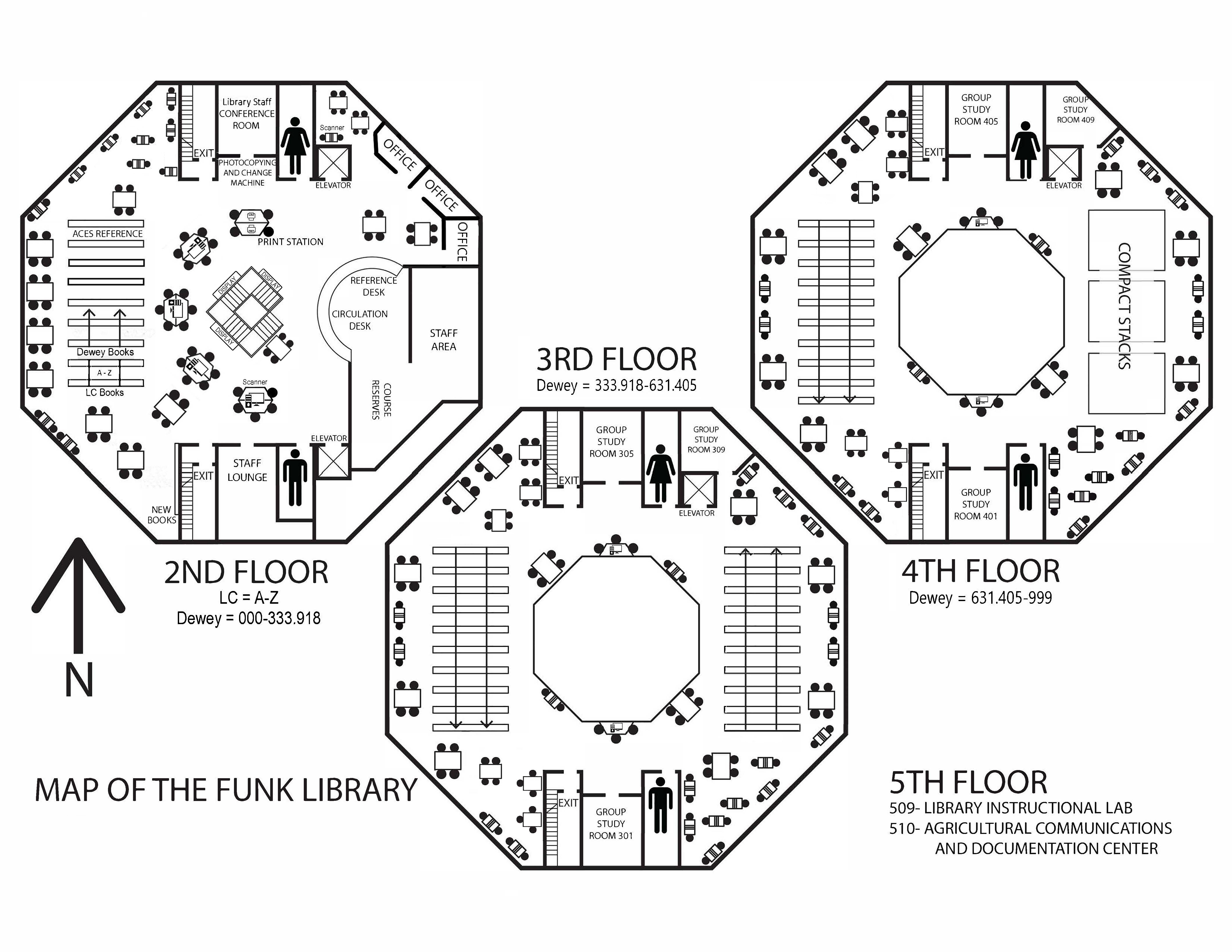
Do you have a sabbatical or job leave at hand?  Are you working on a thesis, dissertation or research project? Do you simply want to refresh yourself, professionally, in this field? If so, consider spending time with us here at the University of Illinois.  The Agricultural Communications Documentation Center is nicely equipped to make your time productive and relaxing.

  • The Center is located in a new library with wireless throughout
  • Away from library traffic, it is an ideal setting for peace and quiet
  • It offers large work areas with desk or table space
  • As a guest of the Center, you can review a wide array of documents easily
  • Our Center staff will be delighted to help you search for information
  • You have access to the largest public university library in the nation and exceptional libraries for communications and agricultural, consumer and environmental sciences

Let us know by return e-note if you are interested in discussing possibilities.


Communicator activities approaching

June 21-23, 2007
“Fiesta del Caballo.”  Seminar of American Horse Publications (AHP) in Albuquerque, New Mexico.
Information: ahorsepubs@aol.com

July 2-5, 2007
“Environmental and rural sustainability through ICT.”  Joint conference of the European Federation of IT [Information Technology] in Agriculture (EFITA) and the World Congress on Computers in Agriculture (WCCA) at Glasgow Caledonian University, Glasgow, Scotland.
Information:  www.efitaglasgow.org

July 28-August 1, 2007
“Writing, photography, design: the AMS trifecta.”  Agricultural Media Summit in Louisville, Kentucky.  Organized jointly by American Agricultural Editors’ Association (AAEA), Agri Council of American Business Media (ABM), Agricultural Relations Council (ARC) and Livestock Publications Council (LPC).
Information:  www.agmediasummit.com


What makes news in the country town.

We close this issue with an observation by Wilbert Lee Anderson in his 1906 book, The country town: a study of rural evolution:

“There is no news value perhaps, no literary or artistic value in, the wholesome averages of life.”

Literary and artistic values aside, we have observed that the “wholesome averages” of local life have always held news value for residents in towns of all types and sizes.


Do you have thoughts, examples or suggestions related to any topics featured in this issue? 

Please send them to us by return e-note.
Get in touch with us:

  • When you cannot locate information you need about agricultural and rural communicating.
  • When you see in this collection interesting items you cannot find, locally or online. Tell us the titles and/or document numbers.  We will help you gain access.

And please suggest (or send) agricultural communications documents we might add to this unique collection.  We welcome them in hard copy (sent to Ag Com Documentation Center, 510 LIAC, 1101 S. Goodwin Avenue, Urbana, IL 61801) or electronic form at docctr@library.uiuc.edu

Best regards and good searching.

June 2007

ACDC News – Issue 07-10

A dozen agricultural information issues challenging agricultural journalists now.

That title introduced a feature article we prepared last month for the International Federation of Agricultural Journalists (IFAJ).  The 12 professional issues caught our attention through documents we are adding to the ACDC collection. All have global features and apply across national boundaries.

You can identify these issues and view sample documents in the article posted on the IFAJ web site.  Notice how some important agricultural information issues may operate beneath the surface of the day-to-day topics we address, skills we apply and tools we use.

Title:  A dozen agricultural information issues
Posted at:  http://www.ifaj.org/news/agricultural_information_issues.htm


U.S. news media “apathetic” and “clueless” about rural life and issues.

Network television coverage of rural issues and perspectives dropped 23 percent between 2002 and 2004, according to an analysis of press coverage during that period of presidential election campaigning. The Center for Media and Public Affairs identified the decline during an examination of 529 broadcast and print stories.

“Much of the press is apathetic toward America’s heartland and clueless about the rural way of life,” reported the Washington Times in summarizing the study.  Newspapers and magazines carried more rural-themed stories during 2004 than during 2002.  However, farming and farm legislation “barely registered on media radar. …Instead, coverage was fixated on urban sprawl and zoning issues.”

Title:  Press willfully ignorant of U. S. rural life
Posted at http://washingtontimes.com/national/20050410-115627-1198r.htm

You can also hear a six-minute interview about findings of this study. National Public Radio aired the segment during April 2005: http://www.npr.org/templates/story/story.php?storyid=4585863


The future of farm e-commerce:  nearing a tipping point? 

A 2006 article in the Journal of the American Society of Farm Managers and Rural Appraisers examined factors that influence how farm markets form on the Internet.  It also identified some Internet sites U. S. farmers are using for e-commerce transactions.  Author Marvin Batte observed that the number of such farmers is small, but growing.

“We may be nearing a tipping point, where there is an avalanche both of farmers and farm merchants using the market and small firms offering support services.”

Title:  Shopping at the farm office
Posted at http://www.asfmra.org/documents/252_batte.pdf


An irreverent view of media convergence.

“No matter how closely and carefully I look at His Royal Convergence Highness, I still get the impression that his clothing leaves something to be desired.”  Douglas Starr, professor of agricultural journalism at Texas A&M University, introduced his article in the Convergence Newsletter with that observation.  He then proceeded to “de-clothe” His Highness.

  • “In the first place, the only things about convergence that are new are some terms and the fact that duties once the prerogative of the News Editor and the Photographer and techniques used in newspapers and magazines now are relegated to the News Reporter.”
  • “Then, of course, the News Reporter writes the broadcast version of the story and prepares the Teleprompter version.  What a salary today’s News Reporter must draw.”
  • “It all seems to me that the new equipment is just that, new equipment.  When Gutenberg developed movable type, nobody called for new ways to write.”
  • “Framing, which has terribly undesirable connotations, is a bugaboo tacked onto news stories, as though the News Reporter has time to decide in what frame the story will be cast.”

The Convergence Newsletter editor invited comments from readers, including those accustomed to cheerleading for convergence.  “Perhaps, as Douglas Starr…hints below, convergence will continue to be old-hat, simply the process of renaming old concepts and job titles that have been in the profession for years.”

Title:  A dispatch from the convergence trenches
Posted at http://www.jour.sc.edu/news/convergence/v3no7.html


Farmers not farmers any more.

“I’m not sure those farmers of the future are going to call themselves farmers,” Gail Keck observed in a recent issue of Prairie Farmer.

“As farming becomes more specialized, people who work in agriculture seem to want job titles that reflect their expertise or describe their duties,” she said.  She said she has business cards from farmers with titles such as:

  • Grain marketing specialist
  • GPS data manager
  • Herdsman
  • Machinery maintenance and operations supervisor

“Many commodity organizations have even abandoned the word.  They’re nearly all ‘producers’ or ‘growers’.”  Keck wonders why the title “farmer” doesn’t seem sufficiently professional.

Title:    Where have all the real farmers gone?


Communicator activities approaching

June 15-19, 2007
“A double creature feature.”  ACE/NETC joint conference of the Association for Communication Excellence in Agriculture, Natural Resources, and Life and Human Sciences (ACE) and the National Extension Technology Conference (NETC) in Albuquerque, New Mexico.
Information:  http://acenetc2007.nmsu.edu

June 21-23, 2007
“Fiesta del Caballo.”  Seminar of American Horse Publications (AHP) in Albuquerque, New Mexico.
Information: ahorsepubs@aol.com

July 2-5, 2007
“Environmental and rural sustainability through ICT.”  Joint conference of the European Federation of IT [Information Technology] in Agriculture (EFITA) and the World Congress on Computers in Agriculture (WCCA) at Glasgow Caledonian University, Glasgow, Scotland.
Information:  www.efitaglasgow.org

July 28-August 1, 2007
“Writing, photography, design: the AMS trifecta.”  Agricultural Media Summit in Louisville, Kentucky.  Organized jointly by American Agricultural Editors’ Association (AAEA), Agri Council of American Business Media (ABM), Agricultural Relations Council (ARC) and Livestock Publications Council (LPC).
Information:  www.agmediasummit.com


Ahh, the warm-season fun.

We close this issue of ACDC News with several more computer terms we have seen roaming the Web with a touch of rural flavor.  These feature some hot-weather pleasures and hospitalities:

Modem: What you did to the hay fields
Software:  Those darned plastic forks and knives at picnics
Micro chip:  What’s in the bottom of the munchie bag


Do you have thoughts, examples or suggestions related to any topics featured in this issue? 

Please send them to us by return e-note.
Get in touch with us:

  • When you cannot locate information you need about agricultural and rural communicating.
  • When you see in this collection interesting items you cannot find, locally or online. Tell us the titles and/or document numbers.  We will help you gain access.

And please suggest (or send) agricultural communications documents we might add to this unique collection.  We welcome them in hard copy (sent to Ag Com Documentation Center, 510 LIAC, 1101 S. Goodwin Avenue, Urbana, IL 61801) or electronic form at docctr@library.uiuc.edu

Best regards and good searching.

May 2007

ACDC News – Issue 07-09

Creative outhouse – a new category of agri-marketing communications.

“We have nothing against traditional media – but we plan to position ourselves for the migration to experiential marketing.” Gerard Estella of a creative and design firm in Iowa offered that explanation in a recent release published by Agri Marketing.  He was referring to a unique combination of services – events, entertainment and emotion – provided by North 40, Cedar Rapids.

“So much marketing and creative work is done inhouse, we decided to create a new category: the creative outhouse.”  He added that you have to have a sense of humor to be in a creative business.

Title:  Dick Damrow acquires equity interest in creative service firm
Posted at: http://www.agrimarketing.com/show_story.php?id=44280


Facing a real risk of information overload.

The agriculture and food industry faces a real risk of information overload in the information age.  So reported Wim Verbeke in an article published in the European Review of Agricultural Economics.  An analysis of case studies led Verbeke to observe:

“It emerges that consumer needs for information cannot be taken for granted.  The provision of ever more and too detailed information entails a risk of information overload, resulting in consumer indifference or loss of confidence.”

The author concluded that “the recipient population needs to be well understood, segmented, identified and targeted.” That conclusion closely matches what professional communicators work hard to encourage.

Title:  Agriculture and the food industry in the information age


Thanks to Professor Delmar Hatesohl

For contributing more than 130 additional documents to the Agricultural Communications Documentation Center from his personal collection.  These materials come from one of the most respected agricultural journalism educators in the U. S., and beyond.  Now retired, Professor Hatesohl served with distinction on the agricultural journalism faculty at the University of Missouri, Columbia.

We will be processing his materials during the months ahead and alerting you to some of them through ACDC News. They range broadly across people, skills, history, issues and trends in this field of interest.  And they add to his valuable legacy of teaching, advising, research and service.


Even when bird flu threatens, it is not enough just to tell people what to do.

Experiences from Cambodia are underscoring this insight that communicators have known for a long time.  Evidence appeared in a research report published in Emerging Infectious Diseases.  Researchers surveyed knowledge, attitudes and practices among Cambodian villagers in two provinces judged to be at high risk for H5N1 flu. Among the findings:

  • 72 percent understood that avian flu is a fatal disease can be transmitted to humans.
  • 67 percent thought it was unsafe to touch sick or dead poultry with their bare hands – but 75 percent acknowledged having done so.
  • 70 percent knew it was not safe to eat wild birds – but 45 percent ate poultry that had died from illness and 33 percent ate wild birds.

Researchers offered suggestions for addressing this mismatch.

Title:  Avian flu prevention puzzle
Posted at: www.cidrap.umn.edu/cidrap/content/influenza/avianflu/news/jan1107comply.html


“Farm fresh” helping debase the English language.

We recently added to the ACDC collection a marketing research consultant’s argument that use of such phrases to promote

food products is more than harmless nonsense.  Writing in Marketing News, Thomas Semon said the phrase “farm fresh” is part of a long-established practice of advertisers to use language that doesn’t really mean what it says but sounds good, and is not specific enough to be clearly deceptive.

“It is a pernicious practice in that it teaches people over the long run to ignore or discount what language communicates.”

Title: Watch language when conveying ad message


Communicator activities approaching

May 20-24, 2007
“Internationalizing with cultural leadership.”  Conference of the Association for International Agricultural and Extension Education (AIAEE) in Polson, Montana.
Information:  www.aiaee.org

June 2-5, 2007
“Communicators unite!”  Institute of the Cooperative Communicators Association (CCA) in Williamsburg, Virginia.
Information:  www.communicators.coop

June 15-19, 2007
“A double creature feature.”  ACE/NETC joint conference of the Association for Communication Excellence in Agriculture, Natural Resources, and Life and Human Sciences (ACE) and the National Extension Technology Conference (NETC) in Albuquerque, New Mexico.
Information:  http://acenetc2007.nmsu.edu

June 21-23, 2007
“Fiesta del Caballo.”  Seminar of American Horse Publications (AHP) in Albuquerque, New Mexico.
Information: ahorsepubs@aol.com

July 2-5, 2007
“Environmental and rural sustainability through ICT.”  Joint conference of the European Federation of IT [Information Technology] in Agriculture (EFITA) and the World Congress on Computers in Agriculture (WCCA) at Glasgow Caledonian University, Glasgow, Scotland.
Information:  www.efitaglasgow.org

July 28-August 1, 2007
“Writing, photography, design: the AMS trifecta.”  Agricultural Media Summit in Louisville, Kentucky.  Sponsored jointly by American Agricultural Editors’ Association (AAEA), Agri Council of American Business Media (ABM) and Livestock Publications Council (LPC).
Information:  www.agmediasummit.com


“Destroyed my career as a livestock photographer.” 

Writing in a recent issue of Farm World, columnist Lee Pitts exposed his foibles and downfalls in trying to photograph livestock.  If you can recall a few slip-ups of your own, you may appreciate his story about one “photo finish” that “exposed my shortcomings and destroyed my career as a livestock photographer.”  The situation involved a winner’s circle photo after a mule match race.

“As I painfully recall, in the photograph the mule’s owner was invisible, the jockey was picking his nose, the mule was relieving himself, eating daisies from the blanket of flowers on his back, had one ear forward and one back and, I swear, was winking at me.”

Unfortunately, the author did not provide a copy of that photo for us to share with you.  However, let us know by return e-note if you would like to read his column.

Title:  Farm animal photography challenging


Please get in touch with us when you see in this collection interesting items you cannot find, locally or online.

Tell us the titles and/or document numbers.  We will help you gain access.
Best regards and good searching.

Please pass along your reactions, questions, suggestions and ideas for the Agricultural Communications Documentation Center.  Feel free to invite our help as you search for information.  And please suggest (or send) agricultural communications documents we might add to this unique collection.  We welcome them in hard copy (sent to Ag Com Documentation Center, 510 LIAC, 1101 S. Goodwin Avenue, Urbana, IL 61801) or electronic form at docctr@library.uiuc.edu

May 2007

ACDC News – Issue 07-08

Editing out the jargon.

Canadian agricultural journalist John Greig has offered helpful ideas for editing out jargon and creating clarity in agricultural journalism.  An editor of magazines and newspapers for Ontario Farmer Publications, he noted:

“Finding a balance between jargon, industry-speak and the clarity needed for a diverse readership is key.”

His recent feature offered eight tips for doing so. You will find them on the International Federation of Agricultural Journalists (IFAJ) web site.
Posted at http://www.ifaj.org/news/editing_out_jargon.htm


Connecting nonformal and formal farmer education more closely. 

Extension and the formal Vocational Education and Training system have developed separately as vital parts of Australia’s education and training for agriculture.  However, authors of a recent study said they feel “there is reason to believe that better alignment of the two would improve outcomes from investment in training, and improve rural capacity building.”  

Sue Kilpatrick and Pat Millar offered four recommendations for coordinating training efforts to stretch budgets, strengthen collaboration and help farmers identify appropriate learning pathways for their needs.

Title:  Aligning the extension and vocational, education and training sectors
Posted at: http://www.rirdc.gov.au/reports/HCC/06-125.pdf


Five reasons farmers prefer to seek information rather than be trained.

An article we have added from the Journal of Agricultural Education and Extension described five reasons they identified in studies of Australian farmer preferences:

  • Preference for independence
  • Familiarity with a highly contextual learning mode
  • Lack of confidence in working in training settings
  • Preference for information from known sources
  • Fear of being exposed to new knowledge and skills

“We recommend that farmers be in control of their training and be encouraged to learn within a wider learning community which facilitates participative research and joint inquiry,” the researchers concluded.

Title:  Information vs. training
Posted at http://library.wur.nl/ejae/v5n1a.html#v5n1a1


“If we label it, will they care?”

Will informative labeling of genetically modified (GM) foods lead to major shifts in buying patterns?  An experimental study in Canada found minimal effects of GM labeling, overall.  However, researcher Louise A. Heslop, reporting in the Journal of Consumer Policy, found that reactions to GM-labeled products varied substantially in terms of:

  • differing levels of consumer activism
  • perceived benefits of genetic engineering
  • interest in novel foods with consumer benefits.

Title:  If we label it, will they care?


“Farmer Frank” – 2007 Best of (Agri)Television Photojournalism.

An agricultural production has earned first place in the 2007 Best of Television Photojournalism awards program sponsored by Poynter Online.  It is an endearing news feature entitled “Farmer Frank” by Jonathan Malat of Station KARE, Minneapolis, Minnesota.

You can see it online (4 minutes 15 seconds) at:
http://www.communicationsmgp.com/projects/1296/newsfeature.asp


A critical view of talking animals.

An article in the Journal of Communication Inquiry critiqued some techniques being used by the farm and food industry to communicate with consumers.  Specifically, author Cathy B. Glenn examined the functions of speaking (“virtual”) animals used in advertisements. Among the examples cited:  Charlie Tuna, Foster Farms chickens and a “Happy Cows” campaign used by the California Milk Advisory Board.

Title:  Constructing consumables and consent: a critical analysis of factory farm industry discourse


Pursuing the sistimatika spirit for a bright rural future.

In these days of digital and systems thinking it comes as a surprise to encounter a Greek concept of more human persuasion.  We found it in a Journal of Agricultural Education and Extension article about experiences of growers of organic olives in Western Crete.  The concept of sistimatika consists of:

  • knowledge about what to do, which is made up of a
  • clear vision and
  • technical knowledge about how to organize the work,
  • hard work,
  • love, and finally
  • an ability and desire to search for and learn whatever may be needed.

Authors noted that “the aspects of love and learning capacity are usually unacknowledged in Western conceptions of development strategies informed by a so-called systems approach, but are, however, essential to arrive at what is headed for.”

Title:  Do it sistimatika
Posted at:  http://library.wur.nl/ejae/v5n3a.html#5n3a1


Communicator activities approaching

May 20-24, 2007
“Internationalizing with cultural leadership.”  Conference of the Association for International Agricultural and Extension Education (AIAEE) in Polson, Montana.
Information:  www.aiaee.org

June 2-5, 2007
“Communicators unite!”  Institute of the Cooperative Communicators Association (CCA) in Williamsburg, Virginia.
Information:  www.communicators.coop

June 15-19, 2007
“A double creature feature.”  ACE/NETC joint conference of the Association for Communication Excellence in Agriculture, Natural Resources, and Life and Human Sciences (ACE) and the National Extension Technology Conference (NETC) in Albuquerque, New Mexico.
Information:  http://acenetc2007.nmsu.edu

June 21-23, 2007
“Fiesta del Caballo.”  Seminar of American Horse Publications in Albuquerque, New Mexico.
Information: ahorsepubs@aol.com

July 2-5, 2007
“Environmental and rural sustainability through ICT.”  Joint conference of the European Federation of IT in Agriculture (IFITA) and the World Congress on Computers in Agriculture (WCCA) at Glasgow Caledonian University, Glasgow, Scotland.
Information:  www.efitaglasgow.org


The taste of hot-weather fun.

We close this issue of ACDC News with a morsel offered by E. W. Howe in Country town sayings (1911):

“Put cream and sugar on a fly, and it tastes very much like a black raspberry.”


Please get in touch with us when you see in this collection interesting items you cannot find, locally or online.

Tell us the titles and/or document numbers.  We will help you gain access.
Best regards and good searching.

Please pass along your reactions, questions, suggestions and ideas for the Agricultural Communications Documentation Center.  Feel free to invite our help as you search for information.  And please suggest (or send) agricultural communications documents we might add to this unique collection.  We welcome them in hard copy (sent to Ag Com Documentation Center, 510 LIAC, 1101 S. Goodwin Avenue, Urbana, IL 61801) or electronic form at docctr@library.uiuc.edu

April 2007

ACDC News – Issue 07-07

No more market reports on this farm broadcast service.

Effective February 12, the Ontario AgRadio Network stopped presenting farm market reports.  President Dennis Guy explained in an article by Frances Anderson in Ontario Farmer: “We’re moving away from agri-business and putting the culture back in agriculture.”

The article, reprinted in The Farm Journalist, explained that programming of the network will focus on four themes: food crops, livestock, technology and finance, and health (food safety) and environmental issues.  Ontario has 75,000 small farm families that can grow something they’re proud of, Guy explained.  They derive part of their income from their properties and have family incomes to afford to buy what they need for their farms. This kind of programming interests consumers as well as small farmers, he noted.

Title:  AgRadio moving to small-farm programming
Posted at http://www.cfwf.ca/farmj/FJ_Jan07.pdf


How consumers respond to information on food labels.

We have added to the ACDC collection some reports of research about this subject from the United Kingdom.  The Food Standards Agency identified several insights about consumers’ response to marketing terms used in food labeling.

Some respondents claimed they would choose between similar food products based on these terms: quality, finest and homemade. However, other pieces of information on the label were cited as more influential.

  • Nearly one-third of the respondents felt that the brand was the most important piece of information when making a purchase decision.
  • One-fourth felt that information about ingredients was most important.
  • Only 6 percent claimed that the product descriptor (such as natural, fresh, pure) was most important.

Title:  Consumer research on marketing terms
Posted at: http://www.foodstandards.gov.uk/foodlabelling/researchandreports/labelresearch0106 


“The big lie about our dirt-cheap food supply”

Writing in Meatingplace.com, Dan Murphy recently took to task “one of the most enduring truisms repeated religiously by media” about how affordable food is for the average American family.  His review of the arithmetic led him to conclude the USDA claims that Americans spend just under 10 percent of their disposable income on food are “preposterous.”

Agricultural journalists and communicators may find interest in the estimates he calculates and the questions he raises.

Title: The big lie about our dirt-cheap food supply
Archived February 2, 2007, at http://archives.foodsafetynetwork.ca/fsnet-archives.htm


Echoes from 40 years ago.

Dan Murphy’s concern about touting cheap food reminds us of thoughts expressed years ago by Frank Neu, public relations director of the American Dairy Association.  Speaking at a 1966 rural media conference at the University of Missouri, Neu took aim at both the calculations and the messages being conveyed.

“Under the guise of public relations, agriculture gets involved in what to me is a very questionable annual affair.  I refer to the “Food is a Bargain’ campaign.  While I’m sure this campaign is designed as an effort to divert attention of consumer movement groups away from investigating food costs, this is a rather ridiculous way to do such a job.

He suggested several approaches that he considered stronger for relating to consumers.

Title:  What you can do about agriculture’s public relations


Thanks to the Farm Foundation

For contributing two new reports that hold interest for agricultural journalists and communicators.  Mary Thompson, communications director for the Foundation, recently provided:

The 2007 farm bill: U. S. producer preferences for agricultural, food and public policy.  This 64-page report summarizes views of more than 15,000 producers in 27 states about policy goals for commodity programs, conservation and environment, trade, food system (e.g., labeling, traceability, BSE testing), rural development and agricultural credit, public lands and labor.
Posted at:  www.farmfoundation.org/projects/06-02ProducerSurvey.htm

The future of animal agriculture in North America.

This 153-page report examines major segments of the animal agriculture industry – beef, pork, dairy and poultry – in Canada, Mexico and the U. S.  More than 150 leaders of industry, government agencies, universities and other institutions provided input for it.  Communicators can use it to identify high-priority information needs to be addressed.  Researchers can identify some promising areas for agricultural communications research.
Posted at:  www.farmfoundation.org/projects/04-32Reportrelease.htm


Why didn’t that Spanish-language version produce great results?

Oh, the perils of translating copy across languages. K. D. Bryant Graham of Jackson Electric Membership Corporation got a surprise while reworking an outdated, bland, monochromatic brochure about heat pumps.  Reporting in a recent issue of Cooperative Communicators Association (CCA) News, Graham described this lesson learned while updating the Spanish version of the brochure:

“In previous communication, the word ‘heat pump’ had been accidentally translated into ‘bomb’ in Spanish.”

Title: Overhauling a brochure


More global than we had realized.

A review of subject terms in the ACDC thesaurus is giving us a better view of the geographic interests this collection covers.  We have tended, during recent years, to say the collection contains agricultural communications documents involving more than 100 countries.

That number is too low. Today the collection represents agriculture-related communications in 170 countries.


Communicator activities approaching

May 1-3, 2007
Eighteenth annual meeting of the Turf and Ornamental Communicators Association (TOCA) in Savannah, Georgia.
Information: www.toca.org

May 20-24, 2007
“Internationalizing with cultural leadership.”  Conference of the Association for International Agricultural and Extension Education (AIAEE) in Polson, Montana.
Information:  www.aiaee.org

June 2-5, 2007
“Communicators unite!”  Institute of the Cooperative Communicators Association (CCA) in Williamsburg, Virginia.
Information:  www.communicators.coop

June 15-19, 2007
“A double creature feature.”  ACE/NETC joint conference of the Association for Communication Excellence in Agriculture, Natural Resources, and Life and Human Sciences (ACE) and the National Extension Technology Conference (NETC) in Albuquerque, New Mexico.
Information:  http://acenetc2007.nmsu.edu


More rural computer language.

We close this issue of ACDC News with several more computer terms we have seen roaming the Web with a touch of rural flavor.  These feature pets and pests around the place:

Laptop:  Where the kitty sleeps
Mouse:  What eats the grain in the barn
Mouse pad:  Hippie talk for the rat hole
Screen:  What to shut when it’s black fly season


Please get in touch with us when you see in this collection interesting items you cannot find, locally or online.

Tell us the titles and/or document numbers.  We will help you gain access.
Best regards and good searching.

Please pass along your reactions, questions, suggestions and ideas for the Agricultural Communications Documentation Center.  Feel free to invite our help as you search for information.  And please suggest (or send) agricultural communications documents we might add to this unique collection.  We welcome them in hard copy (sent to Ag Com Documentation Center, 510 LIAC, 1101 S. Goodwin Avenue, Urbana, IL 61801) or electronic form at docctr@library.uiuc.edu

April 2007

ACDC News – Issue 07-06

More news, please, about which way the wind is blowing.

Writing in the Boston Globe, Monica Collins recently admonished television weather reporters to get beyond “The weather is downright weird.”

By design, the weathercast is a temperate zone, she said – a “bastion of prognosticative bromides without any controversy.”  She urged television weather reporters to go further, to address worries about climate change and global warming.  “Education about global warming need not be an anomaly for a TV forecaster.  It should become part of the routine, when the weather is strange…”

Agricultural reporters, as sources of vital weather information for producers and others, may find interest in this commentary.

Title:  When the weatherman plays dumb
Posted at
http://www.boston.com/news/globe/editorial_opinion/oped/articles/2007/01/09/when_the_weatherman_plays_dumb/


Topics ranging from golden rice to agroterrorism

These got the attention of agricultural communications researchers at the Southern Association of Agricultural Scientists (SAAS) meeting last month in Mobile, Alabama.  Here are the topics addressed and researchers involved in these papers we are adding to the ACDC collection:

  • “Could it really happen?  Beef producers’ risk perceptions of an agroterrorism event occurring in Oklahoma” by Marcus A. Ashlock, D. Dwayne Cartmell II and James G. Leising
  • “Centralizing extension: key leader input concerning a comprehensive agricultural and natural resources awareness website” by Roslynn G. Brain and Nicholas E. Fuhrman
  • “Perceptions of influence on college choice by students enrolled in a college of agricultural sciences and natural resources” by Cathy D. Herren, D. Dwayne Cartmell II and J. Tanner Robertson
  • “The newest white meat: selected consumers’ attitudes and taste perceptions of “all-natural pork” by Katie Chodil, Courtney Meyers, Tracy Irani and Ricky Telg
  • “Outline processor markup language (OPML) as a news reporting and organizational tool” by Blair Fannin
  • “Putting a good foot forward online: working with industry professionals to analyze web site usability” by Emily Rhoades and Katie Chodil
  • “Editor preferences for the use of scientific information in livestock publications” by Traci L. Naile and D. Dwayne Cartmell II
  • “ACE members’ spheres of influence” by Edith Chenault
  • “Evaluation of the professional development status of the Agricultural Media Summit-sponsoring organizations’ active members” by Lindsay M. West, Cindy Akers, Chad Davis, David Doerfert, Steve Fraze and Scott Burris
  • “Finding golden rice in the GMO arena: the framing of golden rice and agricultural biotechnology in Philippine newspapers” by Shalom Mula

Posted at: http://agnews.tamu.edu/saas/saasproceedings.html


Finding hidden resources on Google.

Joe Zumalt of the Center offered some Googling tips for agricultural journalists in a recent issue of IFAJ News.  You can review them on the web site of the International Federation of Agricultural Journalists.

Title:  Hidden resources agricultural journalists can find at Google
Posted at: http://www.ifaj.org/newsletter/jan2006/PD_Google.pdf


View photos of the displaced.

We have added to the ACDC collection a feature from Fairness and Accuracy in Reporting (FAIR) about the power, limits and untapped possibilities of photojournalism.

“With all the emphasis on new media, photography has never lost the power to move us,” observed author Norman Solomon.  He pointed to the work of photographer Sebastião Salgado-Amazonas, including a photo essay, “Displaced people of the world,” that appeared in Time magazine.  You can use the live links below to read the article and view those photos, including some that involve rural people and rural social issues.

Title:  Power and limits of photojournalism
Article posted at: http://www.fair.org/index.php?page=2072
Photos posted at: http://www.time.com/time/nation/article/0,8599,41344,00.html


Communicator activities approaching

April 15-17, 2007
Annual meeting of North American Agricultural Journalists (NAAJ) in Washington, D.C.  Information: www.naaj.net/meeting.html

April 30-May 2, 2007
“Washington watch.”  National Association of Farm Broadcasting (NAFB) in Washington, D.C.
Information:  www.nafb.com

May 1-3, 2007
Eighteenth annual meeting of the Turf and Ornamental Communicators Association (TOCA) in Savannah, Georgia.
Information: www.toca.org

May 20-24, 2007
“Internationalizing with cultural leadership.”  Conference of the Association for International Agricultural and Extension Education (AIAEE) in Polson, Montana.
Information:  www.aiaee.org

June 2-5, 2007
“Communicators unite!”  Institute of the Cooperative Communicators Association (CCA) in Williamsburg, Virginia.
Information:  www.communicators.coop

June 15-19, 2007
“A double creature feature.”  ACE/NETC joint conference of the Association for Communication Excellence in Agriculture, Natural Resources, and Life and Human Sciences (ACE) and the National Extension Technology Conference (NETC) in Albuquerque, New Mexico.
Information:  http://acenetc2007.nmsu.edu


Oh, for a farm of my own.

We close this issue of ACDC News with an observation that caught our eye in a 1906 issue of Agricultural Advertising magazine.  Over these years, has much changed in the minds of those who work in agricultural journalism and communications?

“It is the hope of every advertiser of farm implements that some day he may have a farm of his own upon which to use them.”


Please get in touch with us when you see in this collection interesting items you cannot find, locally or online.

Tell us the titles and/or document numbers.  We will help you gain access.
Best regards and good searching.

Please pass along your reactions, questions, suggestions and ideas for the Agricultural Communications Documentation Center.  Feel free to invite our help as you search for information.  And please suggest (or send) agricultural communications documents we might add to this unique collection.  We welcome them in hard copy (sent to Ag Com Documentation Center, 510 LIAC, 1101 S. Goodwin Avenue, Urbana, IL 61801) or electronic form at docctr@library.uiuc.edu

March 2007

ACDC News – Issue 07-05

What’s a combine?

Listeners to the winning entry in the 2006 New Holland Oscars in Agriculture award program heard that question stump a group of urban students. Marlin Bohling of the Southern Farm Network got a wide range of answers to it – and several other farm-related questions – from students he interviewed in an urban North Carolina high school.

Bohling reminded his radio listeners that in the future young persons such as these may be making public policy about food and agriculture.  His brief feature demonstrated lots of need and opportunity for increased public understanding.

A recent issue of eChats from the National Association of Farm Broadcasting provides a live link to this award-winning feature at: http://www.nafb.com/nafbfiles/Jan07echats1.htm


Information wants to be free.

In a 2005 issue of the Glocal Times, a Swedish university librarian advanced a vigorous argument for open access to information on the Internet.

“The thought that information wants to be free is a serious one, grounded in great ethical and epistemological positions,” said Linda Karlsson of Malmö University, “and it has obvious implications in the areas of communication and development.”

Karlsson addressed two dimensions of a widening digital divide:  (1) initial access to the Internet and (2) content to which users have access, once online.  She also provided her rationale for open access and identified some sample initiatives.

Title:  Information wants to be free
Posted at http://webzone.k3.mah.se/projects/gt2/viewarticle.aspx?articleID=11&issueID=3


On the trials of low-power television service for rural areas.

The Federal Communications Commission created low-power broadcast television service 25 years ago.  LPTV was envisioned as a way to provide local and niche programming to rural Americans and others not served by existing broadcasters. However, the concept continues to languish.  We have added to the ACDC collection a case report from the Center for Public Integrity illustrating how and why.

Title:  Two hundred channels and nothing on
Posted at http://www.publicintegrity.org/telecom/report.aspx?aid=602#


When an agricultural advisory service went private.  A case report.

Last year agricultural information professionals in Africa heard what happened in a Benin community when a pest management advisory service for farmers was privatized.  In a conference paper Ismail Moumouni Moussa reported these results:

  • Opposition because farmers were accustomed to receiving free agricultural extension services.
  • Decrease in demand for information and services.
  • Inequitable access to information because its diffusion was limited to village observers and their close friends.
  • Change in relations between farmers and service providers by “altering the mutual trust environment.” 

Title: Impact of privatization of advisory services


Concerns about gatekeeper bias against rural development.

The Center recently identified a 1991 Journal of Extension article in which Don A. Dillman described the state colleges of agriculture and U. S. Department of Agriculture as biased against rural development.

According to Dillman, these gatekeeper institutions have not made rural development a priority in its right; “both seem too institutionalized in their commitment to agriculture to allow that to happen.”  He argued that agriculture should remain an important commitment.  However, “it should not serve as the implicit intellectual framework and explicit gatekeeper for all of rural development.”

Title:  Agricultural gatekeepers – real barrier to rural development
Posted at: http://www.joe.org/joe/1991spring/tp2.html


Consumers of food products looking for “trust marks.”

Recent research by ConAgra Foods suggested that U. S. consumers are increasingly looking for “seals of standards that they recognize and that they trust as a mark of quality food.”  A 2006 survey identified terms such as the following as signs of quality:  “heart-healthy,” “organic and kosher,” “0g trans fats,” “whole grains,” “low sodium,” “natural” and “dietary guidelines.”

Compared with results of a similar survey in 2005, four times as many respondents to the 2006 survey said they would consider buying products based on these marks.

Title:  Consumers seek “trust marks” as a sign of quality
Posted at http://www.foodqualitynews.com/news/printNewsBis.asp?id=67705


Communicator activities approaching

March 29, 2007
“The nuts and bolts of ag communication.”  Midwest regional design and writing workshop sponsored by Livestock Publications Council (LPC) and American Agricultural Editors’ Association (AAEA) in Des Moines, Iowa.
Information: dianej@flash.net

March 29-31, 2007
Winter meeting of the Agricultural Relations Council (ARC) in Corpus Christi, Texas.
Information:  www.agrelationscouncil.org

April 11-13, 2007
“Think big.”  2007 Agri-Marketing Conference (and 50th Anniversary observance) of the National Agri-Marketing Association (NAMA) in Dallas, Texas.
Information: www.nama.org/amc

April 15-17, 2007
Annual meeting of North American Agricultural Journalists (NAAJ) in Washington, D.C.  Information: www.naaj.net/meeting.html

May 1-3, 2007
Eighteenth annual meeting of the Turf and Ornamental Communicators Association (TOCA) in Savannah, Georgia.
Information: http://www.toca.org/


Yes, another “wretched writer” award.

We cannot resist looking again for wretched rural writing in the annual Bulwer-Lytton Fiction Contest.  The English Department at San Jose State University sponsors this whimsical literary competition that challenges entrants to compose the opening sentence to the worst of all possible novels.

Please pardon us for passing along a 2006 award-winning selection from the Western Novel category.  Samuel Goldstein of Los Angeles, California, won with this opening sentence:

“His mistake, Shut-eye McBlamaway reflected, was not in standing up to a gang of desperadoes and rustlers on the high country, but in standing up to a gang of desperadoes and rustlers who had just left the set of a Sergio Leone shoot, and were thus equipped with those guns that never run out of ammunition.”

You can see more of the worst from 2006 Bulwer-Lytton at:
http://www.sjsu.edu/depts/english/2006.htm


Please get in touch with us when you see in this collection interesting items you cannot find, locally or online.

Tell us the titles and/or document numbers.  We will help you gain access.
Best regards and good searching.

Please pass along your reactions, questions, suggestions and ideas for the Agricultural Communications Documentation Center.  Feel free to invite our help as you search for information.  And please suggest (or send) agricultural communications documents we might add to this unique collection.  We welcome them in hard copy (sent to Ag Com Documentation Center, 510 LIAC, 1101 S. Goodwin Avenue, Urbana, IL 61801) or electronic form at docctr@library.uiuc.edu

March 2007

ACDC News – Issue 07-04

Award-winning network of internet kiosks serves 3.5M farmers in India.

A recent news report about eChoupal helps stretch the mind of innovative rural communicators.  eChoupal is a network of more than 5,200 internet kiosks established by ITC, one of India’s largest exporters of agricultural commodities.  Using the kiosks in 31,000 villages, rural families can, in the local language:

  • Gather information about market prices and weather
  • Learn farm management techniques
  • Check input costs
  • Order farm supplies and sell farm products
  • Gather healthcare and educational information

This initiative has received several awards for innovative use of satellite communications, solar energy and other information technologies serving rural people.

Title:  Indian farmers gain from internet access
Web site:  http://www.echoupal.com


When media air VNRs and ANRs without disclosure.

Are you monitoring discussions about appropriate use of video news releases (VNRs) and audio news releases (ANRs), as used to convey information about food, agriculture and rural interests?  If so, you may find interest in this report added recently from the Center for Media and Democracy.  Please let us know (docctr@library.uiuc.edu) of other reports that come to your attention.

Title:  Video news releases: the ball’s in the FCC’s court
Posted at: http://www.prwatch.org/node/3790


How consumers respond to information on food labels.

We find useful reports of research about this subject from the United Kingdom.  The Food Standards Agency recently reported several insights it identified through research about consumers’ response to marketing terms used in food labeling.

Some respondents claimed they would choose between similar food products based on these terms: quality, finest and homemade. However, other pieces of information on the label were cited as more influential.

  • Nearly one-third of the respondents felt that the brand was the most important piece of information when making a purchase decision.
  • One-fourth felt that information about ingredients was most important.
  • Only 6 percent claimed that the product descriptor (such as natural, fresh, pure) was most important.

Title:  Consumer research on marketing terms
Posted at: http://www.foodstandards.gov.uk/foodlabelling/researchandreports/labelresearch0106


“What is the best way to get your message across to people?”

Geoffrey Moss, veteran communicator in New Zealand, tells us he usually asks that question when he runs workshops.  After discussion, he explains, participants realize there is no “best way” in a general sense.

Geoffrey recently contributed to the ACDC collection some informative books and tip sheets to help communicators choose appropriate messages and media.  They include:

He has led workshops involving more than 2,500 participants in many settings including Sri Lanka, Indonesia, Thailand, Vietnam, Bangladesh, Samoa and Singapore.  In Singapore he has run 31 workshops for Asian managers at the Singapore Institute of Management.

“The participants have taught me much,” he says.  “I have indeed been fortunate.”


Agriculture — rooted deeply in typographic history.

Printed newspapers trace back nearly 1,300 years in China, according to a macro history published in the Gazette: the International Journal for Communications Studies.  And, according to researcher S. A. Gunaratne, a treatise on agriculture (Nong Shu) contained the first description of movable type in the printing process.  That advancement took place in China during 1313.

Title:  Paper, printing and the printing press


Cultural history of some words we use often.

Thanks to Professor Steve Shenton for alerting us to a brief but fascinating cultural history of key words we use often.  It comes from Raymond Williams as a one-page appendix in his book, The country and the city, published by Oxford University Press in 1973.

Williams described the derivations and modern meanings of terms such as: country, city, suburb, rural, farm and pastoral.

Title:  Country and the city


Communicator activities approaching

March 29, 2007
“The nuts and bolts of ag communication.”  Midwest regional design and writing workshop sponsored by Livestock Publications Council (LPC) and American Agricultural Editors’ Association (AAEA) in Des Moines, Iowa.
Information: dianej@flash.net

March 29-31, 2007
Winter meeting of the Agricultural Relations Council (ARC) in Corpus Christi, Texas.
Information:  www.agrelationscouncil.org

April 11-13, 2007
“Think big.”  2007 Agri-Marketing Conference (and 50th Anniversary observance) of the National Agri-Marketing Association (NAMA) in Dallas, Texas.
Information: www.nama.org/amc

April 15-17, 2007
Annual meeting of North American Agricultural Journalists (NAAJ) in Washington, D.C.  Information: www.naaj.net/meeting.html

May 1-3, 2007
Eighteenth annual meeting of the Turf and Ornamental Communicators Association (TOCA) in Savannah, Georgia.
Information: www.toca.org


Here’s some ‘creep’y advice for communicators.

We close this issue of ACDC News with an expression that caught the ear of communicator Amy Keith McDonald during a 2006 meeting of the Agricultural Relations Council.  She later shared it on the ARC ACCESS Board Blog.

“Scope creep” – describes the inevitable changing parameters of a project as changes are made by a client or better (alternative) options are presented.

Advice for communicators:  “Scope creep can be good, but always keep communication between Clients and Agencies current, including cost change, timelines changes, etc.”
Posted at http://www.agrelationscouncil.org/blog.html


Please get in touch with us when you see in this collection interesting items you cannot find, locally or online.

Tell us the titles and/or document numbers.  We will help you gain access.
Best regards and good searching.

Please pass along your reactions, questions, suggestions and ideas for the Agricultural Communications Documentation Center.  Feel free to invite our help as you search for information.  And please suggest (or send) agricultural communications documents we might add to this unique collection.  We welcome them in hard copy (sent to Ag Com Documentation Center, 510 LIAC, 1101 S. Goodwin Avenue, Urbana, IL 61801) or electronic form at docctr@library.uiuc.edu

February 2007

ACDC News – Issue 07-03

“How the Swiss media report on farming issues.”

We appreciate receiving notice from Markus Rediger about an article of this title in a 2006 issue of AGRARForschung, the Journal of Swiss Agricultural Research.  Authors analyzed the frequency, depth and range of agricultural coverage in 586 newspaper articles and 55 television features during 2004.

“In general, the coverage consists of factual journalism such as news articles and reports,” according to the summary.  “Opinion-based journalism, such as comment or analysis, rarely features in the coverage.  …  The reporting across all media analyzed in the study can be described as ranging from balanced to positive in 2004.  However, judging from the scope and volume of coverage, topics selected and journalistic presentation, it may be concluded that media coverage of farming issues is somewhat superficial.”

Title:  How the Swiss media report on farming issues
Summary posted in English, German and French at: http://www.agrarforschung.ch/en/inh_det.php?id=1150


Some topics we helped ACDC users explore during 2006.

We always enjoy getting requests from professional communicators, students, researchers, teachers and others as they search for information about agriculture-related communications.  Here is a scattering of topics among the dozens we helped address during the past year:

  • When farmers establish web sites for direct marketing
  • How folk media can fit into today’s rural communications
  • Surveys about farmers’ use of media
  • Consumer information services offered by Extension
  • Rural-urban conflict in the 1920s and 1930s
  • How to enliven annual meetings of rural organizations
  • Information services for migrant farm workers
  • Generic pork advertising
  • Impact of environmental education on conservation practices
  • Ethical relations among agricultural reporters, publishers and advertisers
  • Contemporary mass media portrayals of farmers
  • Relationship agri-marketing
  • Crisis communication planning
  • Core competencies needed by professional agricultural communicators

Please call on us (docctr@library.uiuc.edu) whenever we can help you search.


How Europeans and Asians view risks of avian flu.

The Centers for Disease Control and Prevention, U. S. Department of Health and Human Services, reported this month the results of research conducted during late 2005.  Results are based on surveys among 3,436 residents living in five European countries and three East Asian areas.

You can see a report of findings at:
http://www.cdc.gov/eid/content/13/2/288.htm


Is information technology ready for the avian flu?

Not in the U. S., according to an article in a recent issue of Computerworld.  It cites findings of a survey by the Deloitte Center for Health Solutions during early December 2006.  Among 163 U. S. employers surveyed, most (68 percent) said their companies are very concerned about a flu pandemic.  However, only 52 percent said they have adequately planned to protect themselves from the effects of a flu pandemic.  Only 45 percent felt confident their companies are prepared to manage a flu pandemic outbreak should one occur.

“Ultimately, dealing with a pandemic is a problem that must be coordinated at the executive management level through a cross-functional team,” author Robert L. Mitchell concluded.  Information technology will not be the full solution.  “But it is part of the solution.  And in a true emergency, information systems might just be the glue that keeps employees in touch – and holds the organization together.”

Title:  Heads in the sand: IT isn’t ready for the bird flu
Posted at: http://www.computerworld.com/action/article.do?command=viewArticleBasic&articleId=277375


How public/private contracting for agricultural extension is working.

An international conference paper presented last year analyzed outcomes of such contract arrangements in the many countries using them.

Authors William Rivera and Gary Alex observed that contracting for extension is a positive development and a vital strategy for agricultural knowledge transfer.  However, “we stress that it should not be considered, and cannot be, an answer to unresolved management problems or the incapacities within an institution.  In short, despite its advantages and benefits, contracting is no panacea.”

Title:  Contracting for agricultural extension
Posted at http://www.aiaee.org/2006/Accepted/570.pdf


‘Raw is natural’ messages worry food technologists.

We recently added a report that aired concerns about a disconnect between public perception and the reality of food processing.  Speaking at a 2006 meeting of the Institute of Food Technologists, Dean Cliver noted:

“After we organize our safety efforts in more elegant ways, we’re still back to the idea that processing is important.  [But] the consuming public is being told that totally unprocessed foods are doing them good.”

Title:  Conflicting food messages may put consumers at risk
Archived June 27, 2006, at http://archives.foodsafetynetwork.ca/fsnet-archives.htm


Communicator activities approaching

 March 12-13, 2007
“Out of ideas for writing, photography and layout/design?” Midwest Regional Workshop of the Cooperative Communicators Association (CCA) in Louisville, Kentucky USA.
Information:  Tammy Simmons at tsimmons@kaec.org or 800-357-5232

March 29, 2007
“The nuts and bolts of ag communication.”  Midwest regional design and writing workshop sponsored by Livestock Publications Council (LPC) and American Agricultural Editors’ Association (AAEA) in Des Moines, Iowa USA.
Information: dianej@flash.net

March 29-31, 2007
Winter meeting of the Agricultural Relations Council (ARC) in Corpus Christi, Texas.
Information:  www.agrelationscouncil.org

April 11-13, 2007
“Think big.”  2007 Agri-Marketing Conference (and 50th Anniversary observance) of the National Agri-Marketing Association (NAMA) in Dallas, Texas.
Information: www.nama.org/amc

April 15-17, 2007
Annual meeting of North American Agricultural Journalists (NAAJ) in Washington, D.C.
Information: www.naaj.net/meeting.html


Hear the laughing dog. 

Yes, researchers are still busy trying to help us communicate with animals.  The 2007 edition of the Old Farmer’s Almanac alerted us to recent findings by animal behaviorist Patricia Simonet.  According to the report:

“When researchers played recordings of dog ‘laughter’ (a breathy exhalation made by pooches), barking and pacing canines at an animal shelter calmed down instantly.”
You can hear a brief sample of the “laughter” sound at: http://www.laughing-dog.org


Please get in touch with us when you see in this collection interesting items you cannot find, locally or online.

Tell us the titles and/or document numbers.  We will help you gain access.
Best regards and good searching.

Please pass along your reactions, questions, suggestions and ideas for the Agricultural Communications Documentation Center.  Feel free to invite our help as you search for information.  And please suggest (or send) agricultural communications documents we might add to this unique collection.  We welcome them in hard copy (sent to Ag Com Documentation Center, 510 LIAC, 1101 S. Goodwin Avenue, Urbana, IL 61801) or electronic form at docctr@library.uiuc.edu

February 2007