ACDC News – Issue 07-22

Surprising advice to researchers:  It is not important what is said.

We recently added a document in which Dr. Elke Scheurmann, University of Melbourne, offered that advice.  Speaking at a conference of the Cooperative Research Centres Association in Australia, she emphasized, “It is important what is heard.”  It begins with listening. Her presentation focused on ways in which researchers (including agricultural researchers) can improve their interactions with commercial companies.

Title:  Encouraging researchers to communicate in commercial terms
Posted at: http://www.crca.asn.au/activities/2005/conference/presentations/SchuermannElke-CommercialCommunication.pdf 


Looking at food labels – across 30 years.

The ACDC collection has reached a scale at which it can serve as a fascinating and valuable tracer of trends.  For example, recently we entered into the collection a 2007 report, “Food-labeling poll,” from the market research department of Consumer Reports.  For comparison, we pulled from our collection “Consumer attitudes toward food labeling” a report of research during 1977 by the U.S. Department of Agriculture.  The questions asked were not identical.  However, some revealing differences appear, in terms of what consumers find useful in labels.  For example:

  • In 1977, consumers rated these kinds of information most important in food labels and other shopping aids: dates on package, price, indication if frozen product thawed and uniform meat names. Food safety did not appear as an aspect of labeling.
  • In 2007, more than 85 percent of respondents agreed with statements calling for country-of-origin labeling of imported foods, label assurances that organic fish is free of or low in contaminants, permission for meat companies to label meat products as tested for mad cow disease, labeling meat and dairy products from cloned animals, and labeling milk from cows raised without synthetic bovine growth hormone.

Title:  Food-labeling poll
Posted at: www.greenerchoices.org/pdf/2007.41_labeling_poll_v._2.6_public_release.pdf

Title:  Consumer attitudes toward food labeling
Posted at: http://naldr.nal.usda.gov/nalweb/agricola_link.asp?accession=CAT80727842


Journalists paying undue reverence to scientific journals.

During a panel discussion at the 2007 World Congress of Science Journalists Pallab Ghosh, BBC, criticized journalists for letting themselves be “spoon-fed readymade copy” provided by scientific journals.  It makes them lazy, Ghosh argued, and allows a few powerful journals to dominate the media.  Other panelists defended the press release and embargo system used by some journals.  We have added to the ACDC collection a summary of the discussion.

Title: Embargoed “till when?”
Posted at http://wcsj2007.internetguruhosting.net/conference-program


A unique rural photograph earned recognition

In the 2003 Commonwealth Photographic Awards program of the Commonwealth Press Union. We came upon this creative image only recently. Photographer Binode Kumar Das captured it during the rehearsal for a silent play in a rural village of India.  It featured three boys and several visual elements that represented peace, new beginnings and a hopeful world.

The photo earned “Highly Commended” honors in the Asia category of this international recognition program. You can view it within the photo gallery at: www.cpu.org.uk/photo_2003_winners.html


“Survey shows farmers slow to embrace Internet.”

That headline in a September issue of the Reading Eagle (Pennsylvania) newspaper called attention to findings of a U. S. Department of Agriculture study among Pennsylvania farmers.

The report “showed that while 62 percent of Pennsylvania farms have access to a computer and 55 percent have access to the Internet, only 29 percent use computers for farm business.  In 2005, only 47 percent had access to the Internet and 27 percent were using computers for farm business.  At that time, 11 percent were purchasing inputs over the Internet and 7 percent were conducting agricultural marketing activities online.”

Title:  Survey shows farmers slow to embrace Internet


On food scares, recalls and consumer apathy in the United Kingdom.

“Public apathy has set in over the safety of the food supply due to the soaring number of scares and recalls.”  Results of a survey among adults during July 2007 led researchers to make that observation, as reported in Food Production Daily.

“Ironically, as the EU and UK regulatory and advisory authorities report soaring numbers of recall and safety reports in the last year, their effectiveness in terms of consumer safety seems to be diminishing as consumer apathy sets in.”

Title:  Companies need to regain public trust
Posted at www.foodproductiondaily.com/news/printNewsBis.asp?id=78472


Help build a glossary of terms related to e-agriculture.

One is being created and offered online from the Food and Agriculture Organization (FAO) of the United Nations.

“We have begun the glossary with e-agriculture related terms from several other glossaries,” according to the introduction.  “but the list is by no means complete.”  Organizers welcome additional terms and suggestions about existing terms.

Contact:  www.e-agriculture.org/145.html?&no_cache=1


Rural communicator activities approaching

February 3-4, 2008
Agricultural Communications Research Papers presented at the 2008 conference of the Southern Association of Agricultural Scientists in Dallas, Texas.
Information: http://agnews.tamu.edu/saas

February 13-15, 2008
“Experience ICT Africa.”  Continental information and communications technologies conference sponsored by the NEPAD Council (New Partnership for Africa’s Development) in Addis Ababa, Ethiopia.
Information: http://ictafrica.nepadcouncil.org

March 9-15, 2008
“Global entrepreneurship: the role of international agricultural and extension education.” Conference of the Association for International Agricultural and Extension Education (AIAEE) at E.A.R.T.H. University, Costa Rica.
Information: http://www.aiaee.org/conferences.html


Fighting the battle for open minds.

We close this issue of ACDC News with an observation from J. Frank Dobie in his book, Cow People:

“Intolerance lingers more steadily than tolerance progresses.”


Do you have thoughts, examples or suggestions related to any topics featured in this issue? 

Please send them to us by return e-note.
Get in touch with us:

  • When you cannot locate information you need about communications, as related to agriculture, food, natural resources and rural affairs in any part of the world.
  • When you see in this collection interesting items you cannot find, locally or online. Tell us the titles and/or document numbers.  We will help you gain access.

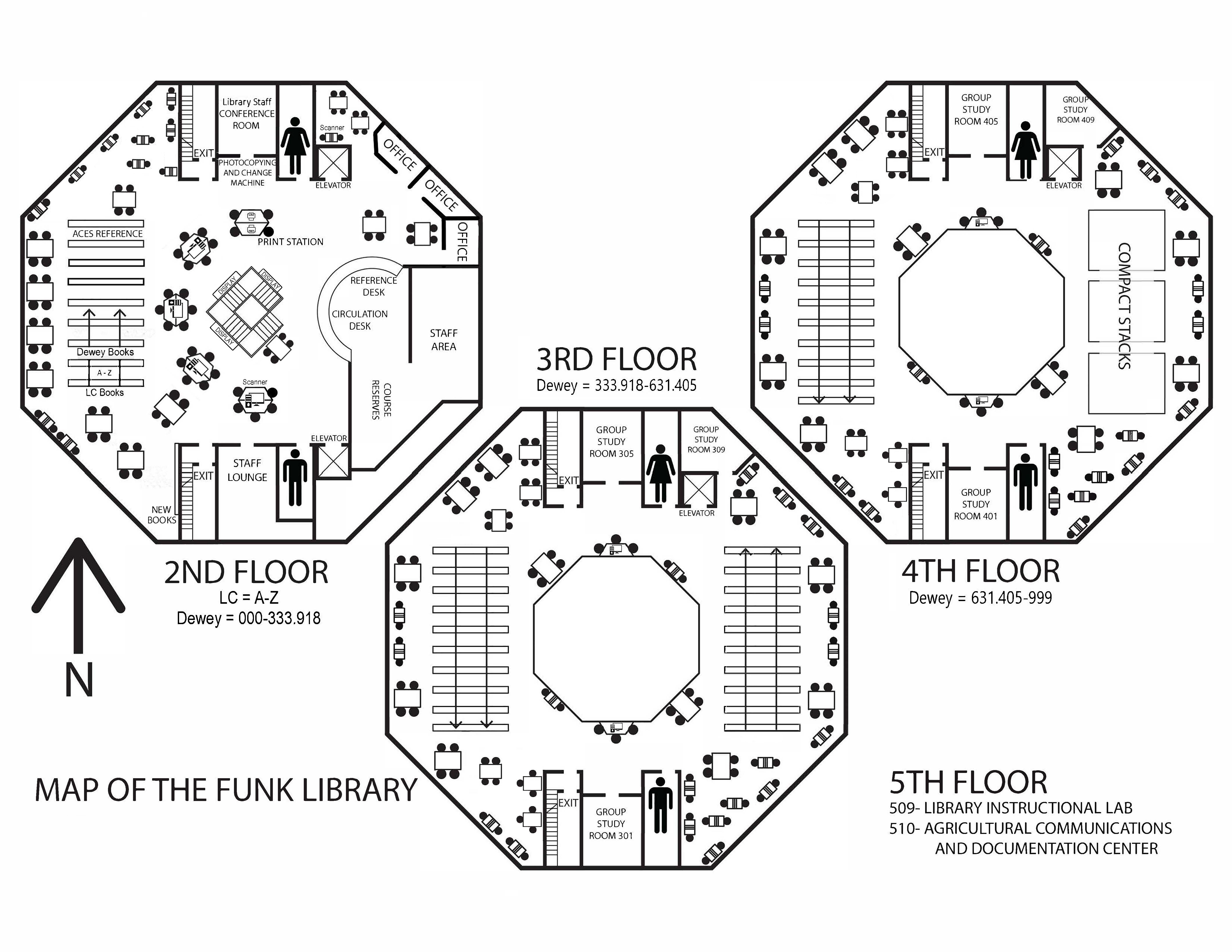
And please suggest (or send) agricultural communications documents we might add to this unique collection.  We welcome them in hard copy (sent to Ag Com Documentation Center, 510 LIAC, 1101 S. Goodwin Avenue, Urbana, IL 61801) or electronic form at docctr@library.uiuc.edu

Best regards and good searching.

November 2007

ACDC News – Issue 07-21

A “grievous information gap” in coverage of climate change.

This topic is not getting adequate attention in the developing world, said Ochieng Ogodo in a presentation to the 2007 World Congress of Science Journalists.  Climate-related emergencies capture the attention for a while as big stories, Ogodo noted.  However, farmers and rural communities in the developing world need continuing access to information they can use to mitigate and adapt to the effects of climate change.  The presenter offered two suggestions to science journalists about how to fill this “grievous information gap:”

  • Set up networks to share information about climate change.
  • Build bridges between the “developed” and “developing” environmental and science journalists to exchange ideas and information about the topic.

Title:  Reporting climate change
Posted at http://wcsj2007.internetguruhosting.net/conference-program 


On farmers misreading what neighbors were thinking.

Signs of disconnect appeared in a study about lingering public reactions to large-scale swine facilities in the U. S. In the June 2007 issue of the Journal of Animal Science researcher Ann Reisner reported results of a survey among large-scale swine facility pork producers, their nearby neighbors and local-community swine facility activists.  They were interviewed several years after the facilities were established or expanded.  No active resistance to the facilities remained.  However:

“The majority of farmers indicated that people in the area had accepted their operation, which was a significant misreading of the residents’ level of support.  Residents and activists did not differ significantly on most measures of opinion; the primary difference was that activists were willing to say publicly what many thought privately.”  

Title:  Reaction of the local public to large-scale swine facilities


Myths and paradigms of participatory communication.

Discussions swirl these days about concepts of citizen journalism, social media, online video amateurs and other forms of participatory communicating.  We recently added to the ACDC collection a book chapter, “Myths and paradigms of participatory communication,” that urged caution. Drawing upon 25 years of international experience, development communication specialist Alfonso Gumucio Dagron observed:

“The abundance of commercial media has created a mirage of variety and choice; however, in reality it offers much less in terms of multicultural content, information, access and participation. … In this context, alternative and participatory media have a greater importance than ever in the defense of human values and the diversity of cultures, languages and beliefs.”

Title:  Myths and paradigms of participatory communication


GM food documentary sparks reactions.

“The Future of Food,” a 2005 film documentary about the development and use of genetically modified food, is stirring varied responses.

Reviews in newspapers and other media have described the film variously from enlightening, fascinating, brave and powerful to activist, one-sided and “a parade of talking heads making doomsday prophesies.”

“After watching The Future of Food…I was deeply troubled by the irresponsible pseudo-documentary which tries to present lies as truth and fiction as fact,” said Karri Hammerstrom, a tree fruit and alfalfa producer in California writing on the AgBioTech web site.

A college-level educational curriculum based on the film was released last month. You can learn more about the film and tap into some of the conversation it generates at:

http://www.thefutureoffood.com (official web site)
http://en.wikipedia.org/wiki/the_future_of_food
http://www.agbioworld.org/biotech-info/articles/biotech-art/hammerstrom.html
http://www.rottentomatoes.com/m/future_of_food


Users of herbal supplements – doing their own thing?

A report from Decision News Media SAS comments on recent findings that a substantial share of consumers of herbal supplements in the U. S. fails to follow evidence-based standards.  The study, reported in Mayo Clinic Proceedings, revealed that two-thirds of the consumers of eight commonly used herbs failed to use them in line with the chosen scientific standard.  Researchers observed that results may reflect a lack of information reaching consumers.  “Furthermore, health care professionals may not often be a major source of herbal product information for patients.”

Title:  Most herbal consumers
Posted at http://www.nutraingredients-usa.com/news/ng.asp?id=76960


Hear how farmers in India are using Web2.0 tools.

Listen to Dr. Jayanta Chatterjee of the Indian Institute of Technology Kanpur describe how they are overcoming language and literacy barriers through participatory use of electronic technologies. This application involves farmer-to-farmer, voice-based blogging based on mobile phone technology.  The audio report is 3:17 in length.

Title:  Farmers in India overcome language
Posted at: http://www.e-agriculture.org/news.html?&no_cache=1


Can psychology help the dismal science?

That question introduced a recent article about factors that influence what we eat, and how much.  Author Lisa Mancino suggested in a USDA article we added recently to the ACDC collection that behavioral economics can help address what she calls “insidious consumption.”  Here are some of the examples she described:

  • Using “mental accounting”
  • Increasing self-control through simple commitment devices
  • Judging a serving by its container
  • Choosing default options

Title:  Insidious consumption
Posted at http://www.ers.usda.gov/AmberWaves/June07/features/insidious.htm

From that site, you can also hear a podcast interview (9:58) with the author.


Communicator activities approaching

November 13-14, 2007
“Capture, consolidate and communicate – the changing nature of contemporary extension.” National Forum of the Australasia Pacific Extension Network in Canberra, ACT, AUSTRALIA.
Information: www.apen.org.au

November 14-16, 2007
“A rural renaissance.”  Annual conference of the National Association of Farm Broadcasting (NAFB) in Kansas City, Missouri USA.
Information: www.nafb.com


How’s that again?

So you follow commodity prices with an eye on topping the market? We close this issue of ACDC News with a report that came one morning during harvest season from a grain merchandiser at a local elevator in Iowa:

“Corn called sharply steady.”

Please pass along to us by return e-note any interesting expressions that catch your eye.  Agricultural writing should hold no shortage of shared entertainment.


Do you have thoughts, examples or suggestions related to any topics featured in this issue? 

Please send them to us by return e-note.
Get in touch with us:

  • When you cannot locate information you need about communications, as related to agriculture, food, natural resources and rural affairs in any part of the world.
  • When you see in this collection interesting items you cannot find, locally or online. Tell us the titles and/or document numbers.  We will help you gain access.

And please suggest (or send) agricultural communications documents we might add to this unique collection.  We welcome them in hard copy (sent to Ag Com Documentation Center, 510 LIAC, 1101 S. Goodwin Avenue, Urbana, IL 61801) or electronic form at docctr@library.uiuc.edu

Best regards and good searching.

November 2007

ACDC News – Issue 07-20

An agri-surprising view of excellence in journalism.

The president of India expressed it during July at the occasion of the Ramnath Goenka Excellence in Journalism Awards program.  President A. P. J. Abdul Kalam framed “excellence” as follows:

“In 1999, I was in Tel-Aviv.  Hamas had inflicted heavy damage on the Lebanese border.  The next day, when I opened the newspaper, this was not front page news.  Instead, there was an item about a farmer from Russia who had settled in a desert zone in Israel.  He had managed to cultivate vegetables and fruits in the area with very high yield.  The newspaper was celebrating his success, probably because people look for such news.  I consider this excellence in journalism.”

He emphasized that journalism can be an effective tool for economic and political development. Every newspaper should have a research unit for developing media personnel in reporting and event analysis, he suggested.

Title:  Journalists can partner national development
Posted at: www.indianexpress.com/story/205371.html


Are guidelines timeless for attracting farm readers?

A recent feature on the International Federation of Agricultural Journalists (IFAJ) web site asked that question.  It summarized key principles of readership identified by Donald R. Murphy 45 years ago in his book, What farmers read and like.  The principles address decisions about:

  • Designing eye-catching that draw farm readers into the issue
  • Choosing subjects that attract keen reader interest
  • Writing effective headlines
  • Choosing and using color, photographs, illustrations and other visual elements
  • Avoiding “great dangers in editing”

You will see that the feature invites your thoughts and experiences about these decisions and others that influence farm readership today – and in your area. Send them along. They will be reported later, as part of that IFAJ series, produced in partnership with ACDC.

View the feature at http://www.ifaj.org/news/attracting_farm_readers.html


New e-Agriculture.org initiative launched by FAO.

The Food and Agriculture Organization of the United Nations recently launched a new initiative for information and communications technologies in support of agriculture and rural development.

“The online platform…will enable users to exchange opinions, experiences, good practices and resources related to e-agriculture, and to ensure that the knowledge created is effectively shared and used worldwide.”

Title: Launch of an interactive web-based platform
Posted at http://www.e-agriculture.org


Here are some new books

In the ACDC collection that may hold special interest for agricultural journalists and communicators.  All contain some rural or agricultural dimension.

  • Kathleen Fearn-Banks, Crisis communications: a casebook approach.  Third edition. Lawrence Erlbaum Associations, Mahwah, New Jersey.  2007.
  • Linda K. Fuller (ed.), Community media: international perspectives.  Palgrave Macmillan, New York.  2007.
  • Kai Hafez, The myth of media globalization.  Polity Press, Cambridge. 2007.
  • Phyllis Méras, Country editor: Henry Beetle Hough and the Vineyard Gazette. Images from the Past, Bennington, Vermont. 2006

Scientists working with journalists. 

A media workshop report we have added from the web site of the American Society of Plant Biologists identified several traits often found in both scientists and journalists: free and independent thinking, competitive natures, curiosity and higher levels of education

With that foundation, workshop speakers offered tips for plant biologists in working with journalists.  Among them:

  • In preparing for an interview, a scientist should learn more about the reporter, publication and its readership.
  • Have a goal in mind for the interview and deliver a focused message.
  • Use accurate terminology and not repeat misleading terms if the reporter uses them in a question. One speaker noted that “too often, the media use misleading terminology such as ‘Frankenfood’ and ‘killer corn’.”
  • Be prepared to answer questions such as, “What does it matter?”

Posted on: http://www.aspb.org/publicaffairs/editorial/newsmedia.cfm


Concern over misleading terms for cured meat products.

An article in Food Production Daily described concerns about terms such as the following being used to promote cured meat products as safe and healthful:

  • “naturally cured”
  • “no nitrite added”
  • “without added nitrite”
  • “nitrite free”

“Such statements can be interpreted as purposely misleading the consumer,” according to the article.

Title:  Nitrite free: where does the truth end?
Posted at www.foodproductiondaily.com/news/ng.asp?n=78581-nitrite-cured-meat-toxic


Agricultural communications literature in nursing journals?

The scatter of literature for this field continues to surprise us.  Here are a few of the diverse journals from which we have added documents to the ACDC collection recently:

  • Journal of Clinical Nursing
  • Acta Paediatrica
  • European Journal of Clinical Nutrition
  • Peace Research Abstracts
  • Development South Africa
  • Journal of Economic History
  • Financial  Times
  • Family and Consumer Sciences Research Journal
  • Library Review
  • Information Development

Communicator activities approaching

November 13-14, 2007
“Capture, consolidate and communicate – the changing nature of contemporary extension.” National Forum of the Australasia Pacific Extension Network in Canberra, ACT, AUSTRALIA.
Information: www.apen.org.au 

November 14-16, 2007
“A rural renaissance.”  Annual conference of the National Association of Farm Broadcasting (NAFB) in Kansas City, Missouri USA.
Information: www.nafb.com


Answer “Yes” when people ask if you talk to animals.

We are always pleased to be able to answer “Yes” when that question comes our way, as it has for years.  To share the pleasure, we close this issue of ACDC News with a new example, thanks to an alert in the Cooperative Communicators Association newsletter.

It seems the outstanding television commercial honored in the 59th Annual Creative Arts Emmy Award program featured Ellen DeGeneres talking with her animals.  You can view “Ellen’s Animals” (1:59) at: http://www.youtube.com/watch?v=h5LR-IZbbc0


Do you have thoughts, examples or suggestions related to any topics featured in this issue? 

Please send them to us by return e-note.
Get in touch with us:

  • When you cannot locate information you need about communications, as related to agriculture, food, natural resources and rural affairs in any part of the world.
  • When you see in this collection interesting items you cannot find, locally or online. Tell us the titles and/or document numbers.  We will help you gain access.

And please suggest (or send) agricultural communications documents we might add to this unique collection.  We welcome them in hard copy (sent to Ag Com Documentation Center, 510 LIAC, 1101 S. Goodwin Avenue, Urbana, IL 61801) or electronic form at docctr@library.uiuc.edu

Best regards and good searching.

October 2007

ACDC News – Issue 07-19

What’s on the minds of science journalists, globally.

Agricultural and natural resource journalists may find special interest in 10 reports we have added to the ACDC collection. They were presented during the 5th World Congress of Science Journalists earlier this year in Melbourne, Australia.  These papers focus on improving science journalism, as related to various agricultural, rural and environmental issues:

  • “New media: podcasting, Second Life and the future of the Web”
  • “Building and maintaining science journalist associations”
  • “How to make a big story bigger”
  • “Biasing scientific information”
  • “Risky business – perception of risk”
  • “Spreading science through societies by reaching women and children”
  • “Reporting science in emerging economies”
  • “Seducing gatekeepers: getting more science past your editor”
  • “Water wars”
  • “Climate change and the spread of disease”

Posted at: http://wcsj2007.internetguruhosting.net/conference-program


See and hear international agricultural journalists meeting in Japan.

Several online resources will permit you to tune in on the recent 51st International Federation of Agricultural Journalists (IFAJ) Congress in Japan.


An award-winning rural radio documentary.

During July the Society of Professional Journalists presented a Sigma Delta Chi Award to a rural-oriented radio program.  Todd Melby, Diane Richard and Robbie Harris of Chicago Public Radio were honored for their 29-minute documentary that highlighted disparities arising from a state tax policy in Illinois that disproportionately hurts rural school districts. The program, aired during 2006, reflected a five-month reporting effort that included an in-depth focus on challenges facing schools in two rural communities in downstate Illinois.

You can hear the program online at www.wbez.org/CityRoom_Story.aspx?storyid=8821.

Notice these qualities the judges emphasized: narrative-style writing, use of natural sound, dual-host format, diversity of voices and “an incredibly important – and difficult topic to cover.”


On the shortcomings of international reporting these days.

A new book by Kai Hafez takes international reporting to task, along several dimensions:

  • It is fundamentally national.  “Most of the time, international reporting in media systems across the world is produced for a domestic audience, not for the regions in question themselves. … What is being fostered is the exact opposite of a multicultural world.”
  • It “privileges” the actions of political actors and systems.
  • It “privileges” the elites or counter-elites “while social groups and movements, political parties and the population as a whole are marginalized.”
  • The “event-centered definition of the news” frequently leads to shortage of social, cultural, economic and political context.
  • “Even today, national media agendas are in synch with the world only in a very superficial way.”

Title:  The myth of media globalization


Helping birds communicate.

A recent article in Molecular Ecology highlighted the need to reduce noise levels that are degrading the breeding areas of birds.  Authors noted: “The dramatic increase in human activities all over the world has caused, on an evolutionary time scale, a sudden rise in especially low-pitched noise levels.”

Findings documented how ambient noise may be detrimental to birds in their efforts to communicate – to defend territories, attract mates, detect predators and hear alarm calls.

Posted at http://www.blackwell-synergy.com/doi/pdf/10.1111/j.1365-294X.2007.03487.x


Home broadband adoption and usage in rural areas continues to lag. 

Research earlier this year by the Pew Internet and American Life Project revealed that high-speed adoption in rural areas (now 31 percent) continues to lag that in urban centers (52 percent) and suburbs (49 percent).

Pew Internet researcher Aaron Smith observed that broadband adoption in rural America faces two challenges – network availability and demographics.  “Rural Americans tend to be older, less avid online users, and thus less interested in fast home connections.  And some parts of rural America also simply don’t have the infrastructure for providing broadband at home.”

Other findings showed that Internet usage in rural areas also trails the national average. Sixty percent of rural adults use the internet from any location, compared with the national average of 71 percent.

Report Title:  Home broadband adoption 2007
Posted at www.pewinternet.org/pdfs/pip_broadband%202007.pdf

News release title: Broadband adoption in 2007
Posted at www.pewinternet.org/ppf/r/141/press_release.asp


“Venezuela’s four-legged mobile libraries”

Is the title of a report from BBC Radio News.  It described how a university in Venezuela is using “bibliomulas” (book mules) to deliver reading materials to rural communities in the foothills of the Andes Mountains.

“Somehow there is already a limited mobile phone signal here, so the organizers are taking advantage of that and equipping the mules with laptops and projectors. The mules are becoming cyber mules and cine mules.”

Posted at http://news.bbc.co.uk/2/hi/programmes/from_our_own_correspondent/6929404.stm


Communicator activities approaching

October 19-20, 2007
“2007 Science in Society.”  Annual conference of the National Association of Science Writers in Spokane, Washington USA.
Information: www.nasw.org/meeting/2007/index.htm

November 13-14, 2007
“Capture, consolidate and communicate – the changing nature of contemporary extension.” National Forum of the Australasia Pacific Extension Network in Canberra, ACT, AUSTRALIA.
Information: www.apen.org.au

November 14-16, 2007
“A rural renaissance.”  Annual conference of the National Association of Farm Broadcasting (NAFB) in Kansas City, Missouri USA.
Information: www.nafb.com


Strange messages about fishing.

We close this issue with some remarkable laws/customs about fishing in various U. S. states.  Thanks to Steve Shenton for alerting us to them. Do you suppose they are actually on the books?

  • It is against the law for a man to knit during the fishing season. (New Jersey)
  • You may not fish on a camel’s back (Idaho) or while sitting on a giraffe’s neck. (Illinois).
  • It is illegal to use a lasso to catch a fish. (Tennessee)
  • Those who fish in the Ohio River in Kentucky need an Indiana fishing license.

Enthusiasts, do you face such obstacles where you fish?
Posted at http://www.lakeshelbyville.com/rec.htm


Do you have thoughts, examples or suggestions related to any topics featured in this issue? 

Please send them to us by return e-note.
Get in touch with us:

  • When you cannot locate information you need about communications, as related to agriculture, food, natural resources and rural affairs in any part of the world.
  • When you see in this collection interesting items you cannot find, locally or online. Tell us the titles and/or document numbers.  We will help you gain access.

And please suggest (or send) agricultural communications documents we might add to this unique collection.  We welcome them in hard copy (sent to Ag Com Documentation Center, 510 LIAC, 1101 S. Goodwin Avenue, Urbana, IL 61801) or electronic form at docctr@library.uiuc.edu

Best regards and good searching.

October 2007

ACDC News – Issue 07-18

When environmental interest groups expand and contain conflict.

A recent book by Sarah Pralle reveals how advocacy groups shape the scope of environmental conflict through their strategic maneuvering.  Branching out, digging in: environmental advocacy and agenda setting examines two forest management conflicts, one in British Columbia and one in northern California.  Results of the analysis address questions such as:

  • What motivates advocacy groups to pursue certain strategies over others?
  • When and why do they change strategies?
  • How do competing groups shape one another’s strategy?

“One important theoretical lesson,” according to Pralle, “is that advocacy group strategies cannot be understood without paying attention to the dynamic quality of the policy process generally and the shifting strategies of advocacy groups in particular.”

Title:  Branching out, digging in


Powdergate – investigating an international trade scam.

Philippa Stevenson, an agricultural journalist in New Zealand, has described how she unearthed and investigated an illegal trade scam within that country’s dairy industry.  This engrossing report, posted recently on the web site of the International Federation of Agricultural Journalists, explains her six-year investigative reporting effort that extended internationally.

“The milk powder whose value during the course of the stories was put at between $45 and $70 million went from New Zealand to Australia to Italy and Mexico.”

How did she spot the story?  How did she pursue it? Why did she stick to it over such a long period?  You can learn her answers from this professional development feature coordinated through an IFAJ/ACDC partnership.
Posted at: www.ifaj.org/news/powdergate.html


More sports reporters than agricultural communicators. 

Agricultural communications continues through an interesting evolution. An article that gives insight is “A primer on agricultural communications for students, librarians and researchers” by Joseph Zumalt.

It describes how this field grew from the early 19th century through the establishment of agriculture colleges, experiment stations, extension services, agricultural organizations, rural free delivery of mail and new modes of communications. Even after phenomenal developments in communications within agriculture, public understanding of agriculture remains far behind in the present world of Internet. “Now there are more sports reporters than professionals looking out for the safety of our food,” the author observes. “This shortage can put the public’s health at serious risk.”

The article also describes the present status of agricultural communications, in terms of education programs, employment opportunities, professional organizations, journals and other information sources such as this Center.

To read more about this article you can access the following website:
http://www.haworthpress.com.proxy2.library.uiuc.edu/store/E-Text/View_EText.asp?sid=VRLVAHT74KKH9M3SQ872CVEN5HUCE5CB&a=3&s=J108&v=5&i=1&fn=J108v05n01%5F05


Interactions of generic pork, beef and poultry advertising.

We have added to the ACDC collection a 2007 report of research that examined the effects of domestic advertising and promotion expenditures on meat demand.  It included measurement of the impacts of generic pork and beef advertising, as well as food safety information, on the demand for beef, pork and poultry.  The title is “Impact of pork advertising on U. S. meat demand.”

Posted at http://agecon.lib.umn.edu/cgi-bin/pdf_view.pl?paperid=26979&ftype=.pdf


 “Obviously a gap” between experts and smallholder farmers. 

A two-day exhibition of local and “modern” agricultural innovations in Ethiopia revealed how interests of farmer differed from those of agricultural experts who took part.  Authors of a case report in LEISA magazine observed, “Researchers, agronomists and other professionals were reluctant to visit what smallholders had developed or were interested in.”  On the other hand, authors found that most of the farmers present were drawn to innovations most useful for small-scale farming and asked the local innovators numerous questions.

Authors suggested that all those involved in agricultural innovation “need to believe in and like each other.  Otherwise, they cannot combine forces to make the most of the agricultural potential in Tigray.”

Title:  Local and “modern” innovations: what interests whom? [Use the title as live link to the citation.]
Posted at www.leisa.info > Magazine > Volume 22, Issue 3.


 A review of agricultural knowledge frameworks.

We have added to the ACDC collection a conference paper that reviewed the evolution of four agricultural knowledge frameworks during the past half century and assessed how they have enabled agricultural development.

  • National Agricultural Research Institutes (NARI) framework. Begun in the 1950s and 1960s with focus on building public sector research departments/institutes and extension services.
  • National Systems framework.  Begun during the 1980s, it reflected efforts of international agencies to shift their agricultural development emphasis toward systems approaches that involved a wider range of institutions (private sector firms, non-governmental organizations, farmer organizations, universities, others).
  • Agricultural knowledge and information system (AKIS) framework. This more integrated concept gained acceptance in the 1990s.  It extended beyond separate national systems and “was intended to promote linkages among and between knowledge institutions and with existing and potential end-users of agricultural knowledge.”
  • Agricultural Innovation Systems (AIS) framework was developed in the 1990s. “While stressing the need for linkages, AIS moves ‘innovation’ to the center of attention and stresses a wide range of stakeholders and pluralistic networking among agriculturally relevant institutions.”

Title:  Enabling agriculture
Posted at http://www.aiaee.org/2006/accepted/580.pdf


Communicator activities approaching

October 19-20, 2007
“2007 Science in Society.”  Annual conference of the National Association of Science Writers in Spokane, Washington USA.
Information: www.nasw.org/meeting/2007/index.htm

November 13-14, 2007
“Capture, consolidate and communicate – the changing nature of contemporary extension.” National Forum of the Australasia Pacific Extension Network in Canberra, ACT, AUSTRALIA.
Information: www.apen.org.au

November 14-16, 2007
“A rural renaissance.”  Annual conference of the National Association of Farm Broadcasting (NAFB) in Kansas City, Missouri USA.
Information: www.nafb.com


“Ah, it is the life of lives.”

We close this issue of ACDC News with insights about the country newspaper editor. They came during the early 1900s from Charles H. Marchant, 30-year editor and publisher of the Vineyard Gazette, Martha’s Vineyard.

“The confessions of an opium eater would be nothing to his confessions.  He is a man of all work, a miscellaneous personage, all the way up from a devil to a gentleman.  He knows, or should know, everybody and a little of everything.  He is in the world and out of the world, and lives in the past, the present and the future.  He must sometimes see and not seem to see – sometimes hear and not seem to hear. … Indeed, the editor must be all things to all men, or all men will be nothing to him.”

Title:  Country editor: Henry Beetle Hough and the Vineyard Gazette


Do you have thoughts, examples or suggestions related to any topics featured in this issue? 

Please send them to us by return e-note.
Get in touch with us:

  • When you cannot locate information you need about communications, as related to agriculture, food, natural resources and rural affairs in any part of the world.
  • When you see in this collection interesting items you cannot find, locally or online. Tell us the titles and/or document numbers.  We will help you gain access.

And please suggest (or send) agricultural communications documents we might add to this unique collection.  We welcome them in hard copy (sent to Ag Com Documentation Center, 510 LIAC, 1101 S. Goodwin Avenue, Urbana, IL 61801) or electronic form at docctr@library.uiuc.edu

Best regards and good searching.

September 2007

ACDC News – Issue 07-17

National honor for rural reporting.

Coverage of shock in a rural Amish community of Pennsylvania received top honors recently in the Sigma Delta Chi Awards Program that recognized outstanding reporting during 2006. Staff members of the Philadelphia Inquirer newspaper were honored in the category, “Deadline reporting – circulation of 100,000 or greater.”

Their story was entitled “A world apart, shattered.”  One judge commented that the story stood out for two reasons: “When an ordinary man, a father of three, snapped and killed three little girls, plus himself…the Inquirer not only had to negotiate a rural community not exactly in its backyard, but an Amish community with no zeal or desire of any kind to stand in the spotlight.”

Title: A world apart, shattered.

You can read the story online at: www.philly.com.  Proceed to the Archives and search on the title.  Notice these reporting qualities the judges commended: swarm coverage in a crisis mode, excellent photography and sensitivity to the values of local residents.


Four key food trends that apply to humans (and pets).

Uli Pesi, market researcher and consultant in Germany, emphasized these trends in his chapter of a new book, Nutritional biotechnology in the feed and food industries:

  • Convenience – simple solutions that save time.
  • Examples: ready-to-eat/ready-to-heat meals, chilled salads, frozen pizzas, easy-to open packaging, prepared pet food.
    • Enjoyment – stressed people tending to reward themselves.
  • Examples: variety; new sensations, tastes, colors, shapes and textures; cross-over or fusion foods that combine taste experiences from different regions of the world; premium pet food brands.
    • Health – balancing busy schedules and longer living.
  • Examples: health foods, portion control, foods matched to life stages and lifestyles.
    • Origin labeling – an emerging trend in counter-reaction to globalization.
  • Examples: regional foods and cuisines that are otherwise becoming scarce, foods without chemical additives needed for long-term preservation, ethnic foods.

Pesi suggested that marketers should make sure the foods they develop meet a useful and meaningful combination of such trends – at least one trend, preferably more.

Title: Convenience, enjoyment and health


Call for more media coverage about safety in eating fish.

Results of research among fishermen, biology students and university educators prompted authors of an article in Risk: health, safety and environment to call for more public information.  Researchers found, for example, limited awareness about:

  • Whether specific fish come from fresh or salt water
  • Whether a given fish species is a predator or merely eats vegetation
  • Fishing regulations, bans and advisories that may exist in a given area

“One important method of managing risk to the public from eating contaminated fish is for the media to provide more ecological information so that the public can be aware of factors that contribute to increased toxic loads in fish in general.”

Title:  Fish advisories: useful or difficult to interpret?


Increased public funding for agricultural research and extension

Is critical to the future competitiveness of U. S. agriculture in a global economy, according to a recent issue report from the Farm Foundation.  It noted a disturbing slowdown in U. S. agricultural productivity growth in the last decade of the 20th century.  A declining rate of growth in public-sector investment in agricultural research and extension is cited as a likely contributor to this slowdown.

Stakeholders pointed to several special needs for effective communications:

  • Coordination and collaboration among stakeholders, public institutions and private businesses.
  • Education and outreach needed to move knowledge from the lab to the field.
  • A next generation of educators with expertise in agricultural production.
  • Helping consumers, special interest groups and policy makers understand the value of investment in agricultural research and extension.

Title:  Funding research and extension
Posted at: http://www.farmfoundation.org/projects/documents/May07_revisedJune4.pdf


Pure, simple birds-eye beauty in the rural landscape.

We have added to the ACDC collection an arresting multi-media report presented recently on National Public Radio.  Rural affairs reporter Howard Berkes used photographs, sound and print copy to help reveal the nature photography of Arizona physician Michael Collier.  Shooting from his single-engine Cessna, Collier “spends every other week combining geology, photography and aeronautics, in a three-decade quest to tell the earth’s ‘stories’ with aerial images.”

Title:  Photographer shoots from his Cessna

You can read this report and view a narrated slide program about 3 minutes in length at:
www.npr.org/templates/story/story/php?storyid=10408149


New associate in the Center.

It is a special pleasure to welcome Anna Pederson as new graduate assistant in the Agricultural Communications Documentation Center.  She will work half-time at the Center as she pursues a graduate degree in library and information science.

Anna brings an excellent combination of skills and experiences to the Center. A 2007 honors graduate in English from the University of Maine, she has five years of experience working in academic and public libraries. She also has gained experience with online databases, search tools, scholarly resources and digital libraries through projects with her English professors.  Service as a peer tutor in the Writing Center of the University has helped develop her teaching skills.  Anna speaks, reads and writes German – and looks forward to strengthening that important dimension of our collection and information services.


Communicator activities approaching

September 17-23, 2007
51st World Congress of the International Federation of Agricultural Journalists in Tokyo and elsewhere, Japan.  Information: www.knt.co.jp/ec/2006/ifaj-e

September 27-28, 2007
13th Annual Newspapers and Community-building Symposium co-sponsored by the Huck Boyd National Center for Community Media and the National Newspaper Association Foundation in Norfolk, Virginia USA.
Information: http://huckboyd.jmc.ksu.edu/symposium/papers.html

September 27-30, 2007
“Taste the future.” Annual Conference of the Canadian Farm Writers’ Federation in Belleville, Ontario.  Information: www.ecfwa.ca

October 19-20, 2007
“2007 Science in Society.”  Annual conference of the National Association of Science Writers in Spokane, Washington USA.
Information: www.nasw.org/meeting/2007/index.htm


Philosophy from an early trail boss. 

Are you still open to a cowhand theme?  In that hope, we close this issue of ACDC News with a piece of philosophy attributed to Ab (Albert Pickens) Blocker, a famous trail boss of the late 1800s:

We come into this world all naked and bare;
We go out of this world we know not where.
But if we have been good fellows here,
We need not fear what will be there.


Do you have thoughts, examples or suggestions related to any topics featured in this issue? 

Please send them to us by return e-note.
Get in touch with us:

  • When you cannot locate information you need about communications, as related to agriculture, food, natural resources and rural affairs in any part of the world.
  • When you see in this collection interesting items you cannot find, locally or online. Tell us the titles and/or document numbers.  We will help you gain access.

And please suggest (or send) agricultural communications documents we might add to this unique collection.  We welcome them in hard copy (sent to Ag Com Documentation Center, 510 LIAC, 1101 S. Goodwin Avenue, Urbana, IL 61801) or electronic form at docctr@library.uiuc.edu

Best regards and good searching.

September 2007

ACDC News – Issue 07-16

We need to fall in love with our hometowns. 

So argued Jay Walljasper in a 2006 Technology and Society article about what some have begun to call a movement for great public spaces. Look to Europe, he observed:

  • “What explains the fact that most European cities gracefully end at some point, giving way to green countryside at their edges, unlike the endless miles of sprawl in America ?” How is it that public spaces and street culture feel so much richer there? Why do you seldom see slums?”
  • Europeans are taking action to maintain the vitality of their hometowns, he observed – reversing urban decay, protecting historic neighborhoods, improving transit systems, creating green spaces, protecting historic areas.
  • “Most cities now have bustling pedestrian zones, and bikeways crisscross even the most crowded metropolises.”

What does it take? According to Walljasper, “Anyone joining this burgeoning movement to improve public places soon discovers the key issue is not urban planning or transportation priorities but love.”

Title: How to fall in love with your hometown


“Strong news releases – more important than ever” 

Is the title of a feature we helped prepare recently for members of the International Federation of Agricultural Journalists (IFAJ). Authors Owen Roberts and Jim Evans explained how electronic technologies give news releases “an unprecedented avenue” to readers and listeners. Drawing upon varied sources, they also identified tips for preparing strong news releases – and some sure-fire ways to drive editors crazy.

Title: Strong news releases – more important than ever
Posted at http://www.ifaj.org/news/strong_news.htm


Why public views of food biotechnology may vary so greatly among countries.

Research reported earlier this year in the International Journal of Public Opinion Research examined the influence of cultural factors on public attitudes in Germany and the USA. An analysis of a cross-cultural survey identified two cultural factors that help explain why public views of food biotechnology vary so greatly between these cultures.

  • Concepts of nature. Authors found appreciation of nature a predictor of attitudes in both countries. “The higher appreciation of nature in Germany partly explains why attitudes toward food biotechnology are more negative in Germany than in the USA.”
  • General trust in institutions. Authors found the relationship between trust and attitudes more complex than expected. “Institutional trust is a moderate predictor of attitudes toward food biotechnology in the USA but not in Germany.”

Posted at: www.foodpolicyinstitute.org/docs/reports/191.pdf


Top 10 food trends among American consumers.

“Today’s food trends – and Americans’ demands for increased variety in their diets – are as diverse as the U. S. population.” So reported Food Technology in presenting the Top 10 Food Trends of 2007:

  1. Dining in
  2. Food talk
  3. Form and function
  4. Sense appeal
  5. Kidding around
  6. Doing without
  7. Local motions
  8. Seriously healthy
  9. Next-generation beverages
  10. Snacking and sharing

Title: Top 10 food trends mirror Americans’ variety
Posted at: www.ift.org/cms/?pid=1001582


An award-winning campaign: “Horticulture for Tomorrow” in Australia. 

Communicators pitched in vigorously to support a first set of national guidelines for environmental assurance in horticulture. A conference paper by Andrew Sedger and Liz Kellaway described this successful communications effort during 2004-2006. Planners in Horticulture Australia Limited wanted to:

  • Engage the 34 industry members in actively supporting the project
  • Raise awareness about the project and its role in addressing issues of environmental management in horticulture
  • Provide growers with information resources and technical tools
  • Generate editorial coverage in specific industry publications and rural media that serve growers

Elements of the communications strategy included branding and marketing; grower resources; a program for communicating with stakeholders; a media program; a national industry summit; and management of ongoing issues. This program met all four objectives and won the first-ever award given by the Public Relations Institute of Australia for an environmental communication campaign.

Title: Communicating environmental assurance in the Australian horticulture industry


Thanks and best wishes to Sara Thompson 

As she leaves her ACDC graduate assistantship this month. Sara will begin the second year of her graduate studies in library and information science with a special kind of international opportunity. She will be an assistant in the Mortenson Center for International Library Programs here at the University of Illinois. Mortenson Center provides professional development opportunities to library and information specialists around the world.

We are most grateful for the skill and dedication Sara contributed to the Agricultural Communications Documentation Center during the past year. Beyond her day-to-day services, she provided special leadership in:

  • systematizing and improving the database
  • standardizing citations
  • inventorying materials in our growing collection
  • managing and redesigning the web site
  • improving our system for identifying documents and
  • preparing a staff orientation handbook.

Communicator activities approaching

September 5-9, 2007
17th Annual Conference of the Society of Environmental Journalists at Stanford University, Stanford, California USA.
Information: www.sej.org/confer/index1.htm

September 8-9, 2007
“Food and morality.” Theme of the 2007 Oxford Symposium on Food and Cookery at St. Catherine’s College, Oxford, England.
Information: www.oxfordsymposium.org.uk

September 17-23, 2007
51st World Congress of the International Federation of Agricultural Journalists in Tokyo and elsewhere, Japan.
Information: http://www.knt.co.jp/ec/2006/ifaj-e/

September 27-28, 2007
13th Annual Newspapers and Community-building Symposium co-sponsored by the Huck Boyd National Center for Community Media and the National Newspaper Association Foundation in Norfolk, Virginia USA.
Information: http://huckboyd.jmc.ksu.edu/symposium/papers.html

September 27-30, 2007
“Taste the future.” Annual Conference of the Canadian Farm Writers’ Federation in Belleville, Ontario.
Information: www.ecfwa.ca


Casting a rural eye on prancing communicators. 

We close this issue of ACDC News with a bit of conversation between a rancher and his son as they returned home from church one Sunday. The exchange was reported in a 1964 book, Cow People.

Son: “Papa, what do you think of his preaching?”
Father: “Too much mane and tail.”


Do you have thoughts, examples or suggestions related to any topics featured in this issue? 

Please send them to us by return e-note.
Get in touch with us:

  • When you cannot locate information you need about communications, as related to agriculture, food, natural resources and rural affairs in any part of the world.
  • When you see in this collection interesting items you cannot find, locally or online. Tell us the titles and/or document numbers. We will help you gain access.

And please suggest (or send) agricultural communications documents we might add to this unique collection. We welcome them in hard copy (sent to Ag Com Documentation Center, 510 LIAC, 1101 S. Goodwin Avenue, Urbana, IL 61801 ) or electronic form at docctr@library.uiuc.edu

Best regards and good searching.

August 2007

ACDC News – Issue 07-15

An upside-down food pyramid — for marketers.

Kevin Murphy of Food-Chain Communications proposes that all marketers within the global food complex use a special pyramid in planning and carrying out their work.  He described an upside-down pyramid during May at the Alltech 23rd International Feed Industry Symposium in Lexington, Kentucky.  Here were the elements of it, from broad top to pinpoint bottom.

  • The customer
  • Trade and business media
  • Industry analysts
  • Food advocacy groups
  • University and extension personnel
  • Government agencies
  • Early adopters
  • Input suppliers
  • Employees
  • Your company

“We need to be better in communicating with all,” Murphy emphasized.  “Come out of your silo…Communicate not only to those who directly touch your product but to those who influence its acceptance.”

Title:  Branding within the food-chain


Food – a special case for risk communicators.

The concept of “risk” takes on many dimensions for communicators to consider. That counsel came from a 2006 panel of European academics discussing food risk communications. Risk dangers extend well beyond toxicity and allergenicity, they emphasized.  Pointing to research on public perceptions of genetically modified foods, they noted how food risk dangers also involve:

  • Moral risks (Is it right to tamper with nature?)
  • Democratic risks (Who is regulating GM and is it possible to regulate such a fast moving technology?)
  • Cultural risks (Should science trump all other values?)

“All this comes together to show that food is a special case,” says the report. “Beyond calories as a mere fuel, food is a fundamental part of culture, and a cultural form that is taking on greater importance in a number of European societies.  As such, food risk communication is a pressing concern and poses unique challenges.”

Title:  Quo vadis food risk communication?
Posted at www.eufic.org/article/en/food-safety-quality/risk-communication/expid/forum-food-risk-communication


Is it “agri-inputs” – or “agro-inputs”? 

Tom Hargrove of the International Center for Soil Fertility and Agricultural Development raised that question recently among colleagues in the Association for Communication Excellence in Agriculture, Natural Resources, and Life and Human Sciences (ACE). He noted that the Merriam-Webster Dictionary does not make this distinction clear.  Also, he “Googled the two terms and found 28,000 references to agri-inputs and 20,000 references to agro-inputs.”

We have added his inquiry to the ACDC collection, along with a detailed response by Elizabeth L. McAdam of Victoria, Australia.  She concluded, “Perhaps it all boils down to a stylistic question rather than anything based on meaning, grammar, or etymology?”

Please send us by return e-note any insights or references you may have.

Title:  Agro-inputs or agri-inputs


Dozens of tips to help you involve readers, listeners and viewers.

If you want to boost your interaction with audiences you may find interest in a feature we prepared recently for members of the International Federation of Agricultural Journalists (IFAJ). It draws upon the experiences of agricultural and other journalists around the world.

Title:  Creative ways to connect with your audiences
Posted at: http://www.ifaj.org/news/creative_ways.htm


What if consumers perceive benefit in genetically modified food?

Results of an international study reported recently in Nature Biotechnology suggest it “may prove much more acceptable than has been previously widely stated.”  Researchers used a choice modeling experimental design to assess consumer reactions at roadside fruit stalls located in New Zealand, Sweden, Belgium, France, Germany and the United Kingdom.

“In conclusion, this research revealed that a significant (and in some markets, surprisingly high) percentage of consumers in European countries appear willing to choose GM food provided there is a price advantage coupled with a consumer benefit (in this case, ‘spray-free’ status).”

Title:  Acceptance of GM food – an experiment in six countries


Welcome to an ACDC associate.

It is a pleasure to introduce Devi Annamali, a doctoral candidate who is helping gather and process information into the Center.  Devi brings a variety of interests to this effort. She did undergraduate studies in zoology-botany-chemistry at Maharaja Sayaji University in India, then earned a masters degree in microbiology at the same university. She also had an equivalent bachelor of technology degree in software programming from IBM and IIT Kanpur.

“After that I thought it’s enough of studying,” Devi recalls. “I should gain some industrial experience, so I worked as a junior research scientist in a multinational plant biotech company. I really liked my stay there and decided to pursue a PhD in the same field. I love studying different subjects; I think that widens my thinking spectrum. So to learn more, here I am today writing a small paragraph about myself for my new job as a student associate in the ACDC project. I am a new member of this family and really enjoy my work here.”


Communicator activities approaching

September 5-9, 2007
17th Annual Conference of the Society of Environmental Journalists at Stanford University, Stanford, California USA.  Information: www.sej.org/confer/index1.htm

September 8-9, 2007
“Food and morality.” Theme of the 2007 Oxford Symposium on Food and Cookery at St. Catherine’s College, Oxford, England.  Information: www.oxfordsymposium.org.uk

September 17-23, 2007
51st World Congress of the International Federation of Agricultural Journalists in Tokyo and elsewhere, Japan.  Information: http://www.knt.co.jp/ec/2006/ifaj-e/

September 27-28, 2007
13th Annual Newspapers and Community-building Symposium co-sponsored by the Huck Boyd National Center for Community Media and the National Newspaper Association Foundation in Norfolk, Virginia USA.
Information: http://huckboyd.jmc.ksu.edu/symposium/papers.html

September 27-30, 2007
“Taste the future.” Annual Conference of the Canadian Farm Writers’ Federation in Belleville, Ontario.  Information: www.ecfwa.ca


Don’t be afraid to sing the discord.

We close this issue of ACDC News with a piece of advice that may interest rural journalists and communicators. It came from J. F. Archibald, founder of the Bulletin newspaper, Sydney, Australia.  He offered it during the 1880s to A. B. “Banjo” Paterson, who later wrote “Waltzing Matilda,” Australia’s enduring voice from the billabong.  We came across the advice in Matthew Richardson’s new book, Once a jolly swagman: the ballad of Waltzing Matilda:

“In all public issues the press are apt to sing in chorus.  If you go to a concert you may hear a man sing in discord which is put there by the composer, and that discord catches the ear over the voices of the chorus.  Well don’t be afraid to sing the discord…for the same reason, do not be afraid to cheer for the underdog…”


Do you have thoughts, examples or suggestions related to any topics featured in this issue? 

Please send them to us by return e-note.
Get in touch with us:

  • When you cannot locate information you need about communications, as related to agriculture, food, natural resources and rural affairs in any part of the world.
  • When you see in this collection interesting items you cannot find, locally or online. Tell us the titles and/or document numbers.  We will help you gain access.

And please suggest (or send) agricultural communications documents we might add to this unique collection.  We welcome them in hard copy (sent to Ag Com Documentation Center, 510 LIAC, 1101 S. Goodwin Avenue, Urbana, IL 61801) or electronic form at docctr@library.uiuc.edu

Best regards and good searching.

August 2007

ACDC News – Issue 07-14

Focus on food and morality.

A fascinating array of topics takes front stage for the 2007 Oxford Symposium on Food and Cookery, which features the theme, “Food and Morality.” This annual symposium is an educational charity that brings together writers, historians, sociologists, anthropologists, scientists, chefs and others.  This year they address the study of food in history, its place in contemporary societies and related scientific developments.  Here are a few of the papers being proposed for the 2007 Symposium that is scheduled for September 8-9 in Oxford, England:

  • “Virtuous food – selling ‘conscientious production’ as moral imperative”
  • “Scientists and food: moral, immoral or amoral?”
  • “The moral economy of meat in Australia”
  • “Perspectives on the first iron biofortified rice in the Philippines”
  • “Ideology of fasting in the Reformation Era”
  • “Main themes in the theology and practice of modern Christian vegetarians”
  • “What stories tell children about responsible food behaviors”
  • “An ethical consideration of pet food”

Information posted at: www.oxfordsymposium.org.uk


Ten red flags of junk science.

We have added to the ACDC collection an article from the European Food Information Council that identifies 10 red flags of junk science.  The Council suggests being careful if the information contains:

  • Recommendations that promise a quick fix
  • Dire warnings of danger from a single product or regime
  • Claims that sound too good to be true
  • Simplistic conclusions drawn from a complex study
  • Recommendations based on a single study
  • Dramatic statements that are refuted by reputable scientific organizations
  • Lists of “good’ and “bad” foods
  • Recommendations made to help sell a product
  • Recommendations based on studies published without peer review
  • Recommendations from studies that ignore differences among individuals or groups

Title:  Nutrition news: reading between the lines
At www.eufic.org/article/en/food-safety-quality/risk-communication/artid/nutrition-news


“Courage comes in many flavors,”

Said community newspaper editor Laurie Ezzell Brown in accepting a special award during April.  She offered that perspective when she and her family were honored with the Tom and Pat Gish Award for courage, tenacity and integrity in rural journalism. This award to the Ezzell family and The Canadian Record of Canadian, Texas, was presented by the Institute for Rural Journalism and Community Issues at a banquet in Lexington, Kentucky, during a National Summit on Journalism in Rural America.

Ezzell Brown cited examples of how complex small-town newspapering can be and how local citizens sometimes display stand-up courage. Two generations of Ezzells have edited the weekly Record since 1949.  Nominators reported that members of this family have “held local, state and national politicians accountable, fought political extremism, opposed unwise military adventures and helped protect the environment, often against organized and violent opposition.”

Title: Courage comes in many flavors

You can see related articles at:
www.texaspress.com/messenger/april07/gish0407.htm

www.ifaj.org/news/honoring_courage.htm


A snapshot of what Americans know and feel about avian influenza.

A report we have added from the Food Policy Institute, Rutgers University, highlighted findings of a mid-2006 nationwide survey among American consumers.  Some of the findings:

  • Most Americans (93 percent) indicate they have heard of avian influenza.
  • Still, most “don’t know much” about it.
  • They hold conflicting beliefs about recognizing and preventing it.
  • They “aren’t very worried about illness with avian influenza,” yet “most report greater perceived risk specifically associated with the consequences of eating chicken infected with avian influenza.”
  • More than 90 percent say they currently eat chicken; most consider chicken products in the U. S. safe to eat.
  • “Many Americans are unlikely to eat chicken if the avian influenza virus is found inside the U.S.”

According to Institute Director William K. Hallman, results of the study suggest that much of the American public does not yet have the information needed to make informed choices about purchasing, preparing and consuming poultry products should avian influenza emerge in the United States.

Title:  Avian influenza on people’s minds
News release posted at:
www.foodpolicyinstitute.org/docs/announcements/avian_flu.pdf

Full research report posted at: www.foodpolicyinstitute.org/docs/reports/fpi_ai_report_final_c_2007_small.pdf


Want to see how a football can help catch goanna?

Three young Aboriginal film makers (ages 9-13) from rural Western Australia were honored recently for producing a video about hunting goanna.  This brief video, entitled “Papinmaru” (goanna), was honored as “most impressive achievement” in an international Lonely Planet video competition.  It “shows the boys making a slingshot from the insides of an old football and talking about the chase, the best bits to eat, traditional names and why they like getting out of town.”

You can see the video at
http://www.lonelyplanet.com/lessthanthree > “The next Spielberg”

Title:  Aboriginal youngsters talk across the desert
News release is posted at http://www.crca.asn.au/conference/media.html


Preparing information professionals to serve rural communities.

What kind of studies can help information professionals serve marginalized and rural communities throughout the world?  A recent article in Webology identified the types of knowledge, skills and experiences such persons need, within and outside the formal information studies curriculum.

Title: Information professional
Posted at: www.webology.ir/2006/v3n3/a29.html


Communicator activities approaching

August 22-25, 2007
Annual conference of the Association of Food Journalists in Minneapolis, Minnesota USA.  Information: www.afjonline.com

September 5-9, 2007
17th Annual Conference of the Society of Environmental Journalists at Stanford University, Stanford, California USA.  Information: www.sej.org/confer/index1.htm

September 8-9, 2007
“Food and morality.” Theme of the 2007 Oxford Symposium on Food and Cookery at St. Catherine’s College, Oxford, England.  Information: www.oxfordsymposium.org.uk

September 17-23, 2007
51st World Congress of the International Federation of Agricultural Journalists in Tokyo and elsewhere, Japan.  Information: www.knt.co.jp/ec/2006/ifaj_e


What a delightful world it would be.

We close this issue of ACDC News with a thought from a 1906 column, “Burba’s Barbs,” published in Agricultural Advertising:

“What a delightful world it would be if every man could elect the other fellow’s reading matter.”


Do you have thoughts, examples or suggestions related to any topics featured in this issue? 

Please send them to us by return e-note.
Get in touch with us:

  • When you cannot locate information you need about communications, as related to agriculture, food, natural resources and rural affairs in any part of the world.
  • When you see in this collection interesting items you cannot find, locally or online. Tell us the titles and/or document numbers.  We will help you gain access.

And please suggest (or send) agricultural communications documents we might add to this unique collection.  We welcome them in hard copy (sent to Ag Com Documentation Center, 510 LIAC, 1101 S. Goodwin Avenue, Urbana, IL 61801) or electronic form at docctr@library.uiuc.edu

Best regards and good searching.

July 2007

ACDC News – Issue 07-13

That lo-o-o-ng last mile for connectivity.

When we wonder why communicating gets muddled in this high-technology era we might review an article added recently to the ACDC collection from Webology journal.  

Authors A. Neelameghan and Greg Chester identified 66 major barriers to effective communications in support of development.  Only a half-dozen of those barriers involved technical and systems aspects.  Call in the professional communicators to help.

Title: Environmental knowledge and marginalized communities: the last mile connectivity.                                   
Posted at http://www.webology.ir/2006/v3n1/a24.html


10 new research papers from the 2007 ACE/NETC conference. 

We are pleased to call your attention to these papers presented during a research session of the 2007 meeting of the Association for Communication Excellence in Agriculture, Natural Resources, and Life and Human Sciences. ACE conference and the National Extension Technology Conference (NETC) took place jointly during June in Albuquerque, New Mexico.  Here are the titles and authors, plus information you can use to contact the lead authors if you are interested in further details.

  • “Reaching online audiences successfully: the effect of cognitive problem-solving style, Internet usage, and level of interactivity on recall of Web-based information.” Emily Rhoades, Tracy Irani, Ricky Telg and Brian Myers.  Contact: rhoades.100@osu.edu
  •  “New agricultural communicators: a content analysis of the current state of agriculture blogging.”  Emily Rhoades and Kelsey Hall.  Contact: rhoades.100@osu.edu
  • “Promoting solutions: selected consumer perceptions and evaluation of an integrated marketing communications Web site for Extension.”  Courtney Meyers and Tracy Irani.  Contact: cameyers@ufl.edu
  • “Identifying factors related to satisfaction and trust in media relations between Kansas Extension agents and newspaper gatekeepers.”  Pat Melgares, Kristina Boone, Joye Gordon and Bonnie Bressers.  Contact: melgares@ksu.edu
  • “Walk the talk: agriculture communicators’ approach to media relationships.” Amanda Ruth and Ricky Telg.  Contact: rutha@cofc.edu
  • “News wire coverage of agricultural issues: a closer look at reporters’ objectivity.” Ruth Bobbitt, Shelly Sitton and Dwayne Cartmell.  Contact: ruth.bobbitt@okstate.edu
  • “Naturally confused: selected consumers’ perceptions of all-natural and organic pork.”  Katie Chodil, Tracy Irani and Courtney Meyers. Contact: kchodil@ufl.edu
  • “Strengthening agricultural communication curricula: conversations with industry professionals.” Marissa Mullett and Mark Tucker.  Contact: mullett.50@osu.edu
  • “Managing impressions of diversity for agricultural communication programs.” Lisa Lundy and Lori Boyer.  Contact: llundy@lsu.edu
  • (Alternative paper) “An analysis of the competition between the Internet and printed agricultural magazines as production agriculture news sources.” Shannon Krueger, Kristina Boone, Joye Gordon and Thomas H. P. Gould.  Contact: skrueger@ksu.edu

How free were the media in 2006?

You may find interest in a global report we prepared recently for members of the International Federation for Agricultural Journalists.  This feature drew upon statistical reports from several organizations that monitor press freedom in nearly 200 countries.

Title:  How free were the media in 2006?
Posted at: http://www.ifaj.org/news/media_in_2006.htm


Contributions of a farm broadcast pioneer.

We join others in honoring Layne Beaty, a farm broadcast pioneer and leader in the U. S. His career from 1939 to 1980 spanned tremendous change in farm broadcast media and methods. You can read a recent article about his life and career at www.nafb.com/nafbfiles/jun07echats1.htm.  The ACDC collection contains nearly 20 documents about him, or written by him.  For example:

Also, you can learn more about him and his work by reviewing “The papers of Layne R. Beaty,” in the National Agricultural Library at: www.nal.usda.gov/speccoll. Search for “Beaty” in “Search Special Collections.”  And let us know if you would recommend other documents about him we might add to the ACDC collection


Communicator activities approaching

July 28-August 1, 2007
“Writing, photography, design: the AMS trifecta.”  Agricultural Media Summit in Louisville, Kentucky USA.  Organized jointly by American Agricultural Editors’ Association (AAEA), Agri Council of American Business Media (ABM), Agricultural Relations Council (ARC), Livestock Publications Council (LPC) and Agricultural Communicators of Tomorrow  (ACT). Information:  www.agmediasummit.com

August 22-25, 2007
Annual conference of the Association of Food Journalists in Minneapolis, Minnesota USA.  Information: www.afjonline.com

September 5-9, 2007
17th annual conference of the Society of Environmental Journalists at Stanford University, Stanford, California USA.  Information: www.sej.org/confer/index1.htm

September 8-9, 2007
“Food and morality.” Theme of the 2007 Oxford Symposium on Food and Cookery at St. Catherine’s College, Oxford, England.  Information: www.oxfordsymposium.org.uk


Great economy in rural talking.

We close this issue of ACDC News with J. Frank Dobie’s observation in Cow People that economy in conversation may be rarer than in art and literature.  He cited a few examples about economical expression in the Old West:

  • A man “died of defective vision.” (another man with a gun saw him first)
  • “They quit breathing” (said of certain cattle thieves)
  • “Two of them…didn’t need their horses any longer and we rode them out” (after a battle at the border)
  • He found “a rope with another man’s horse at the end of it.” (accused as a horse thief)

Can you add an example of great economy in rural talking?  If so, we welcome it.


Do you have thoughts, examples or suggestions related to any topics featured in this issue? 

Please send them to us by return e-note.
Get in touch with us:

  • When you cannot locate information you need about agricultural and rural communicating.
  • When you see in this collection interesting items you cannot find, locally or online. Tell us the titles and/or document numbers.  We will help you gain access.

And please suggest (or send) agricultural communications documents we might add to this unique collection.  We welcome them in hard copy (sent to Ag Com Documentation Center, 510 LIAC, 1101 S. Goodwin Avenue, Urbana, IL 61801) or electronic form at docctr@library.uiuc.edu

Best regards and good searching.

July 2007