ACDC News – Issue 09-18

Sharp pains – and how health words matter in the public mind. Producers in the U. S. pork industry feel a sharp pain from this insight that is supported by research from the United Kingdom. A team of researchers in the Economic and Social Research Council has been examining the public interpretation of terminology used in policy documents and media coverage of health issues such as the bird flu scare and the foot and mouth outbreak.

“We found that the way people communicate about a threat largely determines how they understand it and behave towards it,” said lead researcher Brigitte Nerlich. Some terms can make people sit up and listen, she reported, but they can also lead to panic or cynicism. She did not report research about how terminology may affect buying behavior.

“Recent advice on [H1N1] flu has centred on basic hygiene, which makes people feel they can do something practical, instead of being mere victims of so-called ‘superbugs’ or ‘killer viruses.’ But obviously this is easier to do when a disease is relatively benign.”

Citation: Words matter in public health
Posted at http://www.esrc.ac.uk > conduct a site search on the document title


We extend anniversary congratulations to the University of the Philippines at Los Baños and the College of Development Communication within it. This month marks the Centennial observance of the founding of UPLB. Also, this year marks the 55th anniversary of the College, which was formed in 1954 as the Office of Extension and Publications within what was then the UP College of Agriculture.

Today the UPLB College of Development Communication is the only academic institution in the world that offers Bachelor of Science, Master of Science and Doctor of Philosophy programs in Development Communication. Faculty members within it have pioneered in teaching, research and outreach related to this field.

Visit the UPLB College of Development Communication web site at: http://www.devcom.edu.ph


Rural economies benefit from broadband access . Digital divide remains. Evidence of economic benefit is available in an August 2009 report from the Economic Research Service of the U. S. Department of Agriculture. Researchers cited relatively higher growth in employment and nonfarm private earnings in counties that had broadband access by 2000.

Rural-urban differences continue at the household level, researchers found. “By 2007, most households (82 percent) with in-home Internet access had a broadband connection. A marked difference exists, however, between urban and rural broadband use – only 70 percent of rural households with in-home Internet access had a broadband connection in 2007, compared with 84 percent of urban households.”

Citation: Broadband value for rural America
Posted at http://www.ers.usda.gov/publications/err78


Where livestock producers turn for animal and herd health information. A survey reported in a recent issue of the Journal of Extension tracked the information sources of more than 1,700 Tennessee livestock producers. Among the findings:

  • The most commonly used source of animal or herd health information was the local veterinarian, followed by media sources, such as magazines, and the Extension Service.
  • About one in four used information from animal health companies.
  • One in 14 used the College of Veterinary Medicine.
  • About one in five used the Internet for such information.
  • More than 60 percent used more than one information source.
  • Multiple livestock enterprises seemed to invite use of more sources.

Citation: Use of animal or herd health information sources
Posted at http://www.joe.org/joe/2009february/a7.php


Pop radio program makes donkeys more productive, boys more attractive. Creative media selection has provided greater productivity and better lives for some working donkeys in Kenya. It also has added self-esteem and popularity among the teenage boys who handle them.

A report we have added to the ACDC collection explains how several health and animal protection agencies teamed up with an FM radio station. The station aired a series of programs aimed to change how the teenage donkey handlers saw themselves and how to care for and manage their donkeys. Helpful information, soap-style dramas, prize T-shirts and presence on a pop music channel at a specific time of day proved a winning combination – for the boys and their donkeys.

Citation: Communications success stories
Posted at http://www.developments.org.uk/articles/the-donkeys-tale


Seeking directions in the global biotech adventure. Lori Weaver, publisher and editor of Feeding the Globe , has revealed some recent discussion about the need for, and value of, genetically modified crops. A commentary we added recently to the ACDC collection presented some of the recent dialogue among scientists and interest groups about the role of biotechnology in global food security.

“Maybe the solution means we don’t necessarily choose one way at the exclusion of all others,” she observed.

Citation: Stopping for directions
Posted at http://www.agnewscenter.com/archives.cfm?news=4087


Communicator activities approaching

October 18-25, 2009
“The state of forestry information worldwide.” Special session at the XIII World Forestry Congress 2009 in Buenos Aires, Argentina.
Information: http://www.fao.org/forestry/53818/en/

October 30, 2009
Deadline for research and professional papers to be presented in the Agricultural Communications Section of the Southern Association of Agricultural Scientists (SAAS) conference on February 6-9, 2010, in Orlando, Florida.
Information: http://agnews.tamu.edu/saas > “Call for Papers for 2010 Meeting”

November 11-13, 2009
“Connecting: 2010 and beyond.” Annual convention of the National Association of Farm Broadcasting (NAFB) in Kansas City, Missouri USA.
Information: www.nafb.com


Fire away, Smedley. Do you champion coordinated approaches to agricultural communicating? Are you impatient with piecemeal approaches? If so, you may appreciate this image from veteran communicator Bob Kern. A long-time advocate of the “consulting communicator” role, Bob recalls attending the first regional meeting of the American Association of Agricultural College Editors (AAACE) in 1951 or 1952.

After a discussion that ranged widely and lacked much significance, one of the editors stood up and recalled a cartoon set on the bridge of a weathered-in Coast Guard cutter, shrouded in thick fog. The caption could be a motto for communicators who remain satisfied with fragmented, blind and short-cut approaches to agricultural communicating:

“Fire into the fog, Smedley. There may be a rum-runner there.”


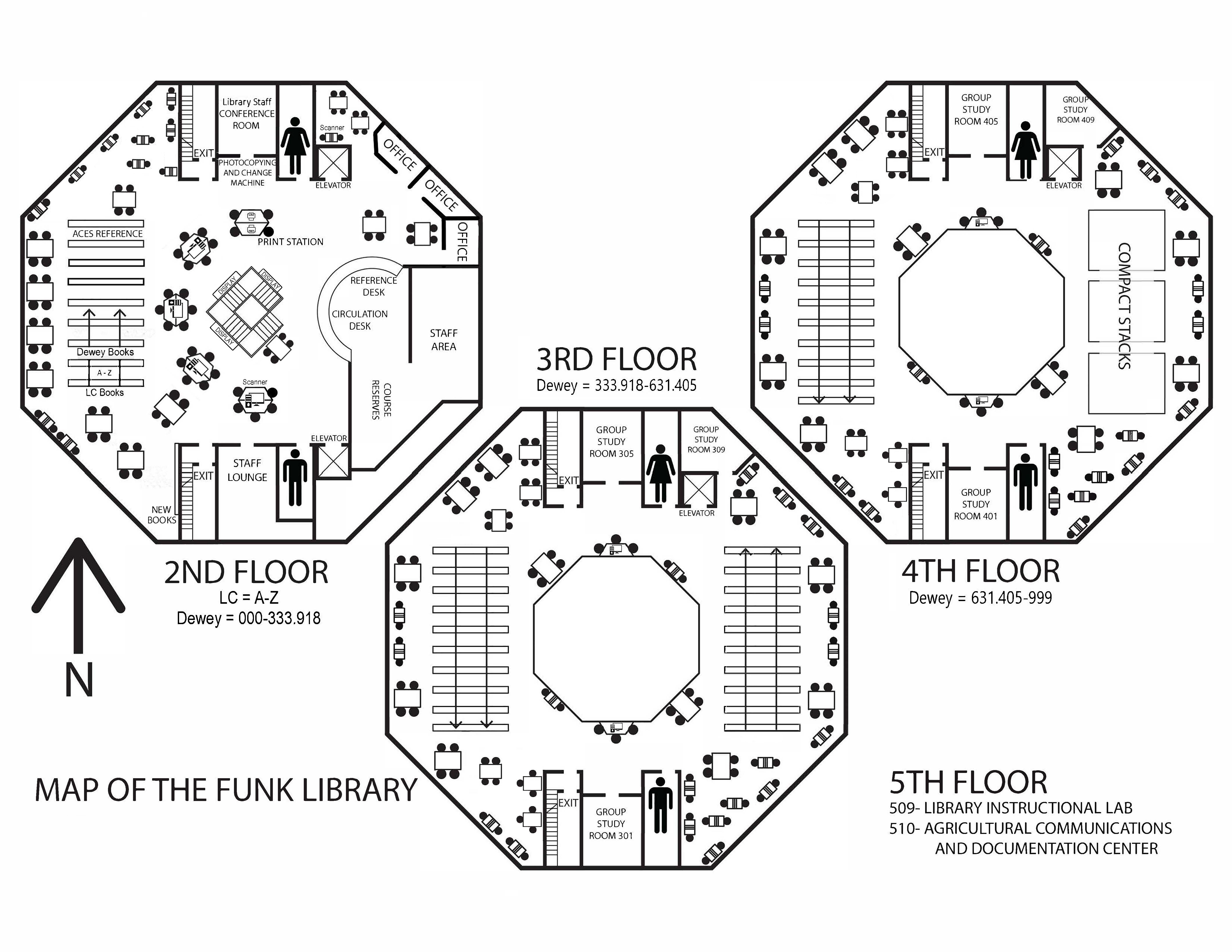
Best regards and good searching. Please pass along your reactions, suggestions and ideas for the Agricultural Communications Documentation Center. Feel free to invite our help as you search for information. And please suggest (or send) agricultural communications documents we might add to this unique collection. We welcome them in hard copy (sent to Ag Com Documentation Center, 510 LIAC, 1101 S. Goodwin Avenue, Urbana, IL 61801) or in electronic format sent to docctr@library.uiuc.edu .

Get in touch with us when you see interesting items in the ACDC collection and can’t gain full-text access through information in the citation, or through online searching. We will help you gain access.


ACDC News – Issue 09-17

How U. S. crop growers are using social media . A new document in the ACDC collection summarizes results of telephone survey research during early 2009 by Nicholson Kovac, Inc., among large-acreage corn and soybean growers in U.S. Some of the highlights:

  • Sixty-two percent said they have sent or received text messages during the past year.
  • Forty-eight percent of those texting said they send five or more texts per day and 63 percent said they have taken photos with their mobile phones.
  • Forty-seven percent said they spend five hours or more per week online.
  • For their business/farm interests, growers said they use Internet most for e-mail and weather and market information.
  • Eighty-five percent said they visit Web sites related to their farm operations and 76 percent check manufacturers’ Web sites.

Posted at http://www.prweb.com/releases/Nicholson-Kovac/agmedia-study/prweb2767974.htm


“My writing style is indeed idiosyncratic,” says agricultural writer Sue Edmonds of New Zealand. This “late blooming” journalist in the New Zealand Guild of Agricultural Journalists and Communicators is featured on the web site of the International Federation of Agricultural Journalists (IFAJ). She shares some thoughts about her career, how she gets story ideas and how she approaches agricultural writing. She also provides several samples of her writing.

Posted at http://www.ifaj.org/professional-development/professional-features/a-late-blooming-farming-writer.html


Touch-screen learning breaks literacy barriers. “Livestock Guru” is the name of an interactive computer program proving helpful to livestock producers, even those unable to read. Created by researchers at the University of Reading, UK, it teaches farmers how to diagnose, prevent and treat specific animal diseases. Experiences in Bolivia revealed that producers using Guru showed up to 44 percent increase in basic knowledge. This response was 10 percent better than that from conventional media such as videos or written materials. Guru had also been used with success in India and Kenya at the time of this 2006 report we have added to the ACDC collection.

Posted at http://www.developments.org.uk/articles/livestock-guru-cures-cows


Greater transparency – greater public uncertainty – then what? Researcher Lynn Frewer examined that matter in a Toxicology Letters article we added recently to the ACDC collection. “Increasing …pressure has been directed toward maximizing transparency in risk management practices,” Frewer noted. “As a result the uncertainties associated with technical risk assessments…will increasingly be subject to public and stakeholder scrutiny. It is therefore important to communicate this uncertainty in an explicit and understandable way that is focused on the information needs of target audiences.”

Is the public able to understand and deal with uncertainty about complex risks? Frewer examines research about this question (answering “yes”), calls for more research and urges institutions to “learn how to internalize public views and societal values into the process of risk analysis.”

Abstract and full-text purchase information at www.sciencedirect.com


“Masses have sense.” Lynn Frewer’s thoughts about abilities of the lay public to understand complex risks remind us of a 1960 document in the ACDC collection by Samuel Lubell. He spent a career analyzing opinion trends (including research among farmers and others in rural areas). His observations prompted him to emphasize several points:

  • It is not true that the masses of people are less able than the more educated to master complicated detail. “I have done surveys of attitudes on automobiles and lawn-growing and have been astonished at the amount of complex, technical information the average man possessed on things that interest him .”
  • In voting, professors are as emotional and irrational as ditch-diggers.
  • “In the light of this, it is difficult to believe that the general public is inherently incapable of understanding complex public issues.”

This document is not in digital format. Check with us docctr@library.illinois.edu if you are interested.


Students learning rural journalism, hands-on . Using a two-part video series, students in a community radio class at West Virginia University documented their experience in learning how to help local residents tell their own stories. Class members teamed with teachers and students of Monroe County Vocational Technical Center to create a local news program, “News at noon.” It was aired daily on an FM station based at the Center. Class members mentored and otherwise helped the high school students and local residents learn how to cover and report news of local interest. Beyond the skills involved, college and high school students alike said they learned about the value of community radio.

View the video at http://www.youtube.com > Search on “grassroots journalism”


Communicator activities approaching

October 15, 2009
Deadline for submission of abstracts of papers and posters to be presented at the International Association of Agricultural Information Specialists (IAALD) XIIIth World Congress, Montpellier, France, April 26-29, 2010. Theme: “Scientific and technical information and rural development: highlights of innovative practices.”
Information: http://iaald2010.agropolis.fr

October 15-18, 2009
Annual conference of the Association of Food Journalists in Houston, Texas USA.
Information: http://www.afjonline.com

October 18-25, 2009
“The state of forestry information worldwide.” Special session at the XIII World Forestry Congress 2009 in Buenos Aires, Argentina.
Information: http://www.fao.org/forestry/53818/en/

October 30, 2009
Deadline for research and professional papers to be presented in the Agricultural Communications Section of the Southern Association of Agricultural Scientists (SAAS) conference on February 6-9, 2010, in Orlando, Florida.
Information: http://agnews.tamu.edu/saas > “Call for Papers for 2010 Meeting”

November 11-13, 2009
“Connecting: 2010 and beyond.” Annual convention of the National Association of Farm Broadcasting (NAFB) in Kansas City, Missouri USA.
Information: www.nafb.com


Closing with a farm limerick . We close this issue of ACDC News with a limerick that caught our eye recently (yes, really) in the February 1, 1912, issue of Prairie Farmer .

A town chap who played in the band
Felt a call to go back to the land.
When he raises big corn
He can blow his own horn,
An advantage you’ll all understand.


Best regards and good searching. Please pass along your reactions, suggestions and ideas for the Agricultural Communications Documentation Center. Feel free to invite our help as you search for information. And please suggest (or send) agricultural communications documents we might add to this unique collection. We welcome them in hard copy (sent to Ag Com Documentation Center, 510 LIAC, 1101 S. Goodwin Avenue, Urbana, IL 61801) or in electronic format sent to docctr@library.uiuc.edu .

Get in touch with us when you see interesting items in the ACDC collection and can’t gain full-text access through information in the citation, or through online searching. We will help you gain access.


ACDC News – Issue 09-16

Time magazine as “a part of a conversation.” The role of news media jumped front-and-center during August when Time magazine devoted cover emphasis to a commentary critical of the agrifood system and practices in the U.S. “Getting real about the high price of cheap food” is the title of this piece by Bryan Walsh. AgriTalk host Mike Adams asked the author in a phone interview if that isn’t one-sided – and if readers of a news vehicle wouldn’t get the perception of such an article as a news story rather than an opinion piece.

“We’re getting a lot of stories that are more angled toward the point of view of the writer,” Walsh replied, referring to recent changes in the editorial approach at Time , “and there’s pluses and minuses to that in many ways. On the one hand, we’ve found that we want to be part of a conversation and to be in front of the conversation means not just recording one perspective and another, just going back and forth like that, but saying this is what we can bring to the story and this is what we think and then we start off this conversation that hopefully goes forward.”

You can read text of the phone interview at:
http://www.drovers.com/news_editorial.asp?pgID=675&ed_id=6029

Some of the early and varied responses in this media-coverage issue have been added already to the ACDC collection. Here are a few samples:

” Ag groups riled by Time article: call for letters to the editor ”

” Time trashes American agriculture ”

” Sustainable ag meets MSM (mainstream media) – and wins ”

” Time brings the debate over food reform to the living room ”


Ag journalists are paying more attention to ethics, according to a research summary in the August/September issue of ByLine , newsletter of the American Agricultural Editors’ Association (AAEA). The report highlights 20 years of research among AAEA members about their experiences and views concerning the relationship between advertising and editorial coverage.

Findings suggest that AAEA members, their publications and advertisers are showing signs of strengthening the role of editorial independence in today’s commercial environment. However, these agricultural journalists continue to have significant ethical concerns. Researchers Karen Simon, Owen Roberts and Jim Evans reported findings during the recent Agricultural Media Summit and International Federation of Agricultural Journalists Congress in Fort Worth, Texas.

Posted at http://www.ageditors.com > August/September 2009 issue of ByLine


Bringing juice-taste marketing to mass media . That’s the idea behind efforts of an ink marketer, US Ink, to encourage newspapers to stick flavored strips on pages to allow readers to taste the product advertised. The patented product, Taste-It Notes, was introduced earlier this year, according to a report from NorthJersey.com. The flavored strip is sealed inside a pouch to keep it fresh and hygienic until the package is broken open and tasted. The report we have added to the ACDC collection described positive results from a peel-and-taste strip placed in a grape juice advertisement in People magazine.


Beware the varied faces of “indigenous.” “To most readers, listeners or viewers, the word ‘indigenous’ would seem harmless enough as a description of an exotic group in a far away place,” wrote Christina Tercero in the Global Journalist magazine of the International Press Institute. “But actually the writer using it generally does so out of a laziness or need for over-simplification. In fact, its use is controversial, leaving a large gap between reality and what the word conveys to readers.”

Tercero based these observations on an analysis of how reporters at the British Broadcasting Corporation (BBC) and CNN determined when, how and to whom to apply the term “indigenous.”

Citation: Defining indigenous in international news
Posted at http://www.globaljournalist.org/stories/2007/01/01/defining-indigenous-in-international-news/


Continuing concerns about cloning animals . A Gallup Poll during May 2009 revealed that U. S. citizens are still concerned about cloning of animals. Sixty-three percent of respondents in this national survey considered the cloning of animals as morally wrong. About one-third considered cloning of animals as morally acceptable. Less than two percent said they don’t know.

Citation: Gallup Poll: whether cloning of animals is morally acceptable or morally wrong
Posted at http://institution.gallup.com


Using social media in Extension: a beginner’s guide. A new resource we have added to the ACDC collection offers insights and tips in plain language for Extension educators who wish to consider using social media. This brief guide identifies some social media applications in Extension programming and provides tips such as:

  • Using a newsreader
  • Commenting on others’ work
  • Sharing content, knowledge, ideas and products openly
  • Writing for the Web
  • Taking part in online communities
  • Using Creative Commons licenses

Posted at http://collaborate.extension.org/wiki/Beginners_Guide_to_Social_Media_in_Extension


Communicator activities approaching

October 15, 2009
Deadline for submission of abstracts of papers and posters to be presented at the International Association of Agricultural Information Specialists (IAALD) XIIIth World Congress, Montpellier, France, April 26-29, 2010. Theme: “Scientific and technical information and rural development: highlights of innovative practices.”
Information: http://iaald2010.agropolis.fr

October 15-18, 2009
Annual conference of the Association of Food Journalists in Houston, Texas USA.
Information: http://www.afjonline.com

October 18-25, 2009
“The state of forestry information worldwide.” Special session at the XIII World Forestry Congress 2009 in Buenos Aires, Argentina.
Information: http://www.fao.org/forestry/53818/en/

October 30, 2009
Deadline for research and professional papers to be presented in the Agricultural Communications Section of the Southern Association of Agricultural Scientists (SAAS) conference on February 6-9, 2010, in Orlando, Florida.
Information: http://agnews.tamu.edu/saas > “Call for Papers for 2010 Meeting”

November 11-13, 2009
“Connecting: 2010 and beyond.” Annual convention of the National Association of Farm Broadcasting (NAFB) in Kansas City, Missouri USA.
Information: www.nafb.com


We’re still fertilizing the agri-vocabulary. Last month we explained how “pellucid” is among the words MSN Encarta insists everyone simply should know. It describes expression that is easy to understand, clear in meaning or transparent. We asked what fresh term(s) we might use to describe the opposite kind of writing.

Thanks to Brian Meyer at Iowa State University for this suggestion:

“The opposite might be…putrid?”


Best regards and good searching. Please pass along your reactions, suggestions and ideas for the Agricultural Communications Documentation Center. Feel free to invite our help as you search for information. And please suggest (or send) agricultural communications documents we might add to this unique collection. We welcome them in hard copy (sent to Ag Com Documentation Center, 510 LIAC, 1101 S. Goodwin Avenue, Urbana, IL 61801) or in electronic format sent to docctr@library.uiuc.edu .

Get in touch with us when you see interesting items in the ACDC collection and can’t gain full-text access through information in the citation, or through online searching. We will help you gain access.


ACDC News – Issue 09-15

H1N1 Flu? Swine Flu? – Appealing to a media ombudsman. Here is one method being used to help clear the confusion. A concerned resident in Ontario, Canada, is appealing to the ombudsman of the Canadian Broadcasting Corporation (CBC) for help in addressing this internationally pesky issue of terminology. Owen Roberts, University of Guelph, describes the effort in his blog, “Urban Cowboy.” The resident argues that use of the term “swine flu” leads to unjust bias against pork and harm to the swine industry.

Posted at: http://www.urbancowboy.ca/2009/08/17/cbc-ombudsman-asked-to-intervene-on-h1n1-swine-flu-verbiage/


“Ethical food shopping is now mainstream in Europe ,” according to research from IGD, an international food and grocery firm. “Until recently, ethical food shoppers were seen as niche. Now as many as seven out of ten Europeans we surveyed buy ethically at least some of the time.”

What are the dimensions of ethical shopping? Priorities vary in countries and cultures across Europe, but here are some aspects of it in the minds of consumers:

  • Environmentally friendly
  • Organic, sustainable
  • Fair Trade
  • Local sourcing
  • Animal welfare

The report we added to the ACDC collection emphasized how food products with ethical credentials offer immense growth potential.

Citation: British shoppers lead the way
Posted at: http://www.igd.com/index.asp?id=1&fid=6&sid=25&tid=90&folid=0&cid=372


“Celebrity chefs – the new demagogues.” That is the title of a commentary we added recently to the ACDC collection from the International Public Relations Association. Pointing to the popularity of celebrity chefs in the United Kingdom, the author expressed concern about:

  • The dip in credibility of scientific experts producing nutrition-related reports that often contradict one another.
  • A growing relationship between the exultation of food (from chefs) and fear (from news of the day).

“Clearly the days of activist celebrity chefs are with us. Good luck to them, but for those of us charged with the challenge of communicating on behalf of the rest of the food industry, let’s try that bit harder.”

Citation: Celebrity chefs
Posted at http://www.ipra.org/detail.asp?articleid=990


Public image of U. S. farming and agriculture shown slipping . We recently assembled for the ACDC collection a six-year trend analysis of this “image” matter. Results are based on results of seven Gallup Polls among U. S. adults between 2001 and 2008. Respondents in each survey were asked to say whether their overall view of farming and agriculture is very positive, somewhat positive, neutral, somewhat negative or very negative.

  • The share of “very positive” responses dropped from 23% in 2001 to 13% in 2008
  • The combined share of “very positive” and “somewhat positive” responses dropped from 59% in 2001 to 50% in 2008

Citation: Gallup Poll: views about farming and agriculture, 2001-2008
Check with us by return e-note if you are interested in seeing the detailed results.


A widening view of agricultural communications research . The broad and scattered nature of research literature about agricultural communications became more apparent through a recent analysis by researchers Eric Abbott, Jennifer Scharpe and Jim Evans. They presented findings at the Association for Communication Excellence (ACE) conference in Des Moines, Iowa, during June. Here is some of what they learned in examining such literature published between 2000 and 2008:

  • “By any measure, the literature of agricultural communication is widely scattered…” Researchers identified articles in more than 100 journals and concluded: “Databases such as Communication Abstracts, Agricola, and CABabstracts are missing most of the relevant literature.”
  • “The 391 articles/books/dissertations collected in the current database from 2000 to 2008 represent only a portion of the total, yet certainly demonstrate a large amount of research activity in this area.”
  • “The problem, and thus opportunity, is how to help network the diverse group of researchers from 132 universities/institutions who are active researchers in agricultural communications.”

Citation : Trends in agricultural communication research: 2000-2008
Contact the lead author at eabbott@iastate.edu to inquire about access to the full report.


Tainted milk in China: struggles in coverage. A report that we added recently to the ACDC collection suggested that in early 2009 “the traditional media still had not managed to investigate and report the magnitude” of allegations regarding melamine-tainted milk powder in that country. A China-based journalist, writing under the pseudonym of Robert Chang, described in the Global Journalist how government media, “netizens,” marketers, public relations firms and other parties responded. He emphasized the impact of online forums in this matter.

“Typically Chinese Internet users view cyberspace as a freer place to voice their angers, lodge complaints and expose corrupted officials,” Chang reported. He said China Internet Network Center reported in July 2008 that China has 253 million Internet users, the biggest online population in the world.

Citation: Tainted
Posted at http://www.globaljournalist.org/stories/2009/02/28/Tainted


Communicator activities approaching

September 10-12, 2009
“Shaping the future marketplace: the opportunity hunters.” Annual conference of the Canadian Farm Writers’ Federation in Edmonton, Alberta, Canada.
Information: http://www.afwa.ca

September 15-19, 2009
“Theory and practice: advisory work in a time of turbulence.” 19th European Seminar on Extension Education in Assisi, Italy.
Information: http://www.agraria.unipg.it/ESEE2009PERUGIA/index.html

October 15, 2009
Deadline for submission of abstracts of papers and posters to be presented at the International Association of Agricultural Information Specialists (IAALD) XIIIth World Congress, Montpellier, France, April 26-29, 2010. Theme: “Scientific and technical information and rural development: highlights of innovative practices.”
Information: http://iaald2010.agropolis.fr

October 15-18, 2009
Annual conference of the Association of Food Journalists in Houston, Texas USA.
Information: http://www.afjonline.com

October 18-25, 2009
“The state of forestry information worldwide.” Special session at the XIII World Forestry Congress 2009 in Buenos Aires, Argentina.
Information: http://www.fao.org/forestry/53818/en/

November 11-13, 2009
“Connecting: 2010 and beyond.” Annual convention of the National Association of Farm Broadcasting (NAFB) in Kansas City, Missouri USA.
Information: www.nafb.com


Aiming to be agri-pellucid. We close this issue of ACDC News with a little spice for the menu of agricultural writers. “Pellucid” is among the words MSN Encarta insists everyone simply should know – to fertilize the vocabulary. The term describes expression that is easy to understand, clear in meaning or transparent. What fresh term(s) might we use to describe the opposite?


Best regards and good searching. Please pass along your reactions, suggestions and ideas for the Agricultural Communications Documentation Center. Feel free to invite our help as you search for information. And please suggest (or send) agricultural communications documents we might add to this unique collection. We welcome them in hard copy (sent to Ag Com Documentation Center, 510 LIAC, 1101 S. Goodwin Avenue, Urbana, IL 61801) or in electronic format sent to docctr@library.uiuc.edu .

Get in touch with us when you see interesting items in the ACDC collection and can’t gain full-text access through information in the citation, or through online searching. We will help you gain access.


ACDC News – Issue 09-14

Paying attention to media coverage of H1N1 flu in the U. S. Here are several recent analyses of the amount and kinds of media attention devoted to the H1N1 flu:

” Media drumbeat amplifies coverage of flu outbreak ”

” Pew Study: Top U. S. papers’ swine flu coverage lacking ?”

” A fierce outbreak of swine flu coverage ”

” Media coverage: Influenza A (H1N1) outbreak 2009 ”


New IFAJ report highlights 11 uses of blogs to cover agriculture . Visit the web site of the International Federation of Agricultural Journalists to see a recent review of ways in which journalists in various countries are using blogs to cover agriculture. Uses range from entertainment to hard-news coverage, and beyond. Maybe you can add to this list, from your experience.

Citation: Why and how journalists around the world are using blogs to cover agriculture
Posted at http://www.ifaj.org/news/news-detail/article/1/why-and-how.html?no_cache=1&cHash=275453a470


Campaign promotes fair trade in the United Kingdom. We have added to the ACDC collection a case report about “Fairtrade Fortnight.” The author is Barbara Crowther of the Fairtrade Foundation, a UK-based independent body that awards the FAIRTRADE Mark to products. The 2009 Fortnight took place during late February and early March. According to this report, the 2008 campaign secured 5,300 media hits across various UK media and involved other activities such as 12,000 local events and visiting farm organization representatives from abroad.

“Our campaign reached an estimated 15 million adults, whilst retailers reported increased product sales during the Fortnight,” Crowther reported.

Citation: Fairtrade Fortnight whets consumer appetite
Posted at http://www.ipra.org/detail.asp?articleid=940


No picture without people. “Zooming zestfully: documentary on photo journalism” is a 12-minute exploration of a photojournalist’s approach to working in rural India. Freelance photographer Zishaan Latif permitted two journalism students to document him on the job.

“The human side of life” is Latif’s beat and he explains that he takes no picture without people. This report, available on YouTube, features some of his photos. You will also see how he goes about taking them.

Citation: Zooming zestfully
View the video at http://www.youtube.com > Search on “zooming zestfully”


How students gain global agri-food perspectives (plus media skills). Fifty-one University of Illinois students have been “immersed” in the European agri-food sector during the past two years. At the same time, they have learned to use a variety of communications skills. These students have done so through an International Business Immersion Program (IBIP) program with the theme: “Firm, channel and industry dynamics within the European agri-food sector.” Each year, they completed a preparatory course on campus, then an intense two-week immersion in agri-food activities throughout Europe. On the communications side, each student learned and applied skills in research reporting, interviewing, blogging, video production and article writing.

You can learn more about the program and see the trip book and photos during students’ 2008 and 2009 studies in Europe at: http://ibip.illinois.edu


Juan Valdez: updating the image of a global icon. Since 1959, a sombrero-wearing Colombian farmer, Juan Valdez, has served as “coffee ambassador to the world.” Colombia is recognized as the first South American nation to claim an association between a country and a world commodity. Recently, the image of Juan Valdez has been retooled. Reporting recently in the International Public Relations Association web site, Juan-Carlos Molleda explained steps the National Federation of Coffee Growers of Colombia has taken since 2004. The Federation has revamped the Valdez image to one of a youthful and authentic identity through a national contest that included the active participation of real Colombian coffee growers.

Citation: Authentic passion about Colombia
Posted at http://www.ipra.org/detail.asp?articleid=976


Communicator activities approaching

August 23-27, 2009
“Worldwide trends in open access to agricultural information.” Agricultural libraries discussion group at the World Library and Information Congress of the International Federation of Library Associations and Institutions (IFLA) in Milan, Italy.
Information: www.ifla.org/annual-conference/ifla75/call-agricultural-en.htm

August 26-28, 2009
“Information and communication technologies for sustainable development.” 4th World Information Technology Forum in Hanoi, Vietnam.
Information: http://www.witfor.org

August 31-September 4, 2009
Sixth International Conference of Animal Health Information Specialists in Brisbane, Queensland, Australia. Held in conjunction with the International Congress on Medical Librarianship.
Information: http://www.icml2009.com/events/icahis.html

September 10-12, 2009
“Shaping the future marketplace: the opportunity hunters.” Annual conference of the Canadian Farm Writers’ Federation in Edmonton, Alberta, Canada.
Information: http://www.afwa.ca

October 15, 2009
Deadline for submission of abstracts of papers and posters to be presented at the International Association of Agricultural Information Specialists (IAALD) XIIIth World Congress, Montpellier, France, April 26-29, 2010. Theme: “Scientific and technical information and rural development: highlights of innovative practices.”
Information: http://iaald2010.agropolis.fr

October 15-18, 2009
Annual conference of the Association of Food Journalists in Houston, Texas.
Information: http://www.afjonline.com


Precision ag sends courtship message. We close this issue of ACDC News with an example of using precision farming technologies for special kinds of communicating. Thanks to ZimmComm New Media for calling our attention to it.

You can see how a Texas crop grower recently used his GPS-based guidance system to plow the letters of his marriage proposal to his girlfriend, Lauren. She got the message when he invited her for an airplane ride that passed over the property. View the couple and the proposal message at:

http://www.precisionpays.com/2009/05/marriage-proposal-thanks-to-precision-ag-tools


Best regards and good searching. Please pass along your reactions, suggestions and ideas for the Agricultural Communications Documentation Center. Feel free to invite our help as you search for information. And please suggest (or send) agricultural communications documents we might add to this unique collection. We welcome them in hard copy (sent to Ag Com Documentation Center, 510 LIAC, 1101 S. Goodwin Avenue, Urbana, IL 61801) or in electronic format sent to docctr@library.uiuc.edu .

Get in touch with us when you see interesting items in the ACDC collection and can’t gain full-text access through information in the citation, or through online searching. We will help you gain access.


ACDC News – Issue 09-13

“Swine flu coverage around the world” is the title of a report we added recently to the ACDC collection from the Project for Excellence in Journalism (PEJ) of the Pew Research Center. During April and May 2009, PEJ studied 12 days of front-page newspaper coverage in seven countries and the top three Spanish-language papers in the U. S. Findings “revealed noticeable differences in attention, prominence and how the papers chose to frame stories.”

For example, the number of cases of this flu in a given country had little to do with the volume of newspaper coverage.

Citation: Swine flu coverage around the world
Posted at http://www.journalism.org/analysis_report/Swine_Flu_Coverage_around_the_World


Trends in U.S. public attitudes to laws about treatment of farm animals . Here are some Gallup Poll survey data we assembled recently about comparative public attitudes in 2003 and 2008. The question in these national surveys among U. S. adults invited opinions about “passing strict laws concerning the treatment of farm animals.” Findings from the two surveys:

May 2003 Survey May 2008 Survey
Strongly support 35% 29%
Somewhat support 29% 33%
Somewhat oppose 20% 21%
Strongly oppose 13% 14%
Don’t know 3% 3%

Citation: Gallup Poll: views about passing strict laws concerning the treatment of farm animals


Pay closer attention to the rural, the poor. In a video we reviewed recently via YouTube, an honored journalist argues for media to pay closer attention to rural people, activities and issues. A 10-minute video, “P. Sainath on Indian media,” features comments by P. Sainath Palagummi Sainath. He is 2007 recipient of the Ramon Magsaysay Award for Journalism Literature and Creative Communication Arts.

Sainath observed that national media in his country assign no journalists to cover poverty and the poor, maintain no “rural” or “labor” beats. He offered reasons for this gap and challenged media to signal the weaknesses in society as well as highlight progress.

Whereas Sainath focused on media coverage in India, his thoughts and concerns resonate with those in any nation who are interested in effective communications in support of sustainable rural development.

Citation: P. Sainath on Indian media
View this video at www.youtube.com/watch?v=QewCqpgBiuw


“Emerging issues in the U. S. organic industry.” That is the title of a new economic information bulletin (June 2009) from the U. S. Department of Agriculture. Rapid growth in consumption of “organic” and “natural” products has led to varied issues, including some related to communications. Among those cited in the bulletin:

  • Consumer sensitivity to the price premium paid for such products, especially during the current economic slowdown.
  • “The low organic adoption rate for grain crops continues to be a bottleneck for expansion of the U. S. organic livestock sector.”
  • Organic producers face competition from new labels, such as the “locally grown” label.

Posted at http://www.ers.usda.gov/Publications/EIB55


Confusion on the “fat” front. Consumer search in the United Kingdom during late 2008 indicated that shoppers are unclear as to what saturated fat is and are confused by the different terms currently used to describe it. Sample terms:

  • Sat fat
  • Fat – of which saturates
  • Saturated fat
  • Saturates

“Only 30% of the 1,000 people interviewed recognized that “saturated fat” meant the same as “saturates. … A further 30% did not know what the term meant at all, 15% thought it was the same as fat in general and 7% believed saturated fat was the same as calories.” This research was commissioned by IGD, United Kingdom.

Citation: IGD develops guidelines for consumer communication
Posted at: www.igd.com > Media Centre


Plenty more mid-year communicator activities

July 31-August 4, 2009
2009 Congress of the International Federation of Agricultural Journalists (IFAJ) in conjunction with the Agricultural Media Summit in Fort Worth, Texas USA.
Information: www.ifaj.org

August 1-5, 2009
“Saddle up, catch the cowboy spirit.” Agricultural Media Summit in Fort Worth, Texas USA. Joint meeting of Livestock Publications Council (LPC), American Agricultural Editors’ Association (AAEA), International Federation of Agricultural Journalists (IFAJ), Agri Council of America Business Media, Agricultural Relations Council (ARC) and the International Association of Agricultural Communicators of Tomorrow (ACT).
Information: www.agmediasummit.org

August 23-27, 2009
“Worldwide trends in open access to agricultural information.” Agricultural libraries discussion group at the World Library and Information Congress, Milan, Italy.
Information: http://www.ifla.org/annual-conference/ifla75/call-agricultural-en.htm

August 26-28, 2009
“Information and communication technologies for sustainable development.” 4th World IT Forum in Hanoi, Vietnam.
Information: http://iaald.blogspot.com/2008/11/world-it-forum-2009.html

August 31-September 4, 2009
Sixth International Conference of Animal Health Information Specialists in Brisbane, Queensland, Australia. Held in conjunction with the International Congress on Medical Librarianship.
Information: http://iaald.blogspot.com/2008/06/sixth-international-conference-of.html


Honored agricultural spy fiction. You read that correctly. And you may recognize it as the lead-in to another honored entry in the latest Bulwer-Lytton Fiction Contest. We close this issue of ACDC News with the runner-up entry in the “Spy Fiction” category of this international literary parody contest hosted by the Department of English and Comparative Literature, San Jose State University. Entrants were challenged to submit bad opening sentences to imaginary novels. Here’s the food-oriented runner-up entry from David Potter, Nagoya, Japan:

“The KGB agent known only as the Spider, milk solids oozing from his mouth and nose, surveyed the spreading wound in his abdomen caused by the crushing blow of the low but deadly hassock and begged of his attacker to explain why she had gone to the trouble of feeding him tainted milk products before effecting his assassination with such an inferior object as this ottoman, only to hear in his dying moments an escaping Miss Muffet of the MI-5 whisper, “It is my whey.”


Best regards and good searching. Please pass along your reactions, suggestions and ideas for the Agricultural Communications Documentation Center. Feel free to invite our help as you search for information. And please suggest (or send) agricultural communications documents we might add to this unique collection. We welcome them in hard copy (sent to Ag Com Documentation Center, 510 LIAC, 1101 S. Goodwin Avenue, Urbana, IL 61801) or in electronic format sent to docctr@library.uiuc.edu .

Get in touch with us when you see interesting items in the ACDC collection and can’t gain full-text access through information in the citation, or through online searching. We will help you gain access.


ACDC News – Issue 09-12

Seven new research reports from ACE conference . These reports were presented recently to the Research Special Interest Group during an Association of Communication Excellence (ACE) conference in Des Moines, Iowa. You can read the abstracts here. Check with the authors about gaining access to full-text reports.


Rural broadband access is not enough. Current discussions about broadband service for rural areas need to move beyond the focus on access, according to a commentary we added recently to the ACDC collection. Joe Dales of Farms.com Professional Services suggested these goals be included:

  • User computer training
  • Internet training
  • Development of relevant broadband business applications

“It can be argued that there is little economic value to society in developing a global leading edge broadband delivery network if its primary use is to download games or videos for rural children.”

Citation: Rural broadband – an important platform
Posted at http://www.professional.farms.com/cms/en/RuralBroadband.aspx


How to cover rural-urban relations . A new professional development feature on the International Federation of Agricultural Journalists (IFAJ) web site offers skills and approaches reporters can use to cover rural-urban issues. This is the fourth in a series about rural-urban communicating. Authors Jim Evans, University of Illinois, and Owen Roberts, University of Guelph, described three types of rural-urban media coverage:

  • Filling gaps in rural-urban understanding
  • Covering rural-urban interests in conflict
  • Covering rural-urban inequities and imbalances

Then they identified skills, tools and perspectives reporters can use with each.

Posted at http://www.ifaj.org > Breaking News section


Part 4. Preparing agricultural journalists/communicators for the 21st Century.

Here are suggestions from Bob Kern, past president and Professional Award recipient of the Association for Communication Excellence, about how to design an undergraduate agricultural journalism/communications program for the 21st Century:

  • “Writing is the primary communications skill – and will remain so for the foreseeable future.”
  • “Within agriculture, schooling should include input/output economics, policy-development process, and U.S. production and marketing within world agriculture.”
  • “Communications teaching should be based on applicable communications theory, emphasizing that which is research-based.”

Read more of Dr. Kern’s suggestions and reasons he offers for emphasizing them.


Thanks to all who contributed to this series. We also invite your thoughts and suggestions about how to prepare agricultural journalists/communicators for the 21st Century.


Karlie

Welcome to a new ACDC staff associate .

We extend a special welcome to Karlie Elliott who joined the ACDC staff during May following her graduation from the agricultural communications program here, with a news-editorial emphasis. She is helping search for documents, review them and process them into the collection. This fall she will enter the masters degree program in the Department of Advertising here at the University of Illinois.

Karlie brings a great combination of skills and interests to the Center. Farm-raised in east-central Illinois, she enjoys and appreciates the full range of activities related to food and agriculture, internationally. Her undergraduate program has involved study in Latin America and Europe. She has gained communications and leadership experience through internships with Caterpillar Inc. and the Office of Communications, U. S. Department of Agriculture. On campus, she has served as president of the College of ACES Council and of the Agricultural Communicators of Tomorrow (ACT) student organization, among other activities. As a junior she was recognized as Robert Harrison Outstanding Junior Leader of the College of ACES. Recently she received the Warren K. Wessels Achievement Award as outstanding senior in the College.


Plenty more mid-year communicator activities

July 31-August 4, 2009
2009 Congress of the International Federation of Agricultural Journalists (IFAJ) in conjunction with the Agricultural Media Summit in Fort Worth, Texas USA.
Information: www.ifaj.org

August 1-5, 2009
“Saddle up, catch the cowboy spirit.” Agricultural Media Summit in Fort Worth, Texas USA. Joint meeting of Livestock Publications Council (LPC), American Agricultural Editors’ Association (AAEA), International Federation of Agricultural Journalists (IFAJ), Livestock Publications Council (LPC) and the National Association of Agricultural Communicators of Tomorrow (ACT).
Information: www.agmediasummit.org

August 23-27, 2009
“Worldwide trends in open access to agricultural information.” Agricultural libraries discussion group at the World Library and Information Congress, Milan, Italy.
Information: http://www.ifla.org/annual-conference/ifla75/call-agricultural-en.htm

August 26-28, 2009
“Information and communication technologies for sustainable development.” 4th World IT Forum in Hanoi, Vietnam.
Information: http://iaald.blogspot.com/2008/11/world-it-forum-2009.html

August 31-September 4, 2009
Sixth International Conference of Animal Health Information Specialists in Brisbane, Queensland, Australia. Held in conjunction with the International Congress on Medical Librarianship.
Information: http://iaald.blogspot.com/2008/06/sixth-international-conference-of.html


Best regards and good searching. Please pass along your reactions, suggestions and ideas for the Agricultural Communications Documentation Center. Feel free to invite our help as you search for information. And please suggest (or send) agricultural communications documents we might add to this unique collection. We welcome them in hard copy (sent to Ag Com Documentation Center, 510 LIAC, 1101 S. Goodwin Avenue, Urbana, IL 61801) or in electronic format sent to docctr@library.uiuc.edu .

Get in touch with us when you see interesting items in the ACDC collection and can’t gain full-text access through information in the citation, or through online searching. We will help you gain access.


ACDC News – Issue 09-11

It’s more than link rot. How about data rot? Thanks to Paul Hixson for introducing that broader question in response to our ACDC News item about the ephemeral nature of live links to agricultural information on the Internet. He alerted us to two recent reports from David Pogue, one in the New York Times and one on CBS Television:

Pogue’s reports examine two aspects of data rot. One involves problems with the medium on which the information is stored (e.g., storage conditions). The other involves obsolescence of storage platforms (e.g., wire recorders and 8-track tape players).

What’s to be done? “…it’s something you have to take responsibility for yourself. No one is going to do it for you,” suggested one of Pogue’s resource specialists.


Farmer-to-farmer video – better than workshops in sparking innovation. A 2009 report in the International Journal of Agricultural Sustainability concluded that “farmer-to-farmer video has great potential to enhance sustainable agriculture by encouraging local innovations.” Researchers reported these findings from a study among 200 women farmers in central Benin:

  • About 92% of those who viewed farmer-to-farmer learning videos and took part in hands-on training workshops developed creative solutions to rice processing based on improved parboiling methods.
  • 72% of those who learned only through video did so.
  • 19% of those who learned through workshops did so.

Thanks to Catherine Mgendi of the Consultative Group on International Agricultural Research (CGIAR) for calling our attention to this report. Other materials in the ACDC collection confirm that implications extend beyond the settings of studies such as this.

Read a summary at: http://www.warda.org/warda/newsrel-videopower-jun09.asp


Food shoppers bombarded and bamboozled. We recently added to the ACDC collection a research summary that raises a caution flag about information overload. Joanne Denney-finch, chief executive of IGD, United Kingdom, reported: “Shoppers tell us they are being bombarded by a variety of issues, day-in, day-out from a variety of sources…and they say that too much information bamboozles them.”

According to reported research findings,” only 21% are very confident that they understand all the information they receive about food, while 19% don’t mind how much information they get – because they usually ignore it anyway.”

Citation: Information overload is industry opportunity
Posted at http://www.igd.com/index.asp?id=1&fid=6&sid=25&tid=90&folid=0&cid=203


Part 3. Preparing agricultural journalists/communicators for the 21st Century.

Here are suggestions from Douglas Starr, professor of agricultural journalism at Texas A&M University, about how to design an undergraduate agricultural journalism/communications program for the 21st Century:

  • “Today’s agricultural journalism/communications students need a Collegiate dictionary, a grammar book and an Associated Press Stylebook, and they need to learn how to use each…”
  • Know, be aware of and be knowledgeable about officials and news sources in various fields of agriculture.
  • “I strongly advocate [education in communication theory and research] because it will stand them in good stead regardless of where their careers take them.”
  • “With the advent of the Internet and the World Wide Web, Ag Comm students should know how to write a second-day story because the Web page gets the first story.”

Read more of Professor Starr’s suggestions and reasons he offers for emphasizing them.


Students produce winning rural-urban videos . You can view three honored videos that college students produced recently to clarify how our food gets from the farm to the dinner table. These videos topped the Alpharma Ag Student Video Contest sponsored by Alpharma Animal Health:

  • “OatS” Produced by a team from the University of Wisconsin-Madison
  • “Today’s Agriculture” Produced by a team from the University of Florida
  • “Beef: Our Priority” Produced by a team from the University of Arizona

Posted at: http://www.meetwhatyoueat.com/winners.aspx


Lots of mid-year communicator activities

June 25-27, 2009
“Free rein in the Big Easy.” Annual seminar of the American Horse Publishers (AHP) organization in New Orleans, Louisiana.
Information: www.americanhorsepubs.org/programs/seminars/index.asp

July 31-August 4, 2009
2009 Congress of the International Federation of Agricultural Journalists (IFAJ) in conjunction with the Agricultural Media Summit in Fort Worth, Texas USA.
Information: www.ifaj.org

August 1-5, 2009
“Saddle up, catch the cowboy spirit.” Agricultural Media Summit in Fort Worth, Texas USA. Joint meeting of Livestock Publications Council (LPC), American Agricultural Editors’ Association (AAEA), International Federation of Agricultural Journalists (IFAJ), Livestock Publications Council (LPC) and the National Association of Agricultural Communicators of Tomorrow (ACT).
Information: www.agmediasummit.org

August 23-27, 2009
“Worldwide trends in open access to agricultural information.” Agricultural libraries discussion group at the World Library and Information Congress, Milan, Italy.
Information: http://www.ifla.org/annual-conference/ifla75/call-agricultural-en.htm

August 26-28, 2009
“Information and communication technologies for sustainable development.” 4th World IT Forum in Hanoi, Vietnam.
Information: http://iaald.blogspot.com/2008/11/world-it-forum-2009.html


Yes, a new winner in agricultural fiction. We have been delinquent in reviewing results of the 2008 Bulwer-Lytton Fiction Contest. You may recall it as an international literary parody contest hosted by the Department of English and Comparative Literature at San Jose State University. The goal of the contest is “childishly simple: entrants are challenged to submit bad opening sentences to imaginary novels.”

So get ready. Here is the runner-up entry in the “Vile Puns” category. Michael L. VanBlaricum of Santa Barbara, California, entered it:

“The Jones family held their annual family reunion on Easter going through over six dozen spiral-cut, hickory-smoked hams and several bottles of a fine Australian shiraz, before Farmer Jones, the head of the family, took the leavings back to Manor Farm to slop Napoleon and his other champion hogs but the seventy-six ham bones fed the pig’s tirade.”


Best regards and good searching. Please pass along your reactions, suggestions and ideas for the Agricultural Communications Documentation Center. Feel free to invite our help as you search for information. And please suggest (or send) agricultural communications documents we might add to this unique collection. We welcome them in hard copy (sent to Ag Com Documentation Center, 510 LIAC, 1101 S. Goodwin Avenue, Urbana, IL 61801) or in electronic format sent to docctr@library.uiuc.edu .

Get in touch with us when you see interesting items in the ACDC collection and can’t gain full-text access through information in the citation, or through online searching. We will help you gain access.


ACDC News – Issue 09-10

More bloggers (including scientists). What about science journalism? Results of a recent Nature News Survey among hundreds of science reporters track the decline of science reporting in mass media. “Supplanting the old media?” is the title of a Nature article, illustrated by a tangle of USB and laptop cords and cables. It highlighted:

  • Traditional media shedding full-time science journalists
  • Growing workloads of remaining science journalists
  • Greater reliance on the public relations departments of scientific organizations
  • More bloggers, including an increasing number of scientists
  • New and diverse employment opportunities for science communicators in government agencies, universities, museums, nongovernmental organizations and other venues
  • Need to “invent new sources of independently certified fact.”

Posted at http://www.nature.com/news/2009/090318/full/458274a.html


New course: Women impacting agricultural communication . Students at Texas A&M University enrolled last fall in a new course focusing on women professionals in agricultural journalism and communication. Teachers Tracy Rutherford and Rebecca McGovney-Ingram planned and taught it as part of a senior seminar. “The course went splendidly,” they report. It featured two areas of focus:

  1. Women who have pioneered and contributed as professional agricultural journalists and communicators, across the decades and in various parts of the career field. Students conducted research and made individual contacts.
  2. Discussion about what it means to be female in this work environment.

A poster describing the course has been added to the ACDC collection.

Contacts: Prof. Tracy Rutherford at trutherford@aged.tamu.edu or Rebecca McGovney-Ingram at rmcgovney-ingram@aged.tamu.edu


Part 2. Preparing agricultural journalists/communicators for the 21st Century.

Here are suggestions from Wayne Swegle, past president and an honorary member of the American Agricultural Editors’ Association, about how to design an undergraduate agricultural journalism/communications program for the 21st Century:

  • The art of simple writing. “I think…communicating in an easily understood fashion, even in story-telling ways, is still in vogue and important in conveying ideas.”
  • Greater understanding of some of the basic laws/rules of economics, as related to agriculture.
  • “Maybe a little dab [of communications theory and research] wouldn’t hurt anything” at the undergraduate level. “I used to say that ‘If you award a PhD to a journalist, you’ve ruined her/him for useful work.’ … Since then, I’ve been disabused of that thinking, of course.”

Read more of Wayne’s suggestions and reasons he offers for emphasizing them.


104th anniversary of the Danish Guild of Agricultural Journalists . On June 5 the Danish Guild will observe its 104th birthday. This special occasion reminds us of poignant comments made by Torsten Buhl in a jubilee speech of 2005.

“It is our ambition to continue as an important and respected forum of exchanging knowledge and information within food and agriculture, just as the guild has been for 100 years. However, we must continue to combine this exchange of information with critical questions – remembering that sustainable development in any context is closely connected to democracy. And that a free press is a precondition of democracy – and vice versa. … Scientific research, development of agricultural practice, husbandry and industry, care of the environment and so on are closely connected to a free and critical press.”

Title: Jubilee speech at NIMB
Posted at http://www.danskeslagterier.dk/smmedia/DLP-jub-Nimb-tale_doc?mb_GUID=EE90C017-0BD4-457B-93EB-D67689D85968.doc


You are marketing solutions, not food products. That message came through clearly from a speaker at the recent National Institute of Animal Agriculture conference in Louisville, Kentucky. Frank Beurskens of ShoptoCook, Inc., highlighted “Meal planning in the supermarket aisle: what consumers are telling us.” Among the insights from this presentation:

  • What to serve each day is the biggest challenge facing shoppers
  • Many complain about “recipe rut,” especially in preparing chicken
  • Shoppers are especially looking for meal items that kids will like
  • They are begging for variety and want to serve healthful food

Presentation posted, via Truffle Media Networks, at http://www.trufflemedia.com/home/content/frank-beurskens-meal-planning-in-the-supermarket-aisle-what-consumers-are-telling-us


Busy season for communicator activities

June 6-10, 2009
“When tillage begins, other arts follow.” ACE.NETC.09 sponsored by the National Extension Technology Conference (NETC) and the Association for Communication Excellence in Agriculture, Natural Resources, and Life and Human Sciences (ACE), in Des Moines, Iowa USA.
Information: http://www.extension.iastate.edu/acenetc2009

June 13-16, 2009
“Branding communications with a kick.” Annual Institute of the Cooperative Communicators Association (CCA) in Kansas City, Missouri USA.
Information: http://www.communicators.coop

June 22-24, 2009
7th World Congress of Computers in Agriculture and Natural Resources in Reno, Nevada USA.
Information: www.wcca2009.org

June 25-27, 2009
“Free rein in the Big Easy.” Annual seminar of the American Horse Publishers (AHP) organization in New Orleans, Louisiana.
Information: www.americanhorsepubs.org/programs/seminars/index.asp

July 31-August 4, 2009
2009 Congress of the International Federation of Agricultural Journalists (IFAJ) in conjunction with the Agricultural Media Summit in Fort Worth, Texas USA.
Information: www.ifaj.org

August 1-5, 2009
“Saddle up, catch the cowboy spirit.” Agricultural Media Summit in Fort Worth, Texas USA. Joint meeting of Livestock Publications Council (LPC), American Agricultural Editors’ Association (AAEA), International Federation of Agricultural Journalists (IFAJ), Livestock Publications Council (LPC) and the National Association of Agricultural Communicators of Tomorrow (ACT).
Information: www.agmediasummit.org


Resolved to “be a wiser wordsmith.” Early this year we added to the ACDC collection a column in which agricultural reporter Cyndi Young-Puyear expressed this goal. She captured a desire and challenge shared by many agricultural journalists and communicators, everywhere: “These are words I just love to roll around on my tongue before speaking them, and others I could choke on before spitting them out.”

Not among her favorites: “carbon footprint,” “faith-based,” “at the end of the day” and acronyms that are “unfamiliar to almost everyone outside of production agriculture.”


Best regards and good searching. Please pass along your reactions, suggestions and ideas for the Agricultural Communications Documentation Center. Feel free to invite our help as you search for information. And please suggest (or send) agricultural communications documents we might add to this unique collection. We welcome them in hard copy (sent to Ag Com Documentation Center, 510 LIAC, 1101 S. Goodwin Avenue, Urbana, IL 61801) or in electronic format sent to docctr@library.uiuc.edu .

Get in touch with us when you see interesting items in the ACDC collection and can’t gain full-text access through information in the citation, or through online searching. We will help you gain access.


ACDC News – Issue 09-09

Update on broadband service in rural America . Recently we added to the ACDC collection the 2009 edition of “Rural Broadband at a Glance,” a report from the U.S. Department of Agriculture. Among the findings reported:

  • Broadband access for both rural and urban populations increased rapidly between 2000 and 2006.
  • Clusters of lower service exist in areas with sparse, aging and declining populations.
  • Internet use (at home or elsewhere) during 2007 reached 63 percent among rural households, compared with 73 percent among urban households.
  • Business development, telemedicine and teleworking are among the drivers for broadband development in rural areas.

Posted at http://www.ers.usda.gov/Publications/EIB47/EIB47.pdf


We missed a message. Did you try to get in touch with us recently about something related to agriculture as portrayed in the ads? An e-mail message with a title to that effect got lost, by accident. We apologize and would encourage you to resend it.


Preparing agricultural journalists/communicators for the 21st Century. Thanks to those who kindly shared their views recently about how to design an undergraduate agricultural journalism/communications program for the 21st Century. Their responses are being added to the ACDC collection. Also, with this issue we begin a series that highlights their suggestions.

Part 1. Samantha Yates, Publications Specialist with the Cotton Economics Research Institute, Texas Tech University , suggests these areas for emphasis:

  • Proper grammar
  • A style of writing that is both intelligent and that speaks to the level of your audience
  • Design and photography
  • Web design “is a must for ag communicators to learn”
  • “Communications theory and research was drilled into me all through graduate school, and while I thought a lot of it was pointless, it has made me better at my job.”

Read more of Samantha’s suggestions and reasons she offers for emphasizing them.


Shoppers still buying local during economic downturn . Two-thirds (65 percent) of United Kingdom shoppers now buy locally branded food, according to research by international grocery firm IGD. In response to a survey late last year, 60 percent predicted the economic slowdown will have no impact on those purchases. Only 20 percent expected to cut back.

“In these tough conditions, many people are keener than ever to support nearby jobs through their spending choices,” explained IGD Chief Executive Joanne Denney-Finch. Research revealed that freshness and environmental reasons also account for consumers’ enthusiasm for local food.

Citation: Shoppers still buying local despite credit crunch
Posted at http://www.igd.com/index.asp?id=1&fid=6&sid=25&tid=90&folid=0&cid=419


“We love eBlasts,” said Denise Faguy in a recent issue of the Highlighter newsletter from Farms.com. “At least we do when they are done properly.” She emphasized how email blasts can:

  • Build brand awareness and loyalty
  • Drive traffic to your website
  • Raise awareness (as well as generate leader or sales) for specific products or services
  • Provide immediate feedback. “In marketing, feedback is such an important tool and that’s why we love eblasts!”

Citation: Why we love eBlasts
Posted at http://www.professional.farms.com/cms/en/eblast.aspx


Is dietary knowledge enough? No. Healthy eating involves more than increasing public awareness of better diets and healthy lifestyles. A recent research report we added from the U. S. Department of Agriculture documented the over-riding impact of “visceral,” impulsive influences.”

Analyses of data about food intake revealed that individuals were significantly likely to consume more calories and lower their diet quality when:

  • Intervals between meals were extended
  • They ate away from home

How about going out for a late meal this evening?

Citation: Is dietary knowledge enough?
Report posted at http://www.ers.usda.gov/Publications/ERR62/#2008-8-11


Busy season for communicator activities

May 21-25, 2009
“Keywords in communication.” 2009 conference of the International Communication Association in Chicago, Illinois USA.
Information: www.icahdq.org

May 24-28, 2009
“25 years of strengthening international agricultural and extension education.” Annual conference of the Association for International Agricultural and Extension Education (AIAEE) in Puerto Rico.
Information: www.aiaee.org

May 27-29, 2009
Fourth international conference on ICT for development, education and training in Dakar, Senegal.
Information: www.elearning-africa.com

June 6-10, 2009
“When tillage begins, other arts follow.” ACE.NETC.09 sponsored by the National Extension Technology Conference (NETC) and the Association for Communication Excellence in Agriculture, Natural Resources, and Life and Human Sciences (ACE), in Des Moines, Iowa USA.
Information: http://www.extension.iastate.edu/acenetc2009

June 13-16, 2009
“Branding communications with a kick.” Annual Institute of the Cooperative Communicators Association (CCA) in Kansas City, Missouri USA.
Information: http://www.communicators.coop

June 22-24, 2009
7th World Congress of Computers in Agriculture and Natural Resources in Reno, Nevada USA.
Information: www.wcca2009.org

June 25-27, 2009
“Free rein in the Big Easy.” Annual seminar of the American Horse Publishers (AHP) organization in New Orleans, Louisiana.
Information: www.americanhorsepubs.org/programs/seminars/index.asp

July 31-August 4, 2009
2009 Congress of the International Federation of Agricultural Journalists (IFAJ) in conjunction with the Agricultural Media Summit in Fort Worth, Texas USA.
Information: www.ifaj.org

August 1-5, 2009
“Saddle up, catch the cowboy spirit.” Agricultural Media Summit in Fort Worth, Texas USA. Joint meeting of Livestock Publications Council (LPC), American Agricultural Editors’ Association (AAEA), International Federation of Agricultural Journalists (IFAJ), Livestock Publications Council (LPC) and the National Association of Agricultural Communicators of Tomorrow (ACT).
Information: www.agmediasummit.org


Best regards and good searching. Please pass along your reactions, suggestions and ideas for the Agricultural Communications Documentation Center. Feel free to invite our help as you search for information. And please suggest (or send) agricultural communications documents we might add to this unique collection. We welcome them in hard copy (sent to Ag Com Documentation Center, 510 LIAC, 1101 S. Goodwin Avenue, Urbana, IL 61801) or in electronic format sent to docctr@library.uiuc.edu .

Get in touch with us when you see interesting items in the ACDC collection and can’t gain full-text access through information in the citation, or through online searching. We will help you gain access.