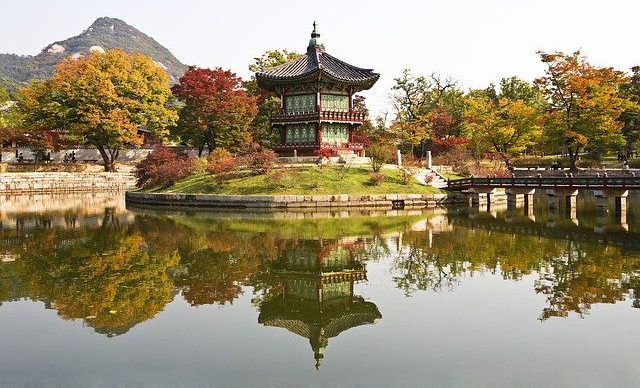
Korean Tradition has three categories: Tangible Culture, Intangible Culture, and Living Culture.
The three categories of culture have rather simple lines of distinction. Tangible culture includes structures, books, old documents, sculptures, and crafts. Intangible culture includes folk play, seasonal customs, thought of filial piety, and Korean medicine. Living culture includes food such as doenjang (soybean paste), kimchi, and traditional teas, as well as household goods such as hanbok (Korean traditional clothes), hanji (Korean traditional paper), red clay houses, ceramics, and potteries. The three cultural realms are not categories of a static separation, rather in an organically interconnected relationship.
Korean Heritage displays the rich historical and cultural diversity derived from its five thousand year history.
“Korea has a beautiful nature and a wealth of priceless national heritage as befits its five thousand year history and traditional culture.
Korea’s national heritage includes tangible and intangible cultural heritage, monuments and folklore cultural materials of historic, artistic, academic and scenic value as national, ethnic or world heritage formulated artificially or naturally.
Throughout the years, Korea has cultivated its own unique national heritage in which the emotions and culture of its people are ingrained. Its national heritage also has an array of attributes ranging from artistic sensibility to scientific sense.
The Korea Heritage Service (KHS) is continuing to provide people with more opportunities to appreciate the value of its national heritage and to make every effort to preserve its precious national heritage which is not only the quintessence of human culture and nature but also the source of life.”
(Korea Heritage Service, Heritage Classification, Republic of Korea)