The IDHH is pleased to announce that all contributing institutions will be featured on the IDHH website’s Browse by Partners feature. This is the first of several site updates planned for 2020 in response to user feedback after launch. Like everything else we do, this website feature relies on good metadata. In order to optimize search and discovery and sorting and faceting sort results, consistent contributor names are essential.
Now is a good time to review your institution’s name as it appears in your metadata records to check for any inconsistencies. To start, checkout the Browse by Partner page and see if you can find your institution. If you discover anything unusual about the way your institution’s name appears on the page, such as duplication or misspellings or if your institution’s name simply does not show up, we highly recommend remediating your institution’s provider field metadata. As always, contact the DPLA’s metadata manager, Joshua Lynch, if you have any questions.
Each contributor institution is one of a nearly 150-piece puzzle of providers from across the state of Illinois. Make your institution’s name stand out and stick.
The data provider field is the DPLA Metadata Application Profile label for the contributing institution name. CARLI member contributors include the institution name in the collection field, dcterms:isPartOf. Other institutions will generally need to include the institution name in the dcterms:provenance field. This field is not repeatable; if you have multiple dcterm:provenance fields in your records, only the first will be used by the DPLA as the name of your institution. Be consistent with this field. The institution’s name should be the same value across all of your institution’s records and collections. Otherwise, collections will be fragmented between multiple provider names that are really from the same institution.
There are some best practices for this provider field metadata. Please include only letters: no special characters. Special characters may break the way institution names display on the Browse by Partners page or in the catalog. In a similar grain, please do not include URIs or URLs in the provider field metadata. These links may break the website and are redundant: each of your institution’s records in the IDHH and DPLA catalogs links back to your local collections automatically. Finally, please keep your institution name short: the shorter the better. If there are multiple terms for your institution, present or not in your metadata, we recommend opting for the shortest one. This makes your institution name easier to read and more digestible to the average user and thus, your materials more findable! Also, extremely long contributor names can take up a lot of space on the Browse by Partners page and in catalog Contributing Institution widget. For more information, please consult the IDHH Metadata Best Practices guide.
So much of our work at the IDHH is focused on photographs, but so often we overlook the history of photography in the 20th century- specifically how photographs and the camera became the way we documented our everyday life.
In celebration of the darkest time of the year and the lights of the winter holidays I want to highlight lantern and glass slides from Mount Prospect Library’s “Dimensions of Life in Mount Prospect”, The Museum of the Grand Prairie through the University of Illinois at Urbana-Champaign’s “Teaching With Cultural Heritage”, and Highland Park Historical Society’s “George D. Rice Collection”.
Magic Lantern. C.1900. Mount Prospect Public Library. Dimensions of Life in Mount Prospect. Permission to display given by Mount Prospect Public Library.
The Magic Lantern was an early projector. Originally invented in the 16th century, projectionists would move painted glass slides behind the lens to create performances and shows. Only lit by candle light, the projection was weak. In the 19th century, small kerosene lamps were mass produced and replaced other, more dangerous illumination methods. Kerosene in part popularized lanterns and put them in churches, schools, homes, fraternal societies and more in the hands of amateur projectionists.
This Magic Lantern from Mount Prospect Public Library’s is a German import from the early 20th century. With 37 glass slides, it projected scenes onto a wall, and included crayons for creating personal slides for new projections.
Magic Lantern. C.1900. Mount Prospect Public Library. Dimensions of Life in Mount Prospect.Permission to display given by Mount Prospect Public Library.
Mount Prospect Public Library’s “Dimensions Of Life in Mount Prospect” includes photographs and descriptions of artifacts from residents of Mount Prospect from the late 19th and early 20th centuries. With artifacts ranging from horse-hair mittens, to glass soda pop bottles, the collection shows how the early days of Mount Prospect and the northwest suburbs of Chicago were influenced by its German heritage and American identity before World War II when the village suburb’s population exploded.
The Museum of the Grand Prairie (formerly known as The Early American Museum) has a large collection of painted glass slides that children could use with toy lanterns.
Magic Lantern Slide: Five Men. C. 1850. Museum of the Prairie, University of Illinois at Urbana-Champaign. “Teaching with Cultural Heritage”.Magic Lantern Slide: Ships along the Coast. C. 1850. Museum of the Prairie, University of Illinois at Urbana-Champaign. “Teaching with Cultural Heritage”.Magic Lantern Slide: Boys on pigs and donkeys. C. 1850. Museum of the Prairie, University of Illinois at Urbana-Champaign. “Teaching with Cultural Heritage”.
These awesome images would be projected on screens, showing sequences and small cartoonish and kitschy ethnographies and scenes of the everyday from ambiguous places.
Compare these slides to the glass lantern slides from the George D. Rice Collection at the Highland Park Historical Society.
Glass Slide: Ships in Glacial Waters. C.1900. Highland Park Historical Society. George D. Rice Collection. Permission to display given by Highland Park Historical Society.Glass Slide: “A Walking Loaf of Hay”. C. 1900. Highland Park Historical Society. George D. Rice Collection. Permission to display given by Highland Park Historical Society.Glass Slide: Man Sitting on the Front Stoop of House. C. 1900. Highland Park Historical Society. George D. Rice Collection. Permission to display given by Highland Park Historical Society.Glass Slide: Group of Men Standing Near Bale of Hay. C. 1900. Highland Park Historical Society. George D. Rice Collection. Permission to display given by Highland Park Historical Society.
Mother Jones is one of the most recognizable figures in the labor struggle of the 19th and 20th centuries. Dressed in all black, wearing outdated dresses and speaking with a thick Irish brogue, Mary Harris “Mother” Jones is known as a fierce union and workers’ rights organizer. In The American Songbag, Carl Sandburg suggests that the folk song “She’ll be Coming ‘Round the Mountain” is based on Mother Jones’ labor organizing around the mines of West Virginia. Her imprisonment in a 1913 labor strike is celebrated by a West Virginian Historic Highway marker: “PRATT. First Settled in the early 1780’s…Labor organizer ‘Mother Jones spent her 84th birthday imprisoned here.” It’s been 89 years since her passing on November 30th, 1930. Although we’re a few weeks late, we wanted to commemorate her passing as an occasion to discuss the Mount Olive Monument and connection to the Virden Massacre. But how did she become to be buried in a small town, alongside a memorial for an event she was not present for, but claimed the lives of seven miners? Mount Olive Public Library’s collection, “Mining and Mother Jones in Mount Olive” contains images of mining in Mount Olive and the story of how one of America’s most famous labor organizers and leaders was buried in a small town in Southern Illinois.
Coal and mining has a long history in Illinois- Father Jacques Marquette and Louis Joliet observed coal along the banks of the Illinois River. In the early 19th century, attracted to farming opportunities, anglo-americans began their migration to Illinois from Appalachia and then from around the world, and started using coal as fuel. By 1818 coal production was taking place along the banks of the Big Muddy River as coal outcropping from river banks was easily harvested.
Coal Miners Posing in the Mine, Mount Olive, Illinois. C.1930-1940. Mount Olive Public Library. Mining and Mother Jones at Mount Olive.
Coal mines were, and still are, the economic powerhouse for many communities across Illinois, and so prominent that towns were named after the fuel, like Carbondale and Coal City, and Diamond (named after “black diamonds”). A coal boom in the 1860’s rocked the relatively small mines that had been powering Illinois and other parts of the Americas for the past 50 years. It coincided with the expansion of railroads across the state, connecting the most-rural parts of Illinois to growing metropolises urgently in need of coal, and moving further into a fully industrialized economy.
The first small unions were reported in 1861, but were short-lived, and often overpowered by the first monoliths of coal mining. Poor working conditions in mines, working seven days a week for low pay balancing the physical cost of labor in the mines prompted unions to begin to form with more vigor. The labor movement, with its epicenter in Chicago, radiated along the railroad lines being built across the nation, carrying union values to places like Virden, and news about the working conditions and hardships to organizers like Mother Jones. By the 1880’s workers’ rights was a national conversation. Federations of unions were forming creating the linkages between the full economy, and strengthening the human ties across class in a country in the adolescence of its industrialization. Mary Harris “Mother” Jones lost her dress shop in the Chicago Fire of 1871. The city’s rapid rebuilding brought a new intensity to the politics of a city that was already economically stratified and growing rapidly through industrialization. The Knights of Labor, an industrial union open to all workers held meetings that Mother Jones’ attended and became radicalized through. The Knights of Labor had become popular with Pennsylvania coal miners in the 1870’s and shared a close friendship with Miners and Mine Laborers Benevolent Protective Association. Together, the two organized wildcat strikes across industry lines, demanding an eight hour workday, better pay, and working conditions. After the Haymarket Riots of 1890, the two unions merged into the United Miners Association. Deeply empathetic to the struggles of coal miners and their families, including the harsh conditions in the mine, and the virtual indentured servitude of being forced to live in high-cost company housing and shop in high-cost company stores on low company pay, Mother Jones made the rights of miners and their families her champion cause.
Information card about Mother Jones, possibly distributed at her funeral. C. 1930. Mount Olive Public Library. Mining and Mother Jones at Mount Olive.
In 1898, the Virden-Chicago Coal Company was the largest coal producer in the state. An Illinois-wide strike had led to negotiations between representatives of the Company and union representatives. However, worried that the agreement would raise the costs of the coal so high that it would make their coal unable to compete with other companies’ coal on the Chicago market, the Virden-Chicago company made arrangements to bring in 50 non-union African-American miners from Alabama, advertising rates of 30¢ per ton of coal.
Coal miners coming up from the mine, Mount Olive, Illinois. C.1930-1940. Mount Olive Public Library. Mining and Mother Jones at Mount Olive.
Slag pile from the Consolidated Coal Company Mine Number 15, Mount Olive, Illinois. C. 1936 Mount Olive Public Library. Mining and Mother Jones at Mount Olive.
The Consolidated Coal Company Mine Number 15, Mount Olive, Illinois. The mine operated from 1905-1951. Mount Olive Public Library. Mining and Mother Jones at Mount Olive.
Strikebreaking with African American workers certainly stoked racial tensions in Southern Illinois and the Labor Movement, a region that was still struggling with racism, poverty, and the fall-out of the civil war. The southern third of the state was surrounded by slave holding states and created a crucible for racial tensions as it intersected with poverty. The United Mine Workers itself was racially integrated and included chapters in Alabama of African American miners who had warned against strikebreaking in Illinois. Written into the initial constitution of the UMW was the inclusion of all people, under the principle and theory that for there to be power in the union, the number of members had to rise. Mining remained one of the few jobs available to African Americans in the Southern Appalachian states including those in North East Alabama. UWM’s inclusion, met both needs. Virden-Chicago Coal Company’s decision to advertise to and employ non-union miners, was an active decision to skirt the union and negotiations made that summer, and in doing so, capitalize on the racism and racial violence. It exploited a promise of a better life for African Americans, while also creating a deeper and more entangled conflict between the white dominated labor unions and African Americans.
The union struck the mine at Virden, furious that their concessions had not been met. On October 12th 1898, a train with the Alabaman strikebreakers arrived at Virden. Beside the would-be miners, were guards armed with rifles, sent to protect the Alabamans from the miners at Virden, who they knew would be armed. Frank W. Lukens, a manager for the Virden-Chicago Coal Company requested that Governor Tanner send in the National Guard to ensure that the strike breakers would have safe entry to the mine, but was refused. As the train pulled into the minehead’s tracks, the union surrounded the train and the guards inside opened fire. The massacre–as it was described later– only lasted 10 minutes and left seven miners dead and 30 more wounded. 4 guards were also killed, and an unreported number of Alabaman workers wounded. The train pulled out and retreated for Springfield. The entire day, the stakes were incredibly high and incredibly clear to all involved except the strike breakers, who were kept in the dark of the strike and the mounting violence in strike breaking. Riots continued for the rest of the day. Seven dead miners first buried in the Mt. Olive cemetery, some 45 miles away from Virden and the site of the massacre- but after the original donor of the land objected to the Union demonstrations commemorating their death, the union began to fund raise for its own acre of burial space. It is the only union owned cemetery in the nation.
Slag pile from the Consolidated Coal Company Mine Number 15, Mount Olive, Illinois. C. 1936 Mount Olive Public Library. Mining and Mother Jones at Mount Olive.
Mother Jones was not at the picket line during the Virden Massacre. But after speaking at the cemetery in October 1923, in memorial of the massacre, wrote to the miners asking that they allow her to be buried alongside the miners who gave up their lives in the massacre.
Letter to the miners of Mount Olive, Illinois. 1923. Mount Olive Public Library. Mining and Mother Jones at Mount Olive.
A large part of Mother Jones’ organizing took place in West Virginia throughout the chaotic Coal Wars between 1912 and 1930. Virden preceded them, but ushered in a strong unionism that extended across the rural midlands of the United States east of the Mississippi. Today, a monument that celebrates her life and the lives of miners stands at the cemetery.
For more on Mother Jones and Mount Olive visit the IDHH.
“I Value My Comfort!” Says Alexander Woolcott. 1940. Pullman State Historic Site. Pullman State Historic Site. Permission to display given by Pullman State Historic Site.
Are you traveling somewhere for the holidays? Take a moment to relax and imagine yourself in some of the more ideal accommodations from Pullman State Historic Site as found in their vintage advertisements from The Saturday Evening Post and National Geographic. The Pullman State Historic Site collection includes nearly 5,000 digitized items from the Pullman Historic Site, the former planned industrial community that specialized in luxury sleeper cars, providing a unique lens into a very intentional joining of civic and everyday life and manufacturing. Far before the Midwest bloc was referred to as “fly-over country”, Pullman cars contributed to a modernized image of the prairie, consistently promoting a “comfortable, convenient, and safe” alternative to cramped travel. In her recent book The Heartland: An American History Kristin Hoganson argues that “The heartland myth insists that there is a stone-solid core at the center of the nation,” which is isolationist, resistant to change, and geographically static. These advertisements directly support that argument representing a historic change of persisting economic growth in the Midwest’s legacy of movement, migration, and seizure. The Pullman advertisements’ specific brand of modernism and modernizing travel depicts spacious, comfortable cars that are conducive for individual and family travel, and suitable even for silent-film star Gloria Swanson. Compare her experience to your probable one on the road, or in the air this Thanksgiving.
“All these wonderful things happen only when you go Pullman” 1950. Pullman State Historic Site. Pullman State Historic Site. Permission to display given by Pullman State Historic Site.
“Elbow Room…that’s what I like when I travel!” 1941. Pullman State Historic Site. Pullman State Historic Site. Permission to display given by Pullman State Historic Site.
Railway Travel Ad. C. 1930. Pullman State Historic Site. Pullman State Historic Site. Permission to display given by Pullman State Historic Site.
“How I stepped into the most surprising role of my career” 1952. Pullman State Historic Site. Pullman State Historic Site. Permission to display given by Pullman State Historic Site.
“Your family will bless you for a vacation trip by PULLMAN” 1955. Pullman State Historic Site. Pullman State Historic Site. Permission to display given by Pullman State Historic Site.
I personally really love the grid system that gets repeated in these advertisements, that build out the entire Pullman itinerary, including the “Short Lesson in Anatomy”.
“Short Lesson In Anatomy”, 1951. Pullman State Historic Site. Pullman State Historic Site. Permission to display given by Pullman State Historic Site.
Happy Thanksgiving.
Additional Sources: Hoganson, Kristin L. The Heartland: An American History. Penguin Books, 2019.
August, September, and October saw another anniversary of the Lincoln-Douglas debates, a watershed moment in Abraham Lincoln’s political career and the end of slavery in the United States. Today in history, on November 7th 1858, incumbent Senator Stephen Douglas defeated Lincoln’s bid for the senate that had spurred their debates around Illinois. At the IDHH, we are looking back to our contributor the University of Illinois at Urbana-Champaign’s “Picture Chicago” and “Teaching with Digital Content (Cultural Heritage Community)” collections to rethink how the relationship between Lincoln and Douglas existed outside of the narrative of the famous 1858 debates.
Both these collections put items from a common cultural heritage in conversation with another, across the typical physical, institutional, and organizational lines that risk siloing these items. The Picture Chicago Collection, includes over 600 images originally published in books about Chicago and digitized by the University of Illinois’ Urbana and Chicago campus libraries, including photos of old Chicago, the city’s gangsters, and early municipal-industrial feats such as the Post Office’s pneumatic tube system and turning the direction of the Chicago River.
Teaching with Digital Content (Cultural Heritage Community),¹ pulls together approximately 1,600 digitized items from a number of sources, including the University of Illinois Rare Book & Manuscript Library and Illinois History and Lincoln Collections as well as the Lincoln Home National Historic Site, as a model for K-12 teachers to integrate digital resources into their curricula, curating objects into discrete teaching units and learning guides. It includes posters from WWII, Japanese Dolls, photographs of civic and everyday life, photographs of pre-modern tools. This collaboration from across the state provides a generous perspective on the everyday lives of Illinoisans from the 19th and 20th centuries.
Stephen A. Douglas: Photograph taken during his debates with Lincoln, 1856. From In Clark E. Carr’s Stephen Douglas. University of Illinois at Urbana-Champaign. Chicago: its history and its builders, a century of marvelous growth.
Slavery’s expansion into the new territories had been a fraught national debate for 40 years preceding the Lincoln-Douglas Debates. The Missouri Compromise of 1820 established the 36°30′ parallel, Missouri’s southern border, limiting the expansion of slavery above that line for all future territories west of the Mississippi River. 30 years later, the Compromise of 1850 was a bricolage of policy that designated California a free-soil territory in exchange for stricter fugitive stage laws in . Four years later, Stephen Douglas introduced the Kansas-Nebraska Act which repealed the prohibition of slavery north of 36°30′ in exchange for “popular sovereignty”, the notion that federal territories could decide for themselves in territorial legislature whether to prohibit or allow slavery, created a deeper rift in the increasingly divided nation. Some believed that Dogulas’ promotion of popular sovereignty and give those with a stake in it immediate agency. Abolitionists took advantage of this, creating a small movement of people rapidly moving to Kansas to overwhelm polls. Open violence between abolitionist and pro-slavery militias became the norm in Kansas prompting the New-York Daily Tribune to name the territory “Bleeding Kansas”.
When the Supreme Court decided in the 1857 Dred Scott decision that neither Congress nor the territorial legislature could exclude slavery from a territory, both the doctrine of popular sovereignty and the compromises were delegitimized and voided. The overlapping policies, compromises, and rulings that continued to permit slavery’s expansion created an increasingly tense and violent political situation with the morality of the nation, the economic spine of new territories, and the lives of 3,000,000 enslaved people all at risk.
At the Republican Convention in Chicago, Illinois Republicans announced that if they won control of the house in the 1858 elections, they would unite in sending Lincoln to the Senate to succeed Senator Douglas- a national spokesman for the Democratic party who had been in the Senate since 1842. In his acceptance speech, now well-known as the “House Divided Speech” Lincoln took a firm stand against the spreading of slavery into territories and attacked popular sovereignty as a naïve form political idealism, citing that neither Congress nor the Supreme Court had respected popular sovereignty as it came to slavery. He claimed that this was a crucial point in deciding either the expansion of slavery to all corners of the country, or abolishing it for good. “‘A house divided against itself cannot stand,’” Lincoln wrote. “ I believe this government cannot endure permanently half slave and half free. I do not expect the Union to be dissolved – I do not expect the house to fall – but I do expect it will cease to be divided. It will become all one thing or all the other.” Lincoln’s platform, the total abolition of slavery or moral grounds to create a more just and united house, differed entirely from Douglas’ belief in territorial legislative governance.
After seizing the nomination, Lincoln spoke in Chicago the day after Douglas, challenging the latter’s appeal to popular sovereignty. When Douglas traveled to Springfield for another speech, Lincoln followed, again attacking popular sovereignty the day after Douglas spoke. After Lincoln’s speech in Springfield, Lincoln and Douglas chose to debate in the seven remaining Congressional districts around Illinois. The debates were each three hours long, and were held in Ottawa, Freeport, Jonesboro, Charleston, Galesburg, Quincy, and Alton, between August 21st and October 15th. Douglas’ political fame and the gravity of slavery expansion attracted national attention from newspapers. People flocked to the debates, with especially large crowds in Freeport, Quincy, and Alton.
In the Freeport debate, Lincoln challenged Douglas to defend popular sovereignty against the Dred Scott decision, in which the Supreme Court decided that slavery could not be excluded from territories, regardless of territorial legislation. Douglas’ words “It matters not what way the Supreme Court may hereafter decide as to the abstract question whether slavery may or may not go into a Territory under the Constitution, the people have the lawful means to introduce it or exclude it as they please” rejected the certainty of the Dred Scott Decision, thereby establishing himself as a politician who would continue the spirit of compromises that were becoming bloody. The Freeport Doctrine, as it became known, alienated voters in both the northern free-states and the southern slave-holding states. Historians agree that this doctrine ultimately cost Douglas the presidency in 1860, but elevated Lincoln’s appeal to abolitionists across the Union.
Douglas went on to serve another term in the Senate, with the Democrats winning control of the Illinois General Assembly in the 1858 election. The debates continued to make an impact on the political climate. After the election, Lincoln collected the transcripts of the debates from newspapers and rigorously edited them, removing strategically manipulated text published by partisan newspapers looking to make one candidate or the other incompetent, and published them as one volume.
Letter from Abraham Lincoln to Joseph Cunningham, written one day after Ottawa Debates, August 22nd, 1858.University of Illinois at Urbana-Champaign Illinois History and Lincoln Collections. Teaching With Digital Content (Cultural Heritage Community)
The stakes were incredibly high, with both the moral spine of the rapidly expanding nation and the lives of millions of people being directly impacted. Looking at the objects in the IDHH provided by the University of Illinois Library’s Digital Collections, we can look closer at the relationship between Lincoln and Douglas past the narrative of the debates, the “House Divided” speech and the Freeport Doctrine. In a letter written by Lincoln to Joseph Cunningham, a judge and newspaper publisher living in Urbana, Illinois Lincoln reflects on “crossing swords” with Douglas at their first debate in Ottawa the day before.
Letter from Abraham Lincoln to Joseph Cunningham, written one day after Ottawa Debates, August 22nd, 1858.University of Illinois at Urbana-Champaign Illinois History and Lincoln Collections. Teaching With Digital Content (Cultural Heritage Community)
“The fire flew some,” Lincoln wrote to Cunningham, “and I am glad to know I am yet alive. There was a vast concourse of people– more than could near enough to hear.” Lincoln and Douglas had known each other and been debating for 20 years before hand, meeting first in the then-state capitol Vandalia and debating multiple times in the 1840’s and meeting for several concurrent speeches in the 1854 campaign. Their report was already well established, but could be easily overlooked, especially considering the political influence Douglas carried with him as the “Little Giant”.
In fact, the closeness of the political circle in Illinois, radiating outwards from the circuit courts, created a culture in which the political overtly crossed into their personal lives. It’s well known that Mary Todd Lincoln was courted by both Lincoln and Douglas in the 1840’s, shortly after moving to Springfield from her Lexington home. But an even more impressive proof of the proximity of Lincoln and Douglas is the story of these two life masks, made by Chicago sculptor Leonard Volk.
Douglas, a cousin of Volk’s wife Emily Clarissa Barlow, sponsored Volk to study in Rome. Upon his return in 1857 Volk chose to open a studio in Chicago, and created a life mask of Douglas.
Life mask of Stephen Douglas created by sculptor Leonard Wells Volk, 1857. University of Illinois at Urbana-Champaign Rare Books and Manuscripts Library. Teaching With Digital Content (Cultural Heritage Community)
The following year, Lincoln was introduced to Volk by Douglas himself during the debates. Lincoln, having read of Volk’s work, promised to sit for him for a bust the first chance he had. In an 1881 essay “The Lincoln Life-Mask and How it Was Made”, Volk recalls waiting nearly two years to see Lincoln again. In April 1860 while visiting Chicago, Lincoln finally came to sit for Volk in his studio on Washington and Dearborn Street, coming daily before court opened. Volk chose to create a plaster cast of Lincoln’s face and torso to base the bust from, rightly betting that Lincoln would only be in Chicago for a short while. The life mask that Volk created is one of only two life masks of Lincoln.
Life mask of Abraham Lincoln created by sculptor Leonard Wells Volk, 1860. University of Illinois at Urbana-Champaign Rare Books and Manuscripts Library. Teaching With Digital Content (Cultural Heritage Community)
Volk continued to build a reputation as an artist and educator in Chicago. In 1866, along with a group of other Chicago artists founded the Chicago Academy of Design, which would become the School Art Institute of Chicago. He continued to create work based off the likeness of Douglas and Lincoln, including creating the Douglas Tomb and Memorial in Chicago and the statue of Lincoln on the east front of the Illinois State Capitol in Springfield. It is so easy to overlook the connections these figures had when considering the historical narrative and the stakes at hand. These objects help us remember the reality of their lives, while also bringing these cultural heritage objects to life. The Volk life masks became the templates for images of Lincoln and Douglas, and the reproductions of the Lincoln bust found in town halls, libraries, schools, court rooms and more across the nation. For more Lincolniana, including the legacy of the Lincoln-Douglas debates, see all items related to Lincoln and Douglas on the IDHH.
Additional source:
Volk, Leonard W., et al. “The Lincoln Life-Mask and How It Was Made Reprinted from the Century Magazine for December, 1881: by Permission of the Century Company.” Journal of the Illinois State Historical Society (1908-1984), vol. 8, no. 2, 1915, pp. 238–259. JSTOR, www.jstor.org/stable/40194303.
¹Editor’s Note, 09/2024: This collection no longer exists.
We need your input! The Illinois Digital Heritage Hub website is now live but that’s not the end of the story. Changes are on the way, guided by the input and insight from site users like you. Please take a 4-question survey to tell us what you think about the website and portal. We welcome suggestions to improve existing content and ideas for new features. And if there’s something you really like, let us know. Thank you for helping us make the website better.
Happy Halloween from the IDHH. Tonight we’re staying in and looking back through our most chilling collections from our contributors. If you’re feeling the boundary between this and other worlds thinning tonight, and looking for a little more, we recommend starting with the Cornelia Neltor Anthony and Frank D. Anthony Book Plate Collection at West Chicago Public Library District. The Cornelia Neltor Anthony and Frank D. Anthony Book Plate Collection includes over 6000 individual book plates collected over 12 years by Cornelia Neltor Anthony before she donated her collection in 1935. At one point considered the second largest collection, just behind the Library of Congress’, the book plates show the more eerie side of individual book collecting. Used to claim ownership of a book, to both deter book thieves and provide instructions for those who come across lost books. Here among the ex-libris are depictions of reading and what books contain, including dark and stormy nights:
It was a dark and stormy night. Waves and lightning were shaking the castle. From the library of Winward and Hazel Prescot. Designed by Charles William Sherborn. 1911.West Chicago Public Library District. Cornelia Neltnor Anthony and Frank D. Athony Book Plate Collection. Permission to display given by West Chicago Public Library District.
Reading by candlelight:
Reading through the night, the pages lit by candlesticks. From the library of Phoebe C. Greeley’s collection, designed by Julia Collins Stohr. 1926. West Chicago Public Library District. Cornelia Neltnor Anthony and Frank D. Anthony Book Plate Collection. Permission to display given by West Chicago Public Library District.
or other scenes with archaic and occult moods:
When the storm cleared a full moon rose behind the tower. Book plate from Helen Banks, designed by Charles Searle McDonald, 1922. West Chicago Public Library District. Cornelia Neltnor Anthony and Frank D. Anthony Book Plate Collection. Permission to display given by West Chicago Public Library District.
Including fantastic and macabre images of reading:
Goblin turns the page. From the Library of Charles S. Dixwell, designed by G. H. McCall. 1928.West Chicago Public Library District. Cornelia Neltnor Anthony and Frank D. Anthony Book Plate Collection. Permission to display given by West Chicago Public Library District.
Fool’s nightmare. Designed and owned by Dana Willard Stockbridge, 1922.West Chicago Public Library District. Cornelia Neltnor Anthony and Frank D. Anthony Book Plate Collection. Permission to display given by West Chicago Public Library District.
Here come the bats. From L. Jirku’s library, designed by Vaclav Rytir, 1913. West Chicago Public Library District. Cornelia Neltnor Anthony and Frank D. Anthony Book Plate Collection. Permission to display given by West Chicago Public Library District.
Book plates pull together the arcane and the scientific, blending what appeals to contemporary readers, including mysticism. These images provide commentary on the purpose of the book, and attitudes people have with reading, including their desires and daydreams. Not all books are spell books, but some spells are to protect them.
A Sator Square embedded in religious and mystic signs and tools. From the library of Henry Van Arsdale, designed by Jay Chambers, 1921. West Chicago Public Library District. Cornelia Neltnor Anthony and Frank D. Anthony Book Plate Collection. Permission to display given by West Chicago Public Library District.
These book plates also include a healthy dose of melancholy and death. Pulling from mythic and christian symbolism, and literature itself. The owl symbolizing knowledge, wisdom, magic and skepticism, and the skull as memento mori- the reminder of both death and memory, heighten the fear factor.
The night turned melancholic with my reading, “in all things terrible, love brings trouble and sadness”. Designed and owned by Georges Goury. C.1923. West Chicago Public Library District. Cornelia Neltnor Anthony and Frank D. Anthony Book Plate Collection. Permission to display given by West Chicago Public Library District.
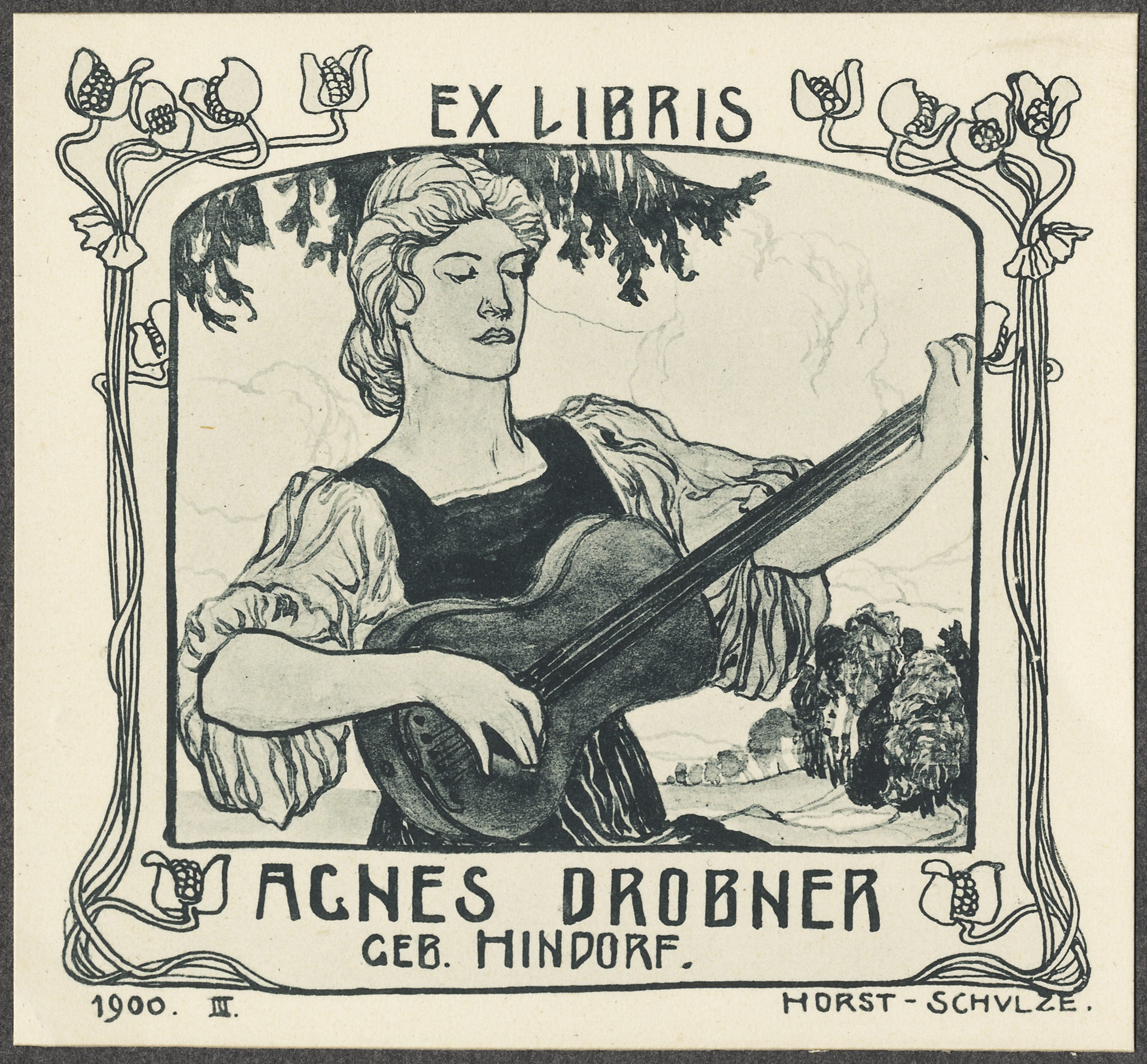
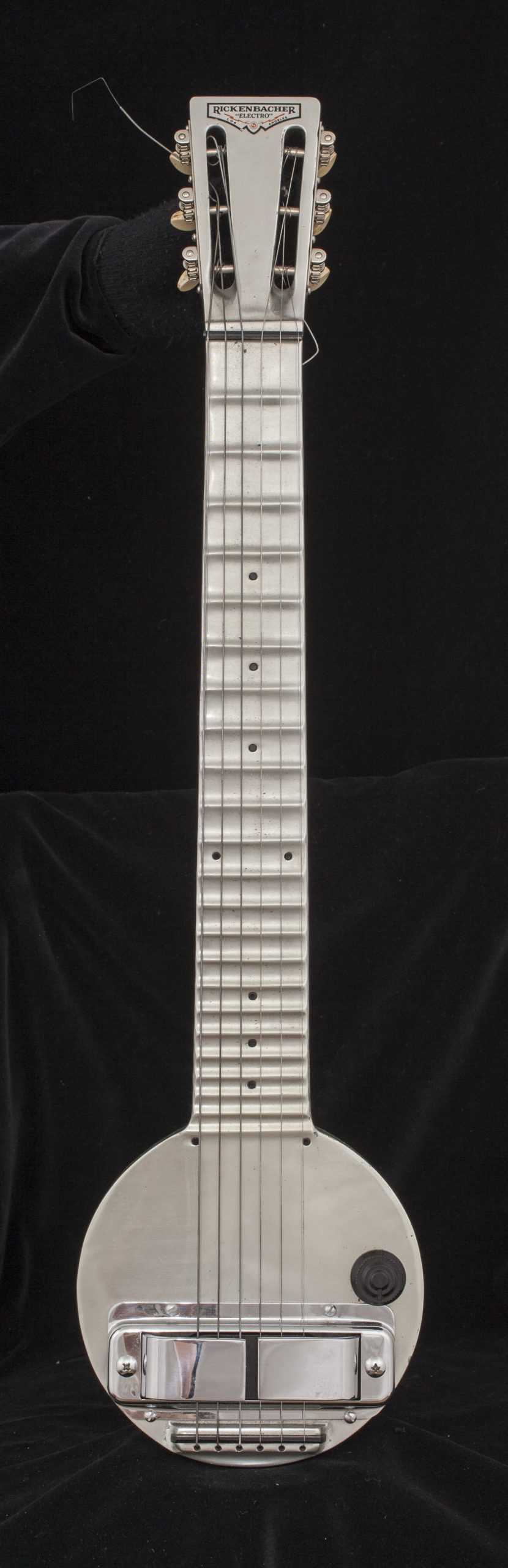
At the end of the night my library did not look the same, and reminded me all the while of what’s to come. From the Library of Dr. Herbert D. Mandelbaum, designed by Walter M. Aikmen, 1917. West Chicago Public Library District. Cornelia Neltnor Anthony and Frank D. Anthony Book Plate Collection. Permission to display given by West Chicago Public Library District.
The owl was still there. From the Library of Theodore Lund, designed by Anne M. Danielsen. C. 1949. West Chicago Public Library District. Cornelia Neltnor Anthony and Frank D. Anthony Book Plate Collection. Permission to display given by West Chicago Public Library District.
But looked different too. From the Library of Irene Andrews, designed by J.W. Jameson. 1932. West Chicago Public Library District. Cornelia Neltnor Anthony and Frank D. Anthony Book Plate Collection. Permission to display given by West Chicago Public Library District.
Tonight is Game Three of the World Series. To celebrate we’re highlighting a few pictures of baseball in Illinois. There is a rich debate about the origins of baseball, both in terms of its evolution- and place, but we know that by the mid-19th century, baseball was already ingrained into American life and community. Both Union and Confederate soldiers documented baseball games in their diaries, including games played as prisoners of war. After the war communities formed clubs of their own, making baseball one of the first instances of communities establishing their own identities. In Illinois, as early as 1869 the Cairo Bulletin was reporting on games in bordering Missouri. By 1870, the Cairo Deltas and Egyptians were playing in Missouri, Kentucky, and Illinois as clubs and regional leagues began to form across the state. Below are some of the greatest hits from Bess Bower Dunn Museum of Lake County, Cherry Valley Historical Society, Chicago History Museum, and the University of Illinois at Urbana-Champaign showing how the game was played in our communities from the 1880’s onward, and became an international phenomenon in the early 20th century.
The Dunn Museum’s Fort Sheridan Collection includes several images of baseball as a part of life on the Fort.
Woman Playing shortstop, C.1945. Unknown Photographer. Bess Bower Dunn Museum of Lake County (IL). Fort Sheridan collection. Permission to display was provided by the Bess Bower Dunn Museum.
Man in Army Uniform Shaking Hands, Exchanging Baseball Bat, C. 1920. Unknown Photographer. Bess Bower Dunn Museum of Lake County (IL). Fort Sheridan. Permission to display was provided by the Bess Bower Dunn Museum.
The Cherry Valley Historical Society Cherry Valley Local History Collection includes team portraits of Cherry Valley Wildcats, and little leaguers from the first half of the century, showing what community sports looked like and how communities supported teams during baseball’s most nostalgic moment.
Cherry Valley Baseball Team, C. 1916. Unknown Photographer. Cherry Valley Historical Society. Cherry Valley Local History Collection. Permission to display was provided by the Cherry Valley Public Library District.
Cherry Valley Baseball Team, C. 1916. Unknown Photographer. Cherry Valley Historical Society. Cherry Valley Local History Collection. Meanwhile, the Chicago History Museum’s Museum Collection and Prints and Photographs Collection includes artifacts and photographs from Chicago’s MLB teams, the Cubs and the White Sox:
Chicago Cub Ron Santo catching a foul ball at Wrigley Field, 1969. Jack Lenahan, photographer, Chicago Daily News Inc. Chicago History Museum. Prints and Photographs Collection. Permission to display was provided by the Chicago History Museum.Wrigley Field from Sheffield and Waveland avenues, 1964. F.S. Dauwalter, Photographer. Chicago History Museum. Prints and Photographs Collection. Permission to display was provided by the Chicago History Museum.
And lastly, the University of Illinois at Urbana-Champaign’s Picture Chicago Collection includes this great picture of the Chicago White Sox and New York Giant’s in front of The Great Sphinx during their 1913-1914 world tour:
Chicago White Sox and New York Giants in front of the Sphinx during their World Tour 1913-1914, 1914. Unknown Photographer. University of Illinois at Urbana-Champaign. Picture Chicago.
Happy October! The Illinois Digital Heritage Hub will be at the Chicago Research Summit and the Illinois Library Association Conference later this month.
Join Keri Cascio, chair of the IDHH Marketing Working Group and Chicago Public Library’s Assistant Chief of Technology, Content and Innovation at the Chicago Research Summit on October 18th. Keri will introduce the new IDHH website and search portal and its potential as a resource for educators and students of Chicago History.
Joshua Lynch, IDHH metadata specialist and webmaster, will present on the IDHH Website and Portal at the Illinois Library Association Annual Conference during both exhibits sessions on Wednesday, October 23rd and Thursday, October 24th. Learn about the IDHH and the DPLA and the website as a tool for new and current contributing institutions, educators and learners, and other user groups.
We look forward to seeing you there and want to hear your thoughts on the site!
This month at the IDHH we’re looking back at how agriculture and industry shaped civic life in small-town Illinois. We’re looking especially at how agriculture and industry created senses of local identity that could be celebrated. It’s now fall, and Illinois’ legacy of harvest festivals, and celebrating the busy growing season as a community is close to our heart. Looking back through our contributor’s collections we found “Pumpkins, Parades, and Pies– Eureka’s Pumpkin Festival Past 1939-1961” from our partner the Eureka Public Library District.
Souvenir booklet for the 1951 Eureka Pumpkin Festival. Permission To display provided by Eureka Public Library District.
Between 1939 and 1961 the third weekend of September saw the Eureka Pumpkin Festival in Eureka IL. It was first organized by the Eureka Community Association to bolster the local economy after the Great Depression. Its first year, the festival brought 10,000 visitors over the course of the weekend to the small town of 1,700 people. The Eureka Public Library District has gathered over 300 photographs, scans of pamphlets, recipe books, and souvenir ephemera that document the festival. Eureka’s connection with pumpkins began 35 years earlier when Dickinson and Company first canned pumpkin, relying heavily on local farms with their success. Dickinson and Company was bought by Chicago-based Libby, McNeil, and Libby Company in 1929, and with it the recipe for “pumpkin custard”. With Libby’s nationwide distribution network, canned pumpkin became an autumn staple in homes across the country.
Above: Libby’s “custard pumpkin pie” label used in conjunction with Eureka Pumpkin festival c.1946. Bottom: A Libby’s Pumpkin Can Signed by actor Ronald Reagan c. 1947. Eureka College Ronald Reagan Museum. Permission to display images provided by the Eureka Public Library District.
The festival continued annually for the first three years, but was interrupted and discontinued with the United States’ involvement in World War II after the 1941 festival. Global politics and community life was reflected in the parade’s floats, where both themes of peace, agricultural heritage and social clubs, and anticipating the United States’ entrance in WWII, canning’s contribution to war preparedness.
A float in the 1941 Eureka Pumpkin Festival, just months before the United States joined World War II. The float’s skirt reads “Pumpkin Patch to Preparedness”. Permission to display was provided by the Eureka Public Library District.
The Eureka Greenhouse Company float for the 1939 festival featuring a dove and Earth. Permission to display was provided by the Eureka Public Library District.From the Red School to the Red Barn” 4-H float entered in the 1955 Eureka Pumpkin Festival parade. Permission to display was provided by the Eureka Public Library District.
“The Pumpkin Center of the World”. 1946 Pumpkin Festival grand prize winning float built by Robert Faubel and Robert Schertz. Featuring pumpkin made of flowers and a float lined with cornstalks. Faubels’ son stands on top. Permission to display was provided by the Eureka Public Library District.
After WWII, the festivals ballooned to 50,00 people attending. In 1947, then-film star and Eureka College alumnus Ronald Reagan and Governor Dwight H. Green were invited to Eureka to crown Joan Snyder the Pumpkin Queen. The Pumpkin Queen and her attendants were a large part of the parade, in so many ways the face of the other hundreds of coordinators and volunteers who made the festival possible. Photographs of the Queen and her attendants in the collection show an interesting and idiosyncratic spin on mid-century pageants. The promotional material generated for the souvenir booklet (of which all the post-World War II festival’s have been fully scanned as part of the collection) show the Queen and her attendants in a local pumpkin field in full pageant-wear.
In 1959, the centennial celebration included a beard-growing and period-wear contest in addition to the traditional pageant.
Men in their centenary beards, 1959.Permission to display was provided by the Eureka Public Library District.
The last Eureka Pumpkin Festival was held in September 1961. The November prior, Libby’s closed the Eureka canning factory and moved its operations to the Morton plant. For more on the pumpkin and mid-century american life be sure to visit Eureka Public Library District’s collection. Happy Autumn.
Mrs. Robert Johann of the Junior Women’s Club and four children marvel over a pumpkin pie. Permission to display was provided by the Eureka Public Library District.