Celebrating Women’s History in IDHH Collections

The IDHH contains some content that may be harmful or difficult to view. Our cultural heritage partners collect materials from history, as well as artifacts from many cultures and time periods, to preserve and make available the historical record. Please view the Digital Public Library of America’s (DPLA) Statement on Potentially Harmful Content for further information.


In recognition of Women’s History Month, the IDHH would like to highlight several collections from our contributors and curated searches of IDHH items that tell different stories about the history of women in Illinois:

    • Jane Addams: explore photographs and documents related to Jane Addams, social reformer, and settlement and women’s suffrage activist, who co-founded Chicago-settlement Hull House in 1889 and was awarded the Nobel Peace Prize in 1931.
    • Gwendolyn Brooks: explore photographs related to Gwendolyn Brooks, Poet Laureate of Illinois and the first African American poet to win the Pulitzer Prize.
    • The Creative Woman (Governors State University): a collection containing issues of GSU’s quarterly feminist journal The Creative Woman,  which featured articles, essays, and creative writings on the lives and experiences of women.
    • The Woman’s Study Club of Joliet (Lewis University): a collection containing documents and records of the Women’s Study Club of Joliet, a club with the goal of educating women members which grew from the Columbian Clubs and The Woman’s Building organized by Bertha Palmer for the 1893 Chicago World’s Columbian Exposition.

You can also visit the IDHH’s Digital Exhibits to learn about the life and career of two turn-of-the-twentieth-century Illinois women: Rachel Crothers, a playwright from Bloomington, Illinois, and Fanny Butcher,  Literary Editor at the Chicago Tribune.

You can also view the IDHH’s previous posts with topics related to Women’s History Month:

The Enduring Legacy of Jane Addams – Women’s History Month

March is Women’s History Month and March 8th marks International Women’s Day. The first National Woman’s Day was observed in the United States on February 28, 1909 by the Socialist Party of America in honor of the 1908 garment workers’ strike in New York. While this was the first official observance of any kind, the movement for women’s rights was born much earlier in 1848, when Elizabeth Cady Stanton and Lucretia Mott held the first women’s rights convention in the US. From that convention in 1848, this celebration of the vital role of women in American history would progress over the next 139 years from an official day to an official week, to finally being a federally designated month in 1987. In honor of Women’s History Month and International Women’s Day, the IDHH is featuring Jane Addams, an agent of change in Illinois history. 

Born in Cedarville, Illinois in 1860, Jane Addams was an influential social reformer and activist who established the historic Chicago settlement house Hull House in 1889 with Ellen Gates Starr. Jane Addams would build Hull House into a hub of social and cultural opportunities for the largely immigrant residents on the Near West side of the city. In addition to her efforts with Hull House, Jane Addams worked with reform groups towards creating the first juvenile-court law, establishing an eight-hour working day for women, and advancing the cause of women’s suffrage. She would eventually help form the Women’s International League for Peace and Freedom in 1919, serving as the inaugural president of the international organization. In recognition of her unwavering dedication to the ideal and objective of world peace, Jane Addams was the co-winner of the 1931 Nobel Peace Prize, the second woman to ever receive the Prize. 

Below are a few of our favorite items featuring Jane Addams and her pioneering work with Hull House:

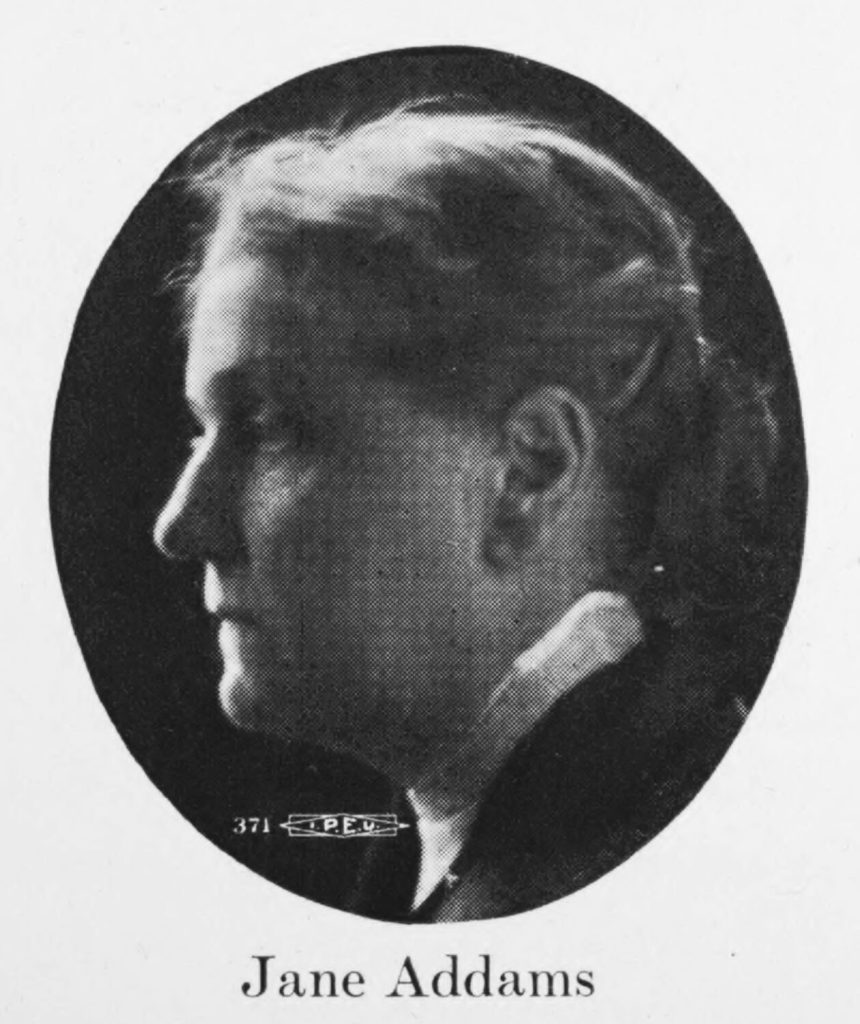
black and white engraving of a woman in profile with the name "Jane Addams" below the image
Jane Addams. 1922. I. P. E. U. [International Photo-Engravers Union of North America 371]. University of Illinois at Urbana-Champaign Library. Picture Chicago. Courtesy of the University of Illinois at Urbana-Champaign Library.
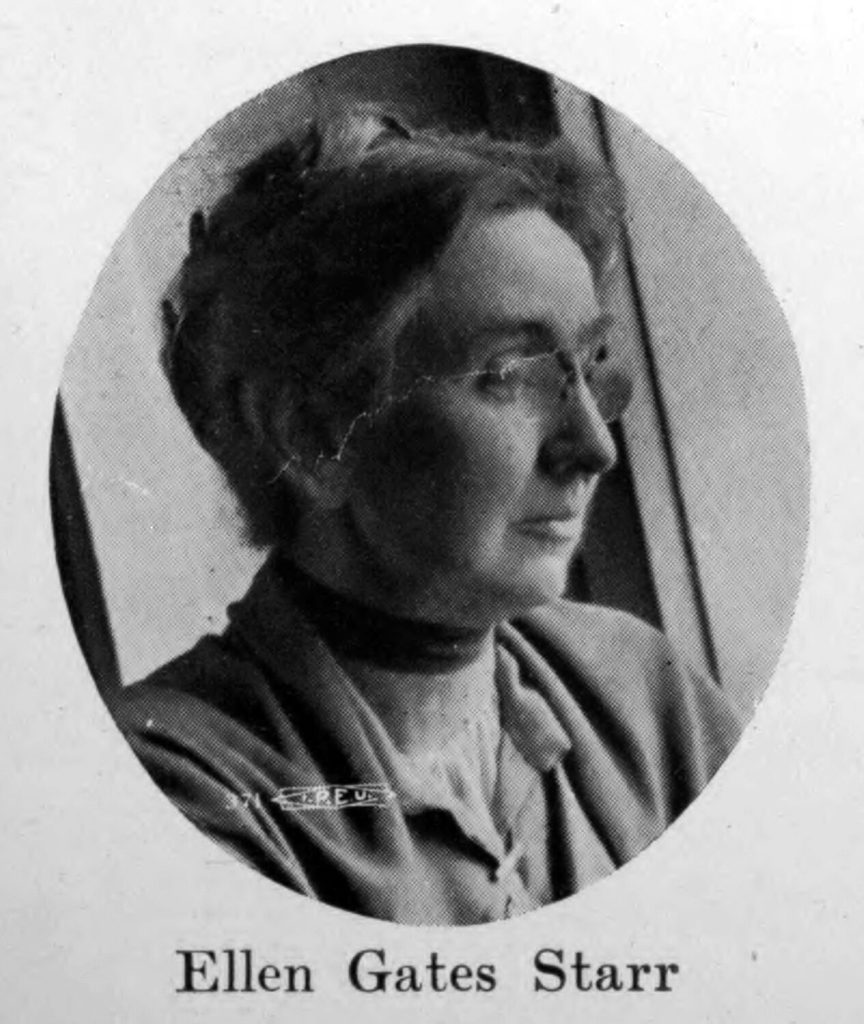
black and white engraving of a woman in profile with the name "Ellen Gates Starr" below the image.
Ellen Gates Starr. 1922. I. P. E. U. [International Photo-Engravers Union of North America 371]. University of Illinois at Urbana-Champaign Library. Picture Chicago. Courtesy of the University of Illinois at Urbana-Champaign Library.
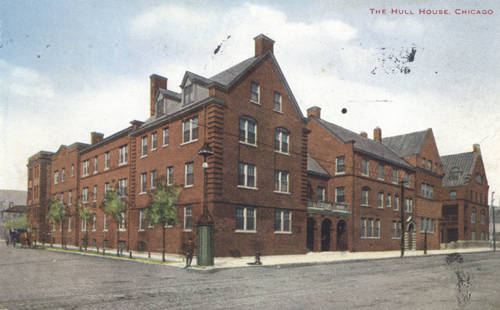
color postcard of the Hull House building.
Hull House, Chicago. June 1, 1915. Eastern Illinois University. Booth Library Postcard Collection. Courtesy of Eastern Illinois University.
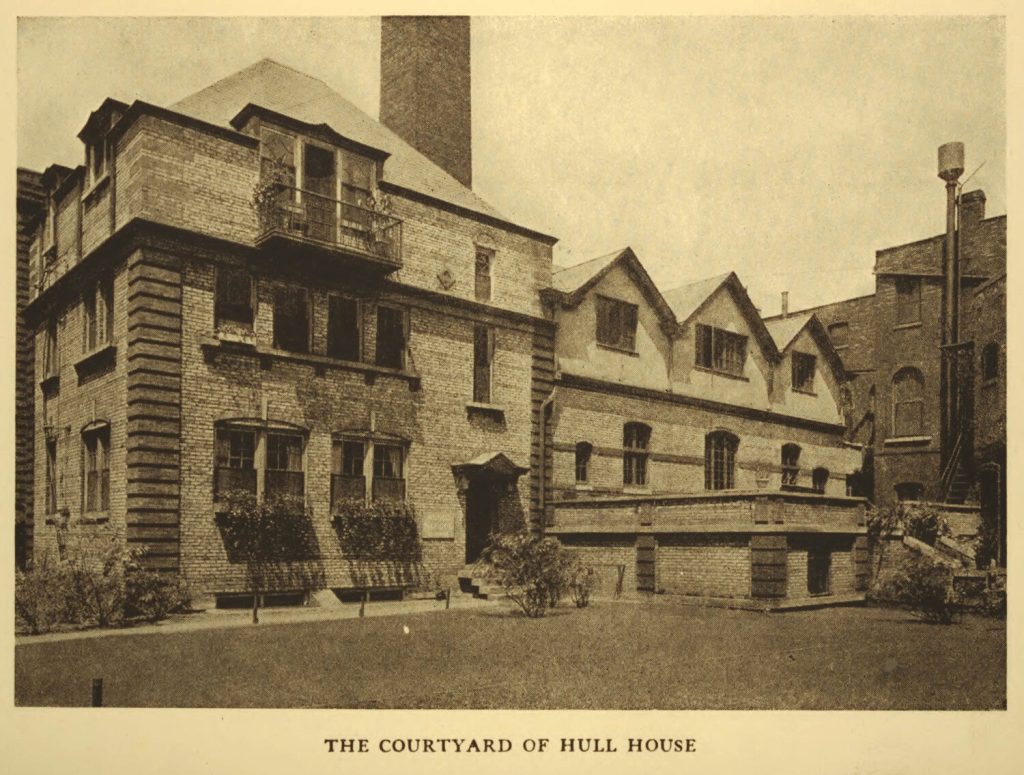
black and white photo on yellowed paper of the courtyard at Hull House, with a brick building in the background.
Courtyard of Hull House. 1920. University of Illinois at Urbana-Champaign Library. Picture Chicago. Courtesy of the University of Illinois at Urbana-Champaign Library.
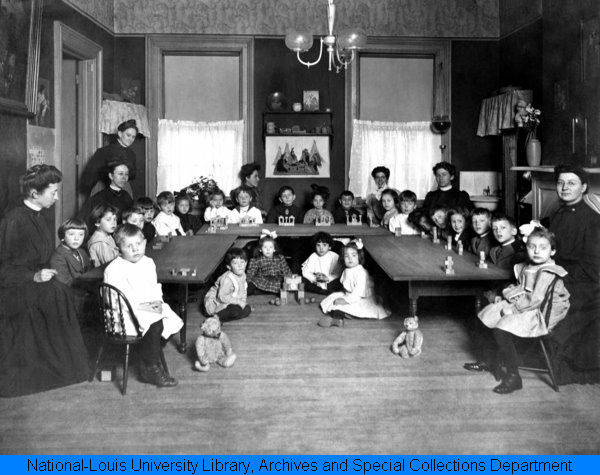
black and white photo of women and children sitting around a u-shaped table and on the floor in late Victorian clothes.
Hull House Kindergarten. circa 1906. National Louis University. Elizabeth Harrison-Chicago Kindergarten Movement. Courtesy of National Louis University.
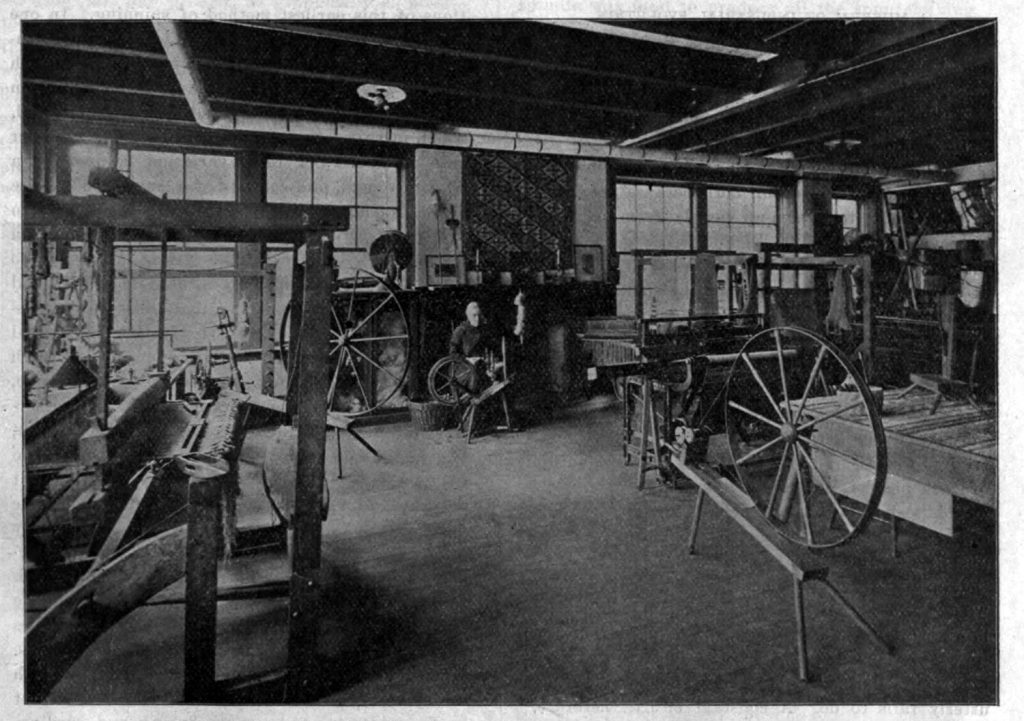
black and white photo of spinning wheels and looms in a textile room.
The Textile Room. May 1902. University of Illinois at Urbana-Champaign Library. Picture Chicago. Courtesy of the University of Illinois at Urbana-Champaign Library.

Want to see more? 

Visit the IDHH to view even more items related to Jane Addams and Hull House, as well as other notable women of Illinois, such as Gwendolyn BrooksMary G. Harris Jones, and Jane Byrne.

Celebrate Women’s Fight for the Vote with Hazle Buck Ewing

In celebration of Women’s History Month, we at the IDHH would like to introduce Hazle Buck Ewing, passionate activist for women’s suffrage and lifelong member of the Bloomington League of Women Voters.

Ewing joined the women’s suffrage movement in 1915, and worked to secure voting rights for women through her writing, her attendance at conferences, and her financial support of the movement. She continued to promote women’s rights after the passage of the 19th amendment by supporting the Equal Rights Amendment and voting in every election beginning in 1920, only stopping when she was too ill to leave her home. She died at the age of 88 on August 29, 1969. 

The Hazle Buck Ewing Women’s Suffrage collection from Illinois State University is comprised of materials created and collected by Ewing during her involvement in the women’s suffrage movement. The collection has over 150 items and includes letters, articles, pamphlets, and photographs that give insight into the efforts made by early 20th-century suffrage activists to secure women the right to vote. 

To celebrate Hazle Buck Ewing and Women’s History Month, here are a few of our favorite items from the collection: 

Image of purple and gold voter ribbon from national woman's party
National Women’s Party Sash and Ribbons, circa 1916-1919. Circa 1916-1919. Illinois State University. Hazle Buck Ewing Women’s Suffrage Collection. Courtesy of Illinois State University.
black and white newspaper clipping of two small children standing in front of a large, lopsided snow person.
Hazle Buck Ewing’s nieces with snow suffragette at home of Nelson L. Buck, December 25, 1915. December 25, 1915. Illinois State University. Hazle Buck Ewing Women’s Suffrage Collection. Courtesy of Illinois State University.
black ink transcript typed on yellow-aged paper of Hazle Buck Ewing's poem "Out West".
Hazle Buck Ewing poem “Out West”. October 1916. Illinois State University. Hazle Buck Ewing Women’s Suffrage Collection. Courtesy of Illinois State University.
black ink typed transcript on yellow-aged paper of two short letters by Hazle Buck Ewing.
Hazle Buck Ewing Letters to Claude Kitchin and Thomas Martin, January 5, 1918 (copy). January 5, 1918. Illinois State University. Hazle Buck Ewing Women’s Suffrage Collection. Courtesy of Illinois State University.
color telegram to Hazle B. Ewing
James Lewis telegram to Hazle Buck Ewing, May 10, 1918. May 10, 1918. Illinois State University. Hazle Buck Ewing Women’s Suffrage Collection. Courtesy of Illinois State University.
color trifold invitation to attend the Victory Convention of the National American Woman Suffrage Association, with the left panel listing available hotels, the middle panel with the mailer information, and the third panel listing the details of the convention.
Invitation to National American Women Suffrage Association and League of Women Voters conference, Chicago, February 12-18, 1920. 1920. Illinois State University. Hazle Buck Ewing Women’s Suffrage Collection. Courtesy of Illinois State University.
black ink typed letter on aged paper with a handwritten signature in blue ink.
Scott W. Lucas Letter to Hazle Buck Ewing, March 14, 1949. March 14, 1949. Illinois State University. Hazle Buck Ewing Women’s Suffrage Collection. Courtesy of Illinois State University.

In August, we celebrated the 100th anniversary of the 19th Amendment, featuring images of women exercising their right to vote from the McLean County Museum of History’s Pantagraph Negative Collection (1940-1945). 

View the complete Hazle Buck Ewing Women’s Suffrage Collection in the IDHH. 

View more items related to women’s suffrage in the IDHH.