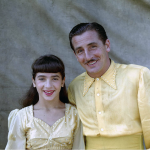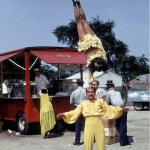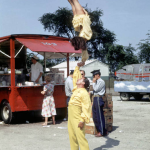
The IDHH has continued to grow, with new collections added each quarterly harvest!
This month we’re featuring two new collections from Illinois State University (ISU), both of which explore circus history in Illinois: the P. T. Barnum Letters and Ephemera collection and the Ward Family Postcards collection. American showman Phineas Taylor “P. T.” Barnum (1810–1891) is probably best known for co-founding the three-ring Barnum & Bailey Circus in the late nineteenth century. The documents in this collection, which includes letters from Barnum himself, relate to Barnum’s circuses, business ventures, and Barnum’s purchase and disposition of Villa Park, approximately 760 acres of land in what is now metropolitan Denver, Colorado. The Ward Family Postcards collection features postcards sent by the Flying Wards, an aerial act that played in circuses and other venues in the early twentieth century, to their family back home as they toured through North America and Europe, offering insight into the developing trapeze act as well as historic postcards of different American cities.
Here are a few of our favorite items from these two new collections:
Das Völkerschlachtdenkmal as der Vogelschau [back]. August 3, 1913. Published by Louis Glaser. Illinois State University. Ward Family Postcards. Courtesy of Illinois State University.Oregon Lumber Co., Baker City, Oregon [front]. circa 1906-1918. Published by W. A. Baird. Illinois State University. Ward Family Postcards. Courtesy of Illinois State University.Hotel Tilden Hall, Bloomington, Illinois [front]. March 31, 1938. Published by Curt Teich & Co. Illinois State University. Ward Family Postcards. Courtesy of Illinois State University.P.T. Barnum letter to George S. Bowen, October 16, 1875 [page 1]. October 16, 1875. Illinois State University. P. T. Barnum Letters and Ephemera. Courtesy of Illinois State University.P.T. Barnum letter to Sol Smith, January 21, 1851 [page 1]. January 21, 1851. Illinois State University. P. T. Barnum Letters and Ephemera. Courtesy of Illinois State University.
As the weather starts to warm up and the school semester ends, we here at the IDHH are ready to celebrate summer and summer vacations! Whether you’re headed outside for some fun in the sun and sport, off to the beach for the sand and waves, or just remaining at home for a staycation, we hope you can take some time to rest and relax before the “Sirius-ly Scorching Dog Days of Summer” arrive.
Here are a few of our favorite items related to summer vacations:
Vacation Days, Lake Bluff, Ill. m86.1.1481. August 7, 1913. Bess Bower Dunn Museum of Lake County. Lake County History in Postcards. Courtesy of Bess Bower Dunn Museum of Lake County.High School kids on vacation, Bloomington-Normal, IL 1949. July 7, 1949. Created by Stanley Lantz. McLean County Museum of History. Pantagraph Negative Collection, 1946 – 1949. Courtesy of McLean County Museum of History.Vacation days, Chicago [front]. July 19, 1909. Imprint by V.O. Hammon (Chicago, Ill.). Eastern Illinois University. Booth Library Postcard Collection. Courtesy of Eastern Illinois University.High School kids on vacation, Bloomington-Normal, IL 1949. July 7, 1949. Created by Stanley Lantz. McLean County Museum of History. Pantagraph Negative Collection, 1946 – 1949. Courtesy of McLean County Museum of History.Me travel? …not this summer. Vacation at home. 1945. Created by Albert Dorne (1904-1965). Illinois State University. World War II-Era Posters and Propaganda. Courtesy of Illinois State University.Sublimating vacation; Pantagraph photostory; vacations during wartime, Bloomington, IL, 1944. July 19, 1944. Created by Gladys Mittelbrusher. McLean County Museum of History. Pantagraph Negative Collection, 1940-1944. Courtesy of McLean County Museum of History.
The IDHH has continued to grow, with new collections added each quarterly harvest!
This month we’re featuring two new collections from Illinois State University (ISU), both of which explore the history of ISU: the Charles E. Hovey Presidential Papers collection and the Illinois State University Historical Photos collection. Charles Edward Hovey (1827–1897) was the first President of ISU, then known as Illinois State Normal University, a state teacher’s college and the first public university in Illinois; this collection features letters written by and about Hovey, as well as other foundational documents to the University and family photographs. The Historical Photos collection features digitized photographs that document the history of ISU, from its founding in 1857 to its modern activities in the 2020s.
Here are a few of our favorite items from these two new collections:
Class of 1860, Illinois State Normal University. 1860. Created by Staford Engraving Company. Illinois State University. Illinois State University Historical Photos. Courtesy of Illinois State University.Library card catalog, North Hall, Illinois State Normal University. c. 1914-1920. Illinois State University. Illinois State University Historical Photos. Courtesy of Illinois State University.Gymnasium (Cook Hall), Illinois State Normal University. Created by Illinois State University Photographic Services. Illinois State University. Illinois State University Historical Photos. Courtesy of Illinois State University.Photograph of Letter to Edwin C. Hewett, 1858. 1858. Created by Charles E. Hovey. Illinois State University. Charles E. Hovey Presidential Papers. Courtesy of Illinois State University.E.W. Bakewell, Esq, 1883-04-09 [page 1]. April 9, 1883. Created by Charles E. Hovey. Illinois State University. Charles E. Hovey Presidential Papers. Courtesy of Illinois State University.
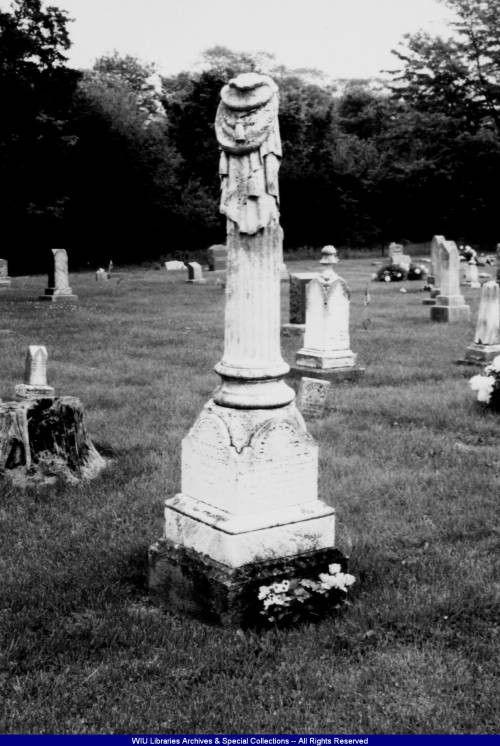
October marks that time of the year when we dress up as ghouls and goblins, decorate our homes with spiderwebs and skeletons, and indulge in all manner of frightening things. As a nod to these spine-chilling 31 days, the IDHH is featuring the fascinating use and art of tombstones and other grave markers. As diverse as the great variety of funerary traditions around the world, grave markers serve not only the utilitarian purpose of demarcating the physical space where an individual might lie, but also reflect the social values and traditions of a specific period or people. Cemeteries and other burial places held great significance from the earliest days, as providing a place for the dead was thought to be an important family obligation. This significance would eventually extend to larger communal graveyards and burial places as inclusion in these spaces became exclusive to community members, often excluding foreigners, criminals, and other unwanted groups.
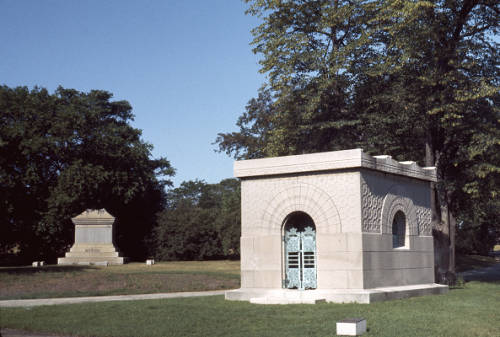
The tombstones and grave markers within these communal spaces have communicated a number of ideas to visitors over time. As a work of art, the craftsmanship and skill in the construction of the tombstones can be an aesthetic pleasure in its own right. Such artistry leads people to create gravestone rubbings with charcoal and to capture graveyard scenes through painting and photography. The construction and grandiosity of these markers may also impart a sense of prestige or wealth, such as in the image below of Carrie Eliza Getty’s large tomb in Chicago. Of course, tombstones also act as a memorial to previous generations, prompting us to seek out the histories of those buried there, like of the Mabie family and their influential 1840s circus show in Wisconsin. Whether viewed as art, icon, or historical marker, tombstones offer a (spooky) glimpse into the values and customs of those who are no longer with us.
Here are a few of our favorite items featuring tombstones from across the Midwest:
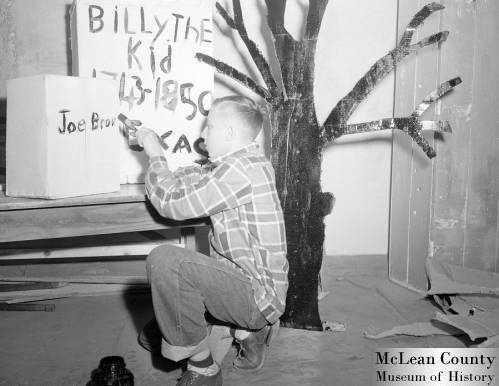
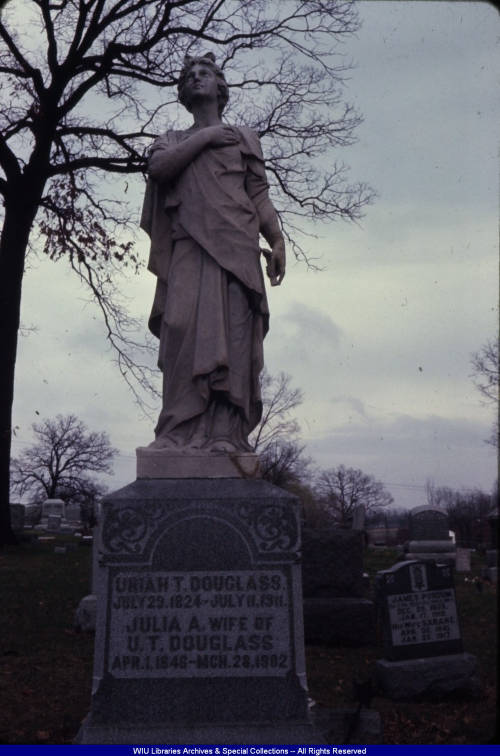
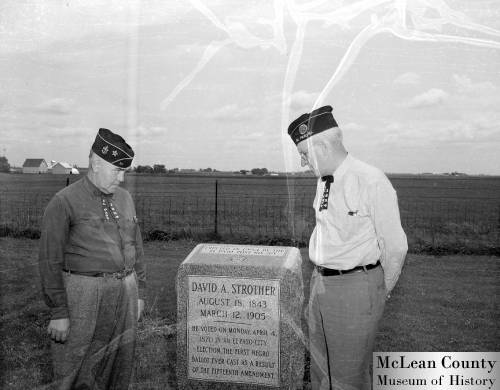
Boy painting tombstone decorations, unspecified location, Central Illinois, 1951 Halloween picture layout. October 29, 1951. Photographed by Gene Smedley. McLean County Museum of History. Pantagraph Negative Collection 1950 – 1959. Courtesy of the McLean County Museum of History.Carrie Eliza Getty Tomb and Joseph Medill tombstone, Graceland Cemetery. 1976. Photographed by Charles William Brubaker. University of Illinois Chicago. C. William Brubaker Collection. Courtesy of the University of Illinois Chicago.Tombstone of Uriah T. Douglass and Julia A. Douglass in Oakwood Cemetery. [n.d] Western Illinois University. Digital Image Collection. Courtesy of Western Illinois University.Tombstone. [n.d.] Photographed by Sverre O. Braathen. Illinois State University. Sverre O. Braathen Circus Photo Collection. Courtesy of Illinois State University.Two veterans looking at tombstone of David A. Strother, first African American to cast a vote in the United States, El Paso, IL, 1954. May 28, 1954. Photographed by Ann Broder. McLean County Museum of History. Pantagraph Negative Collection 1950 – 1959. Courtesy of the McLean County Museum of History.Scott tombstone Scott’s Cemetery 2002. 2002. Photographed by John Hallwas. Western Illinois University. Digital Image Collection. Courtesy of Western Illinois University.
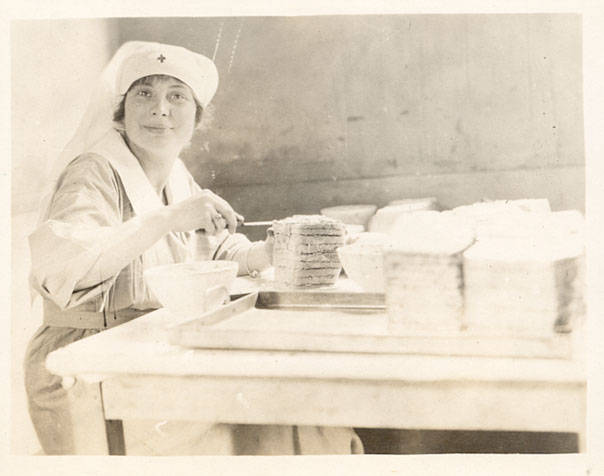
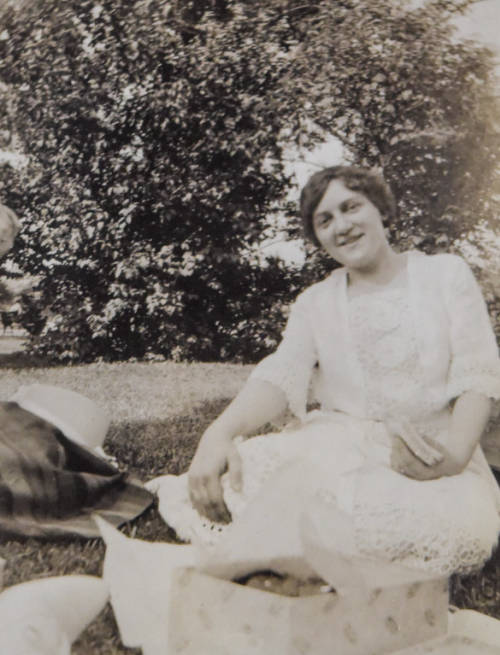
A staple lunchbox food, picnic addition, or food on the go, the sandwich is so ubiquitous these days that we might eat or make one without ever stopping to wonder about the history of this versatile dish. With August as National Sandwich Month, the IDHH would like to highlight this humble entrée and the many ways it’s permeated our everyday culture. While something resembling the sandwich has most likely existed since the consumption of meat and bread began, legend has it that John Montagu, 4th earl of Sandwich, once dined on sliced meat and bread while playing at a gaming table so that he could continue to play as he ate. Indeed, the name was adopted in the 18th century for the earl, but probably due to his requests for the dish in London society or perhaps from a penchant of his to eat sandwiches while working at his desk. Regardless, Montagu’s social status lent the food credibility, and the sandwich soon became fashionable fare on the European continent.
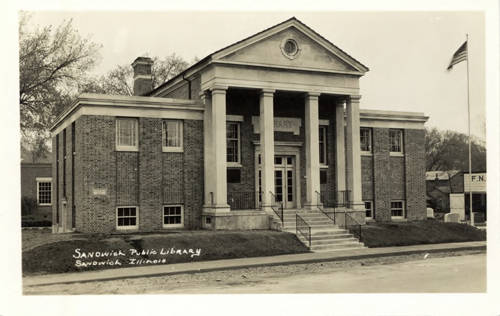
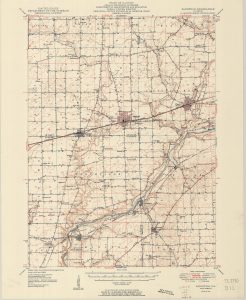
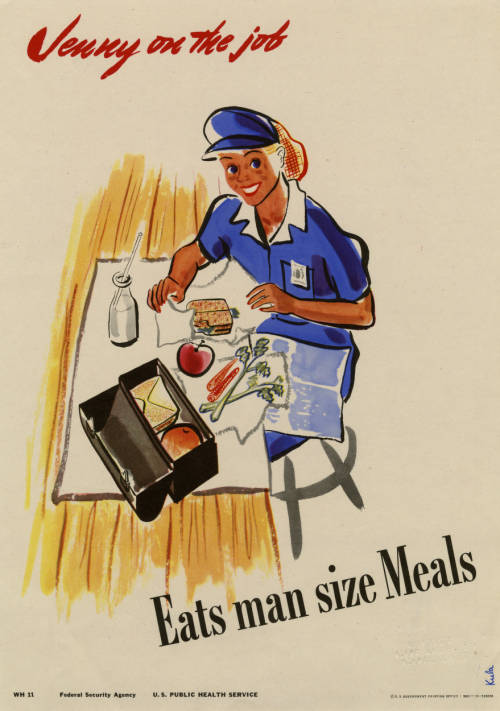
The food item’s simplicity and versatility allow it to be a suitable choice in a variety of environments. Just as welcome in the lunchbox of an elementary school student as a busy professional, the sandwich can be arrayed in a myriad of ways, dressed up for foodies or made as plainly as possible. The World War II poster featuring the character “Jenny on the job” illustrates how the sandwich was used as part of an appeal to a sense of manliness and competence for female workers stepping into roles traditionally filled by men, who were overseas fighting in the war. As versatile as the food itself, the word “sandwich” may also refer to non-food items as well, such as the town of Sandwich, Illinois, the Sandwich Range in the White Mountains of New Hampshire, or the sandwich mathematical theorem.
Have are a few of our favorite sandwich-related items from the collection:
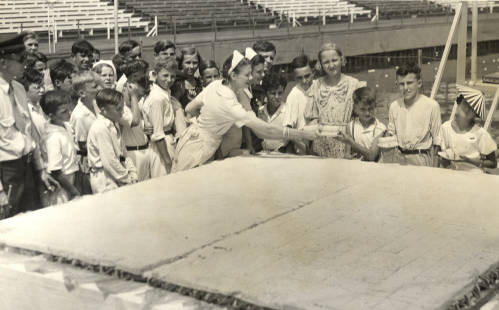
Nurse Making Sandwiches, Fort Sheridan. circa 1920. Bess Bower Dunn Museum of Lake County. Fort Sheridan. Courtesy of the Bess Bower Dunn Museum of Lake County.Sandwich Public Library, Sandwich, Illinois. n.d. Eastern Illinois University. Booth Library Postcard Collection. Courtesy of Eastern Illinois University.Sandwich quadrangle, Illinois: 15 minute series. 1950. Created by U.S. Geological Survey. University of Illinois at Urbana-Champaign Library. Historical Maps Online. Courtesy of the University of Illinois at Urbana-Champaign Library. Warnecke friend holds a sandwich at a picnic, circa 1910s. circa 1910s. Bensenville Community Public Library. Bensenville Historical Collection. Courtesy of Bensenville Community Public Library. Jenny on the job eats man size meals. 1943. Created by Kula Robbins, for the U.S. Public Health Service. Illinois State University. Propaganda on All Fronts – United States & International World War II Era Posters. Courtesy of Illinois State University.Children feasting on the world’s largest ham sandwich. 1933 – 1934. Photographed by Kaufmann & Fabry Co. University of Illinois Chicago. Century of Progress World’s Fair, 1933-1934. Courtesy of the University of Illinois Chicago.
Want to see more?
View even more items related to sandwiches on the IDHH.
“Main Street of America”, Route 66 is probably the most well known road in America. It’s been featured hundreds of times in American literature and film, from symbolizing escape and grief in Steinbeck’s Grapes of Wrath to the backdrop of Radiator Springs just off Route 66 but forgotten after ‘the Mother Road’ (another Steinbeck reference) was bypassed by Interstate 40.
Scoop- Aerial Views. 1941. McLean County Museum of History. Pantagraph Negative Collection (1940-1945). Photograph by Frank Bill.
From Illinois, or perhaps most of the country, Route 66 always looks westward- showing the horizon of the spiritual architecture of Americana. This westerly orientation makes sense, when it opened in 1926 as part of the U.S. Highway System, Route 66 began in Chicago and ran diagonally across the state, like a 300 mile asphalt vein through The Prairie State. You can virtually drive the entirety of “Old U.S. Route 66” in about 3 hours on Google Maps’ street view, but you wouldn’t get the full story of Route 66 before it was largely replaced by the speedier and beefier Interstate 55. Items from our contributors at Towanda Area Public Library, Illinois State Library, Illinois State University, and McLean County Museum of History, capture the spirit of Illinoisan Route 66 as it was in the 1940’s.
Like most roads, Route 66 repurposed other roads and trails, laying a new physical and administrative infrastructure on top of historic passages and routes far preceding car culture. In the earliest part of the 20th century, people traveled between Chicago and Saint Louis on the “Pontiac Trail ”- a native trail, turned unpaved stagecoach byway that travelled southwest through Springfield and the St. Louis area. By 1915 it became IL-4, and ran parallel to Chicago Alton Railroad.
1956-1957 Illinois: Official Highway Map. 1956. Illinois State Library. Illinois State Highway Maps Collection.
The relationship between railroad and road was hot in Illinois. Railroads connected metropolitan areas, small farm towns along the railroads. Towns grew and farmers needed roads to ship their crop. Dirt roads weren’t enough, the roads of Illinois in 1910 were hardly better than the Illinois roads of 1818 according to historian David Wrone. The compact prairie sod was all too vulnerable to the elements; quick to become deep mud that a horse drawing cargo had difficulty picking its way through, and according to Donald Tingley, prompted “automobile pioneers [to store] their machines in the barn until spring. In the summer the mud turned into dust almost as deep.” Motorists, farmers, bankers and cyclists alike began organizing, building associations and committees that sought to advocate for better roads, and investigate solutions. The Tice Road Law of 1913 provided state assistance on roadside improvement for any county which was willing to build and maintain their roads. The Illinois Highway Department integrated a system to connect towns through highways. Illinois’ road story received another push in 1916 when the Federal Aid Road Act was passed, granting Illinois roughly three million dollars between 1917 and 1922.
The newness of these paved roads were politically advantageous for Illinois. Minimal construction meant that the route could open to traffic almost immediately in 1926. The flatness of Route 66 made it a popular truck route. The trucking industry stimulated the local economies it drove through, with small outposts of hotels, restaurants and diners, filling stations, roadside attractions to attract attention for money traveling through.
Photograph of Fern’s Cafe. 1954. Towanda District Library. Towanda Area Historical Collection.
Photograph of Fern’s Café customers in 1954. Towanda District Library. Towanda Area Historical Collection.
With the outbreak of World War II, the highway’s importance exploded as a road for military convoys and equipment transportation. Much of the original pavement was still in service but in poor condition from heavy truck traffic. The Federal Highway Defense Act sought to modernize the highway system, make repairs where needed, and establish a strategic highway network in preparation for war.
The Federal Highway Defence changed the roads dramatically. Two-lane highways became four-lanes. Route 66’s past as a long vein of county, windy, country roads, had been central to its character. Landmarks were named after it’s most dangerous parts. Illinois newspapers counted pile-ups, injuries, deaths of travellers. So-called “Dead Man’s Curve” in Towanda– a slim sharp curve, was especially treacherous for speeding drivers from Chicago who misjudged the sharpness they’d have to navigate. New portions circumvented these dangerous parts like these.
Photograph of Construction of northbound lanes on Route 66. 1954. Towanda District Library. Towanda Area Historical Collection.
When car and tourism culture took off in the 1950’s the kitschy infrastructure had been well established with its legacy of trucking, and the roads were now safe enough to travel with your family in tow.
Rusk Haven Motel on Route 66, Bloomington, Illinois. C. 1950. Illinois State University. Ken-Way Studio Archive.Brandtville Cafe with man in phone booth, Bloomington, Illinois. 1955. Illinois State University. Ken-Way Studio Archive.
So, what did the impact of the interstate highway system have on its predecessors? Even while Route 66 was booming with roadside traffic and tourism in mid-1950’s, planning to make it obsolete was already in legislation. The improvements that had been made in the 1940’s to create a strategic highway network of small roads were left in the dust of Eisenhower’s vision for the Interstate Highway System. Inspired by the Reichschautobahn system, Eisenhower saw a fast and safe highway, as critical for economic growth defense, if it was ever needed.
1957. Parts of Route 66 were already being chosen for sections of I-55, I-74, or I-190. Route 66 was travelled less and less, left in increasingly worse disrepair- from over-use and then neglect. The mother road was officially removed from the U.S. Highway System on June 27, 1985. Community efforts have since surged attempting to preserve the highway’s particularity and celebrate it’s off-beat culture that lined rural America for three decades. Cities in Illinois began to register stretches of the route under the Register of Historic Places, citing both the engineering and cultural significance that preceded the interstate and knitted together rural communities alongside the road.
Gas station men on Route 66. 1942. McLean County Museum of History. Pantagraph Negative Collection (1940-1945). Photograph by Leonore Campbell.Highway 1.1944. McLean County Museum of History. Pantagraph Negative Collection (1940-1945). Photograph by Stan Windhorn.
Happy Mother’s Day from the IDHH. We’re a little late on celebrating mothers, but still feel like a tribute should be made. Shelter-in-place has been particularly difficult, and we’re hoping that the distance between you and your loved ones is either not-far, or easily traversed.
Mother and Daughter Performers on Menage Horses. 1950. Passion for Circus. Photographer, Sverre O. Braathen. Used with permission from Illinois State University’s Special Collections, Milner Library.
To celebrate Mother’s Day we’re highlighting photographs of families of performers, especially mother-daughter performers from Illinois State University’s Passion for Circus Collection. The photographs come from a collection of nearly 10,000 spanning from the 1930’s to the 1950’s from circus across the United States.
Performer and Employee with Parent. 1950. Passion for Circus. Photographer, Sverre O. Braathen. Used with permission from Illinois State University’s Special Collections, Milner Library.
Below is just a small selection of performers and their families, mostly mother-daughter aerial and acrobatics acts, but also performers with their spectator, non-circus parents.
Mother and Daughter Circus Performers. 1949. Passion for Circus. Used with permission from Illinois State University’s Special Collections, Milner Library.
Performer with Parent. 1951.Passion for Circus. Photographer, Sverre O. Braathen. Used with permission from Illinois State University’s Special Collections, Milner Library.
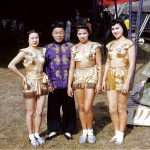
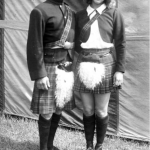
Performers in Wardrobe. 1936.Passion for Circus. Used with permission from Illinois State University’s Special Collections, Milner Library.
Aerialists in Wardrobe. 1945. Passion for Circus. Photographer, Sverre O. Braathen. Used with permission from Illinois State University’s Special Collections, Milner Library.
Mother and Daughter Production Girls. 1944.Passion for Circus. Photographer, Sverre O. Braathen. Used with permission from Illinois State University’s Special Collections, Milner Library.
Happy World Cat Day! Also called International Cat Day, the holiday was first established by the International Fund for Animal Welfare in 2002. However, national holidays celebrating our feline friends have observed in countries around the world for decades. To celebrate, the IDHH spotlights items from Illinois State University’s collections.
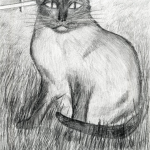
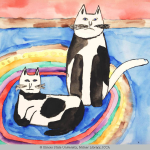
First, behold the artwork of talented youngsters who loved their cats enough to immortalize them in pencil and watercolors. The paintings below are from the International Collection of Child Art and were created by children ages 8 through 13 from Colombia, Wales, and the U.S. The children’s attention to detail show how dear their furry friends were.
Cat. 1969. Illinois State University. International Collection of Child Art. Permission to display was given by Illinois State University Milner Library.
Caption: Observation Drawing of a Cat. 1980. Illinois State University. International Collection of Child Art. Permission to display was given by Illinois State University Milner Library.
My Cat and Kitten. 1960. Illinois State University. International Collection of Child Art. Permission to display was given by Illinois State University Milner Library.
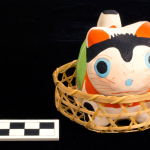
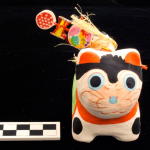
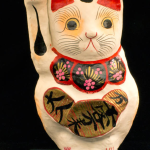
Next, here are toys from Japan featured from the Ethnology Teaching Collection, including a papier-mâché cat in a basket and the famous good luck charm of the waving cat, or ‘Maneki-Neko’. These figurines were placed in shop windows, inviting customers in and waving good-bye on their way out.
Paper Cat in Basket. No date. Illinois State University. Ethnology Teaching Collection. Permission to display was given by Illinois State University Milner Library.
Paper Cat with Toy. No date. Illinois State University. Ethnology Teaching Collection. Permission to display was given by Illinois State University Milner Library.
Maneki-Neko Cat. No date. Illinois State University. Ethnology Teaching Collection. Permission to display was given by Illinois State University Milner Library.
The IDHH celebrates Father’s Day by highlighting families of performers from Illinois State University’s Passion for Circus collection. Captured by photographer, Sverre “Bex” Braathen, the photographs are from a collection of nearly 10,000 that includes thousands of black and white photographs from the 1930s and thousands more color photos from the 1940s and 1950s from circuses all around the United States.
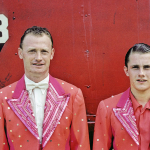
Below is a selection of several father-daughter and father-son acts, Alfred, Sr. and Alfred, Jr. Burton from the Ringling Barnum Circus, the Naitto family, Ala and his daughters, Nio and Margie, also of Ringling, and Ernest and Ernestine Clarke of the Tom Mix Circus. The Burtons performed balancing acts on high pedestals. The Naittos were high wire and tightrope performers. The Clarkes performed floor routines. Ernest was famous as a somersaulting leaper in his own Clarkonian Flying act of the Ringling Brothers circus.
Father and Son Performers. July 1955. Illinois State University. Passion for Circus. Permission to display was given by Illinois State University.
Naittos Tight Wire Performers. September 1942. Illinois State University. Passion for Circus. Permission to display was given by Illinois State University.
Father and Daughter Performers in Wardrobe. July 1938. Illinois State University. Passion for Circus. Permission to display was given by Illinois State University.
Finally, several images capture Astrid and Ernst “Franklin” Schlichting of the Ringling Barnum Circus. Astrid, thirteen years old, performs hand balancing routines with her father, acts that require tremendous strength and concentration.
Father and Daughter Performers. July 1950. Illinois State University. Passion for Circus. Permission to display was given by Illinois State University.
Hand Balancers in Action. July 1950. Illinois State University. Passion for Circus. Permission to display was given by Illinois State University.
The Illinois Digital Heritage Hub celebrates December by highlighting items that symbolize three of the month’s holidays as well as the winter solstice. Best wishes to everyone this holiday season.
Happy Kwanzaa. Date unknown. University of Illinois Urbana-Champaign Library. Amos Kennedy Collection. Permission to display was given by University of Illinois Urbana-Champaign Library.
Chanukah. 1960. Illinois State University. International Collection of Child Art (ICCA). Permission to display was given by the Illinois State University Milner Library
Christmas Lights on the Tower, Fort Sheridan. 1965. Bess Bower Dunn Museum of Lake County. Fort Sheridan Collection. Permission to display was given by Bess Bower Dunn Museum of Lake County
“Christmas Lights on the Tower” is provided with permission from the Bess Bower Museum of Lake County. See all their items in the IDHH. The item is from the Fort Sheridan collection, which documents the history of a former U.S. Army post in Lake County north of Chicago.