ON THIS DAY: Harold Washington’s Inauguration

On this day in 1983 Harold Washington was inaugurated the 51st mayor of Chicago. Washington was the first African American to be elected the Mayor of Chicago, and served until his death in November 1987. The Chicago History Museum Prints and Photographs Collection includes photographs from photographers and photojournalists from the 20th century through the present. The photographs in the collection capture both historic events in Chicago and the nation’s history, to everyday life in the neighborhoods. We chose these pictures taken by Richard Gordon, who covered the 1983 Mayoral Race from nearly every angle, with an especially keen focus on Harold Washington. 

black and white photo of Black Chicago Mayor Harold Washington shaking hands with two women.
Harold Washington Shaking Hands with Two Women on Lasalle Street. 1983. Chicago History Museum. Prints and Photographs Collection. Photograph by Richard Gordon. Permission to display given by Chicago History Museum.

The story of Washington’s election has been told numerous times, as a victory in the history of Chicago and Black History, and as a restorative moment in black leadership in electoral politics.  After serving in the Illinois House and Senate for 15 years Washington cast a bid in the 1977 special election against Mayor Daley’s successor Mayor Bilandic. 

His platform was progressive even by today’s standards. He resolved to work against the democratic party machine where career politicians had capitalized on their political stature and created public programs to ensure affordable rent and more control for public housing, a civilian oversight board to screen and investigate complaints about Chicago Police conduct, and stimulus to the Chicago Transit Authority which was consistently losing ridership. 

After losing the 1977 mayoral primaries to Jane Byrne, Washington was elected to represent the Illinois 1st Congressional District in Congress.

black and white photo of white Mayor Jane Byrne with two Women of Color standing next to her.
Jane Byrne at a campaign event during the Democratic mayoral primary race.1983. Chicago History Museum. Prints and Photographs Collection. Photograph by Richard Gordon. Permission to display given by Chicago History Museum.

Running for mayor would be a loss in political stature and relative comfort. Washington did not run in 1983 on his own volition. When approached by community organizers to run for mayor, he agreed to run if they registered 50,000 new black voters. They responded by registering 100,000 new voters.

black and white photo of white Mayor Richard M Daley reaching out to shake someone's hand surrounded by a crowd of people.
Richard M. Daley campaigning for election.1983. Chicago History Museum. Prints and Photographs Collection. Photograph by Richard Gordon. Permission to display given by Chicago History Museum.

His campaign faced incredible and open racism at the hands of the city council that provoked the unexpected crossing of party lines in deeply blue Chicago. “ It would be the worst day in the history of Chicago if your candidate was not elected. It’s a racial thing, don’t kid yourself. I’m calling on you to save your city, to save your precinct. We’re fighting to keep the city the way it is.” Alderman and Chairman of the Cook County Democratic party Edward Vrdolyak said during a get out the vote rally ahead of the Democaratic Primary Election. The rally was supposed to be for mayor Jane Byrne’s reelection, a chance to give her a boost in the primary elections above Washington and Daley– but with this outburst, the racist spirit of the rally was clear.  Even after winning the primary, many of Chicago’s democratic aldermen, including Vrdolyak, put their support behind Washington’s Republican opponent, Bernard Epton.

black and white photo from the back of three people riding on a car in a parade.
Democratic supporters for Republican mayoral candidate Bernard Epton riding in a campaign vehicle. 1983. Chicago History Museum. Prints and Photographs Collection. Photograph by Richard Gordon. Permission to display given by Chicago History Museum.

Even after the election, this confederation of aldermen created a hostile political situation that would continue through Mayor Washington’s tenure, effectively limiting Mayor Washington’s impact.

black and white photo of Black Chicago Mayor Harold Washington and a group of supporters walking down stairs.
Harold Washington and supporters walking down stairs. 1983. Chicago History Museum. Prints and Photographs Collection. Photograph by Richard Gordon. Permission to display given by Chicago History Museum.

Washington’s charisma comes through in many of the photographs Gordon took of him. But this photo of Muhammad Ali, campaigning for Washington is particularly special. In a moment of Chicago’s politics known for the alliances known as the “Political Machine” the faces of the anti-machine were powerful in garnering attention and trust.

black and white photo of boxer Muhammed Ali kissing a young Black girl and surrounded by Black children and adults.
Muhammed Ali campaigning for Harold Washington.1983. Chicago History Museum. Prints and Photographs Collection. Photograph by Richard Gordon. Permission to display given by Chicago History Museum.

Women’s History Month: Mary Salome Ott Brand

Happy Women’s History Month. At the IDHH, we’d like to introduce Mary Salome Ott Brand –a childhood immigrant from France and an early settler of the North Shore of Chicago who cast her first ballot to vote at the age of 91. 

In 1913, Illinois became the first state in the nation to grant women the right to the presidential vote. Women’s suffrage had slowly evolved since the 15th amendment in 1870 leading to the ratification of the 19th Amendment in 1920. The right to vote was won in large part by the organizing and lobbying of woman’s clubs in communities across the nation. The diversity of materials in Highland Park Public Library’s Highland Park History Collection shows different elements of women’s history, both at the collective and political while also in the lives of individuals. The collections include women’s club minutes, photographs, and biographies constructed of newspaper clippings and stories transcribed by local historians and family members.

On Election Day 1916, Mary Salome Ott Brand left her house on N. Second Street in Highland Park to vote for the first time. At 91, she was accompanied by her son Orson, who documented his mother’s first time to the polls. 

sepia-tone photo of a woman standing in an open wooden doorway.
Mary Salome Ott Brand, 1825-1921. 1916. Highland Park Public Library. Highland Park History. Photograph by Orson Brand. Permission to display granted by Highland Park Public Library.
sepia-tone photo of a group of men and two women standing in front of a brick building.

Grandma Brand, Age 91. 1916. Highland Park Public Library. Highland Park History. Photograph by Orson Brand. Permission to display granted by Highland Park Public Library. 

The fight for women to vote had been long fought. With Suffragette figures such as Susan B. Anthony well known, the struggle to vote was also fought by women in local communities through woman’s clubs and federations of woman’s clubs. Women in Lake County had been active in the conversation and activism of women’s right to vote. In 1916, The Woman’s Civic Club  –later renamed the Ravina Women’s Club joined forces and merged with the Highland Park Woman’s club in in the 1960s –wrote they were “in favor of full suffrage for the women of Illinois as speedily as possible, therefore favor the adoption of an amendment to the constitution to that end” –meaning presidential suffrage –that would eventually become the 19th ammendment. Highland Park Public Library has several collections from Highland Park area womans’ clubs dating back to the early 20th century, including the Ravina Woman’s Club Records and Highland Park Woman’s Club Records.

Living in the North Shore during the civil war, the great migration, the fight for unions, and the fight for women’s vote, Brand’s life was certainly impacted by the changing political landscape and political awareness. The right to vote, at 91, was certainly reason enough to document.

Here is Brand at the polls.

sepia-tone photo of Mary Salome Ott Brand holding her voting ballot in front of a group of men.
Grandma Brand, Age 91. 1916. Highland Park Public Library. Highland Park History. Photograph by Orson Brand. Permission to display granted by Highland Park Public Library.

In the obituaries that were included in Ms. Brand’s biographical file- along with stories she told a local historian, they universally describe Brand as a life-long resident of Lake County –which she was, after moving there. Photographs of her home continue to document  what life in Lake County was like in the earliest part of the 20th century. For example, this picture taken by George D. Rice –another local documentarian I mentioned in a post in January.

black and white photo of a woman standing on the steps of a house surrounded by a white picket fence while two children sit playing in front of a tree in the yard.

Mary Salome Ott Brand and Children in Front of a House. n.d. Highland Park History. Photograph by George D. Rice. Permission to display granted by Highland Park Public Library.

Compared with her stories of the prairie as it was in the 1840s-60s, the rapid change from prairie to the north Chicago suburbs is immediately apparent. The Highland Park History Collection is definitely unique among the collections within the IDHH  for having so many different forms of historical documentation. Meeting minutes, written local histories, and, of course, photographs build a well-rounded picture of subjects at the micro-local. The biographical files created by local historians in Highland Park and more broadly Lake County cover the lives of women during the early 20th century.  Here is Mary Salome Ott Brand’s assembled biography.

typed notes on a visit to mrs. brand

Biography of Mary Salome Ott Brand. C.1925. Highland Park Public Library. Highland Park History.  Permission to display granted by Highland Park Public Library.

Lastly, here’s a picture of her and her son together: 

sepia-toned studio-style photo of a man standing behind a sitting woman.
Orson Brand and His Mother, Mary Salome Ott Brand. 1916. Highland Park Public Library. Highland Park History. Photograph by Orson Brand. Permission to display granted by Highland Park Public Library.

For more of any of these kinds of documents please visit the IDHH. The papers of women’s social and political organizations are linked above, but here are more of the local biographies created by historians and more photographs by Orson Brand. 

Collections for Election Day

Election Day brings to mind the history of democracy in the state of Illinois. One of the richest sources of this legacy is the Chicago History Museum. Marking the week of Election Day, the Illinois Digital Heritage Hub features material from two of the Museum’s digital collections that are also available in the DPLA, the Museum Collection and the Prints and Photographs Collection.

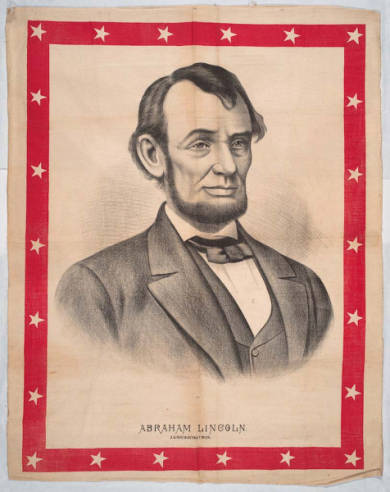
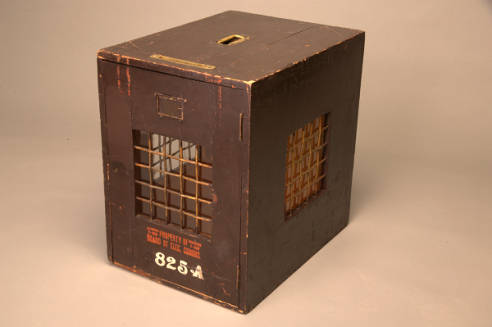
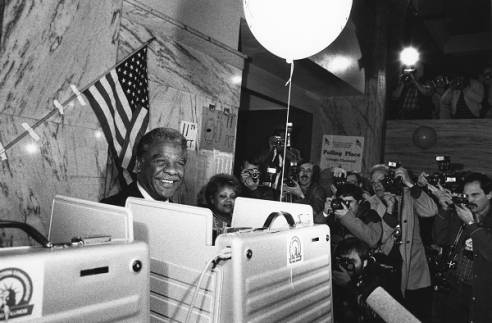
The Chicago History Museum’s collections include some of the earliest campaign material in the state, including posters for Abraham Lincoln’s and Ulysses S. Grant’s election bids. The Museum exhibits technologies essential for the electoral process, such as a ballot box used to gather votes sometime between 1890 and 1932. Other materials chronicle the campaigns of more recent elected officials, such as former mayor, Harold Washington.

Banner featuring black-and-white etching of Abraham Lincoln with a red frame with white stars.
Abraham Lincoln’s election campaign banner. 1864. Chicago History Museum. Museum Collection. Permission to display was given by Chicago History Museum.

color photograph of a ballot box from circa 1890-1932.
Ballot Box. 1890-1932. Chicago History Museum. Museum Collection. Permission to display was given by Chicago History Museum.

black and white photo of former Chicago Mayor Harold Washington at a voting booth while photographers take photos in the background.
Harold Washington voting on election morning in Hyde Park. 1983. Chicago History Museum. Prints and Photographs Collection. Permission to display was given by the Chicago History Museum.

The IDHH features many of the Chicago History Museum’s digital items, including those featured here. See also the full range of IDHH institutions’ materials pertaining to elections or voting.