The IDHH contains some content that may be harmful or difficult to view. Our cultural heritage partners collect materials from history, as well as artifacts from many cultures and time periods, to preserve and make available the historical record. Please view the Digital Public Library of America’s (DPLA) Statement on Potentially Harmful Content for further information.
With just a couple days left in the month of October, we here at the IDHH are beginning the festivities of Halloween. It’s spooky season, a time for the macabre: decorating homes and pumpkins, handing out (and eating) candy, dressing in costumes and attending parties, reading gothic horror novels and plays, and watching the silent and early talkie films that began and defined the horror genre.
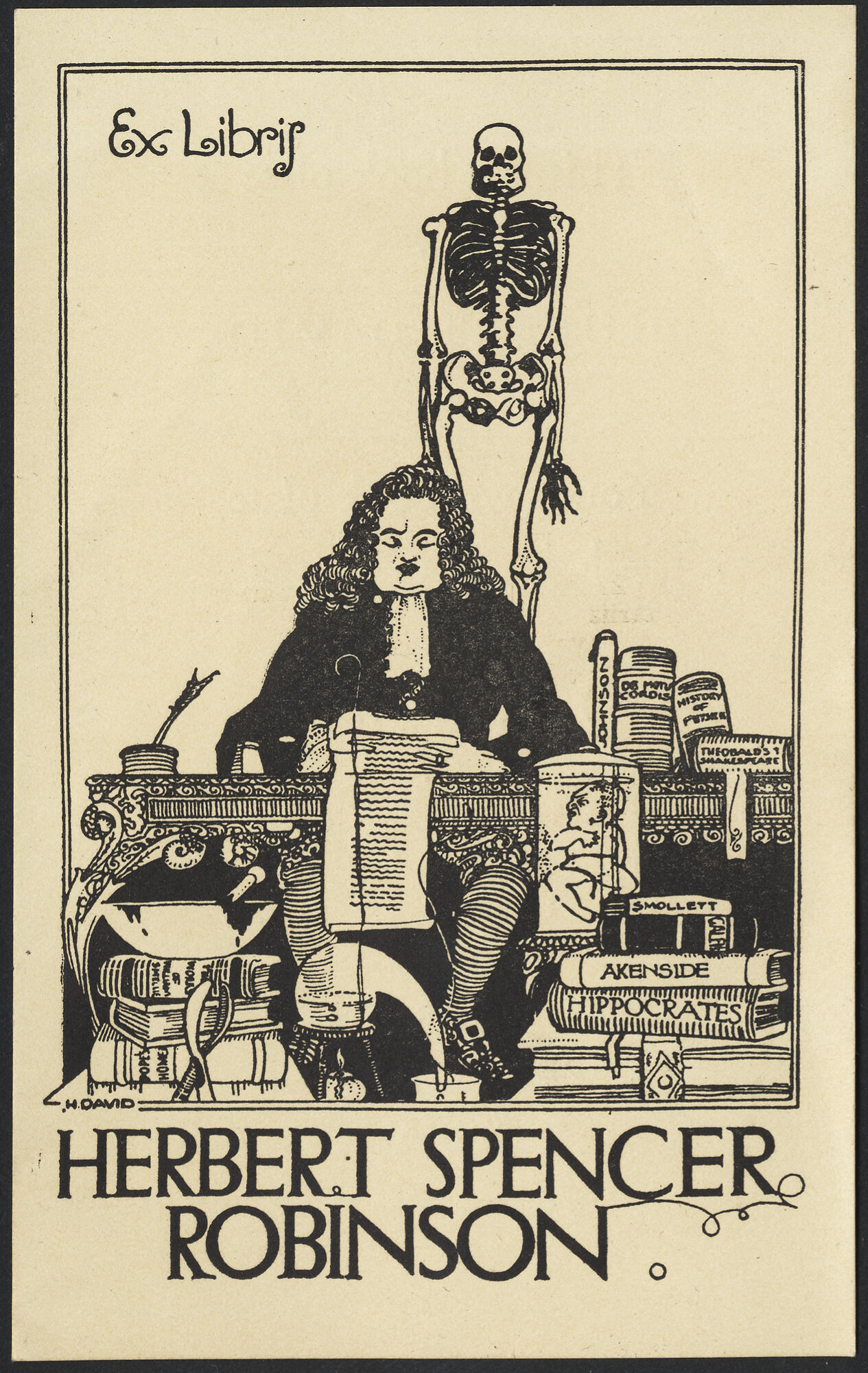
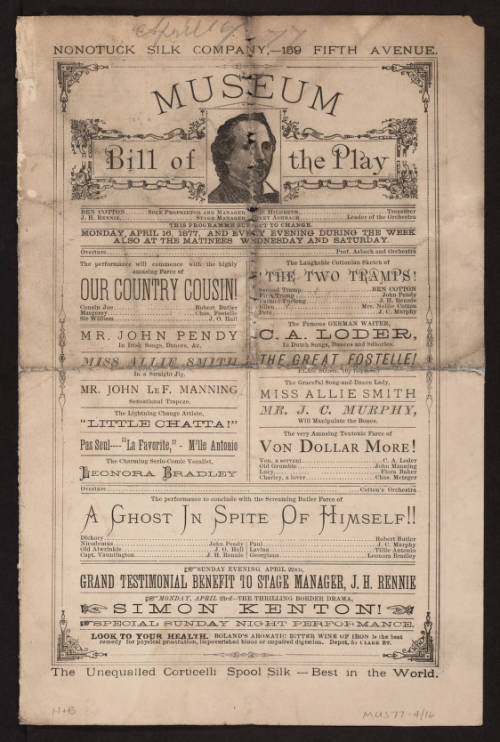
Here are this year’s spooky Halloween-related images from IDHH contributors (and if you’re like me, you think a clown is scarier than a skeleton…):
Clown operating a marionette skeleton. April 8, 1936. Illinois State University. Musselman Family Photographs. Courtesy of Illinois State University.Cathell, J. Everist. 1902. University of Illinois Urbana-Champaign Library. John Starr Stewart Ex Libris Collection. Courtesy of University of Illinois Urbana-Champaign Library.Qui Me Invenerit Vitam et Havriet Salvtem a Domino. Prov. CVIII. circa 1585. Illinois State University. Special Collections Prints. Courtesy of Illinois State University.Robinson, Herbert Spencer. [n. d.] University of Illinois Urbana-Champaign Library. John Starr Stewart Ex Libris Collection. Courtesy of University of Illinois Urbana-Champaign Library.Wood’s Museum, Ghost in spite of himself (April 16, 1877), Ghost in spite of himself; Our country cousin; Two tramps [page 1]. April 16, 1877. Chicago Public Library. Chicago Theater Collection-Historic Programs. Courtesy of the Chicago Public Library.
October marks that time of the year when we dress up as ghouls and goblins, decorate our homes with spiderwebs and skeletons, and indulge in all manner of frightening things. As a nod to these spine-chilling 31 days, the IDHH is featuring the fascinating use and art of tombstones and other grave markers. As diverse as the great variety of funerary traditions around the world, grave markers serve not only the utilitarian purpose of demarcating the physical space where an individual might lie, but also reflect the social values and traditions of a specific period or people. Cemeteries and other burial places held great significance from the earliest days, as providing a place for the dead was thought to be an important family obligation. This significance would eventually extend to larger communal graveyards and burial places as inclusion in these spaces became exclusive to community members, often excluding foreigners, criminals, and other unwanted groups.
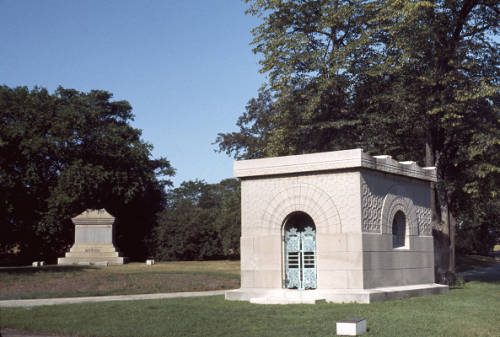
The tombstones and grave markers within these communal spaces have communicated a number of ideas to visitors over time. As a work of art, the craftsmanship and skill in the construction of the tombstones can be an aesthetic pleasure in its own right. Such artistry leads people to create gravestone rubbings with charcoal and to capture graveyard scenes through painting and photography. The construction and grandiosity of these markers may also impart a sense of prestige or wealth, such as in the image below of Carrie Eliza Getty’s large tomb in Chicago. Of course, tombstones also act as a memorial to previous generations, prompting us to seek out the histories of those buried there, like of the Mabie family and their influential 1840s circus show in Wisconsin. Whether viewed as art, icon, or historical marker, tombstones offer a (spooky) glimpse into the values and customs of those who are no longer with us.
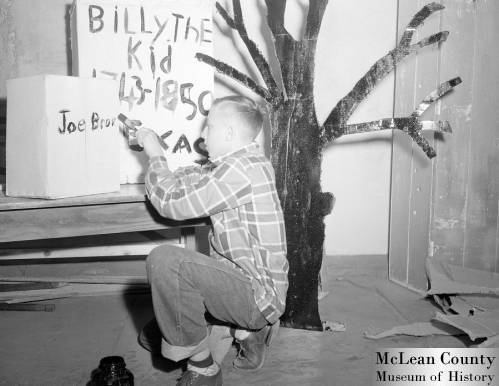
Here are a few of our favorite items featuring tombstones from across the Midwest:
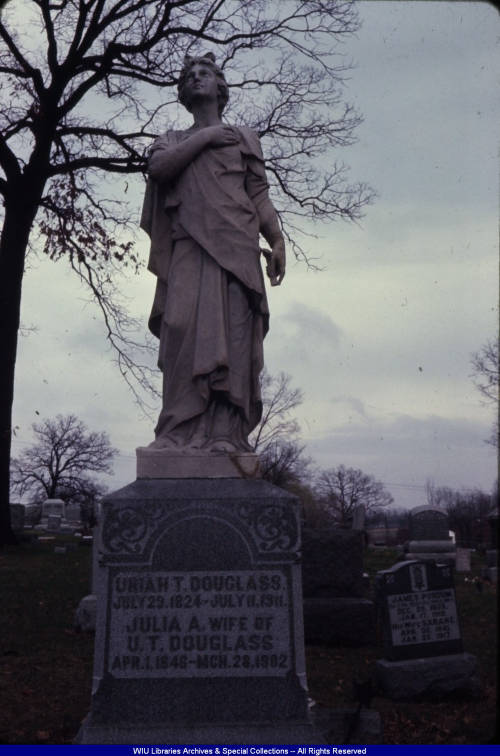
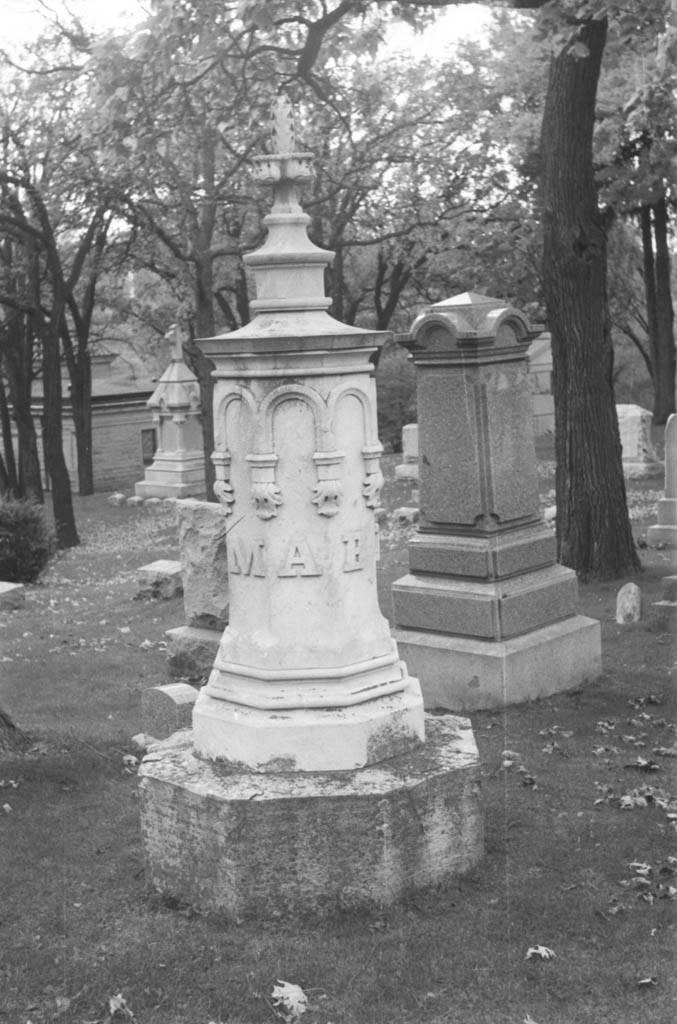
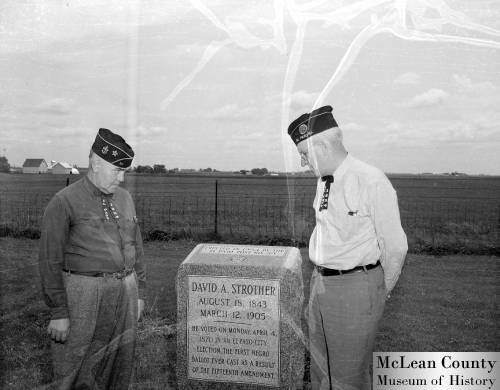
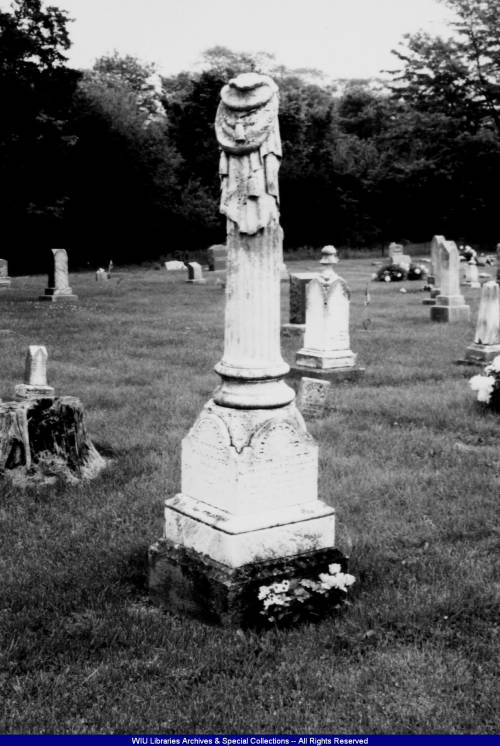
Boy painting tombstone decorations, unspecified location, Central Illinois, 1951 Halloween picture layout. October 29, 1951. Photographed by Gene Smedley. McLean County Museum of History. Pantagraph Negative Collection 1950 – 1959. Courtesy of the McLean County Museum of History.Carrie Eliza Getty Tomb and Joseph Medill tombstone, Graceland Cemetery. 1976. Photographed by Charles William Brubaker. University of Illinois Chicago. C. William Brubaker Collection. Courtesy of the University of Illinois Chicago.Tombstone of Uriah T. Douglass and Julia A. Douglass in Oakwood Cemetery. [n.d] Western Illinois University. Digital Image Collection. Courtesy of Western Illinois University.Tombstone. [n.d.] Photographed by Sverre O. Braathen. Illinois State University. Sverre O. Braathen Circus Photo Collection. Courtesy of Illinois State University.Two veterans looking at tombstone of David A. Strother, first African American to cast a vote in the United States, El Paso, IL, 1954. May 28, 1954. Photographed by Ann Broder. McLean County Museum of History. Pantagraph Negative Collection 1950 – 1959. Courtesy of the McLean County Museum of History.Scott tombstone Scott’s Cemetery 2002. 2002. Photographed by John Hallwas. Western Illinois University. Digital Image Collection. Courtesy of Western Illinois University.