What has 88 Keys and 30 Days? National Piano Month

From grand to upright to electronic, the piano has undergone a number of reinventions over the past three hundred years as musical tastes and needs have changed. With the start of National Piano Month on September 1, the IDHH would like to explore the history and influence of this versatile instrument on the wide world of music. Most sources point to the Italian instrument maker Bartolomeo Cristofori di Francesco as the inventor of the early piano. While the exact timeline of Cristofori’s work is murky, he undeniably had mastered the elements of modern piano action and created a piano (the fortepiano) by the early 1700s. While older keyboard instruments such as the clavichord and the harpsichord allowed for either dynamic control over individual notes or access to a loud, resonant sound, Cristofori’s fortepiano was revolutionary because it enabled players’ greater command of the instrument’s expressive tone and volume. 

Over the next three centuries, variations in piano shape and design would multiply as renowned composers such as Wolfgang Amadeus Mozart and Frédéric Chopin wrote pieces specifically for the instrument, bringing greater attention and demand for the piano. By the 1860s, the upright piano had become a more practical and accessible musical option for use in private homes, as groups could now listen to simplified piano arrangements of popular music and enjoy an evening of tuneful entertainment together. Further innovations to piano design and construction were developed in the 20th century with the advent of electric and digital instruments, applying the technological advances of the era to the art of music making. Illinois has had its own role in the history of the piano, from William Wallace Kimball’s successful Kimball Piano Company in Chicago, to the numerous talented pianists such as Lillian (Lil) Hardin Armstrong who made Illinois their artistic home and contributed to the vibrant musical culture of the state. 

Below are a few of our favorite items featuring the versatility of the piano:
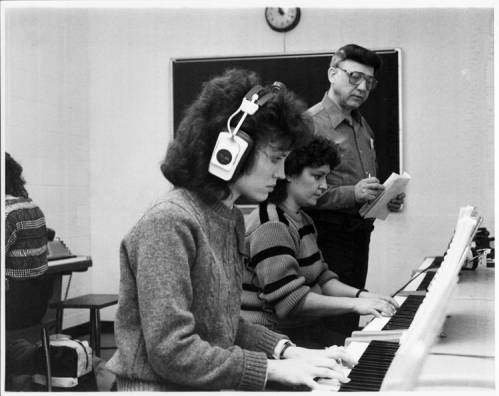
Students in a class wear headphones while practicing on electronic piano keyboards.
Elgin Community College Piano Class. [n.d.] Elgin Community College. Elgin Community College History. Courtesy of Elgin Community College.
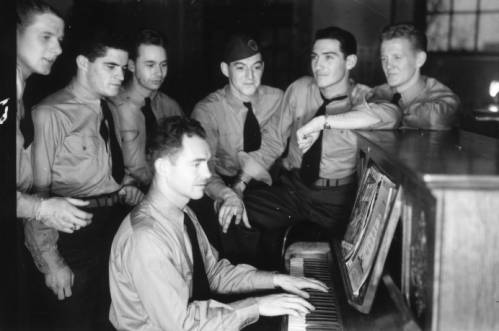
A group of naval flight school cadets gather around an upright piano as one cadet plays.
Cadet Life 8. 1943. Monmouth College. Naval Flight School. Courtesy of Monmouth College.
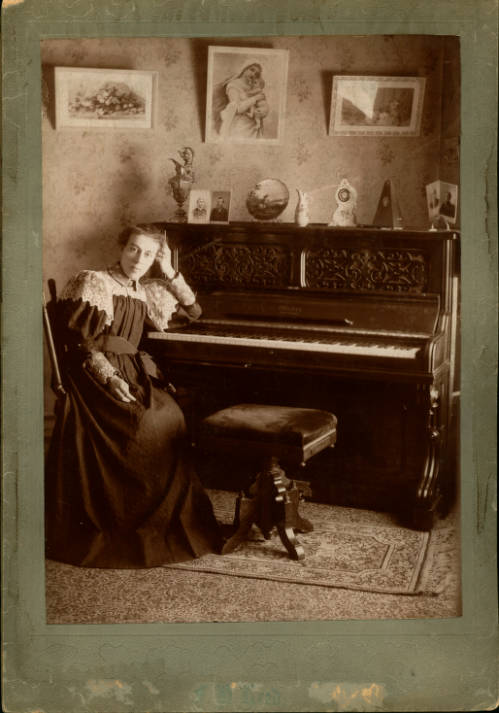
A woman in 19th-century dress poses by an upright piano for a photograph.
May Deeming leaning on a piano. circa 1890s. Lewis University. Bruce Cheadle Papers. Courtesy of Lewis University.
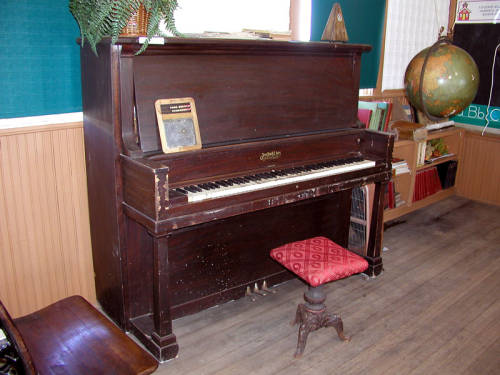
An upright piano stands up against a wall along with other items from a rural one room school house.
Piano from one room school house. circa 1900. Henderson County Historical Society Museum. Henderson County Historical Society Museum. Courtesy of the Henderson County Historical Society Museum.
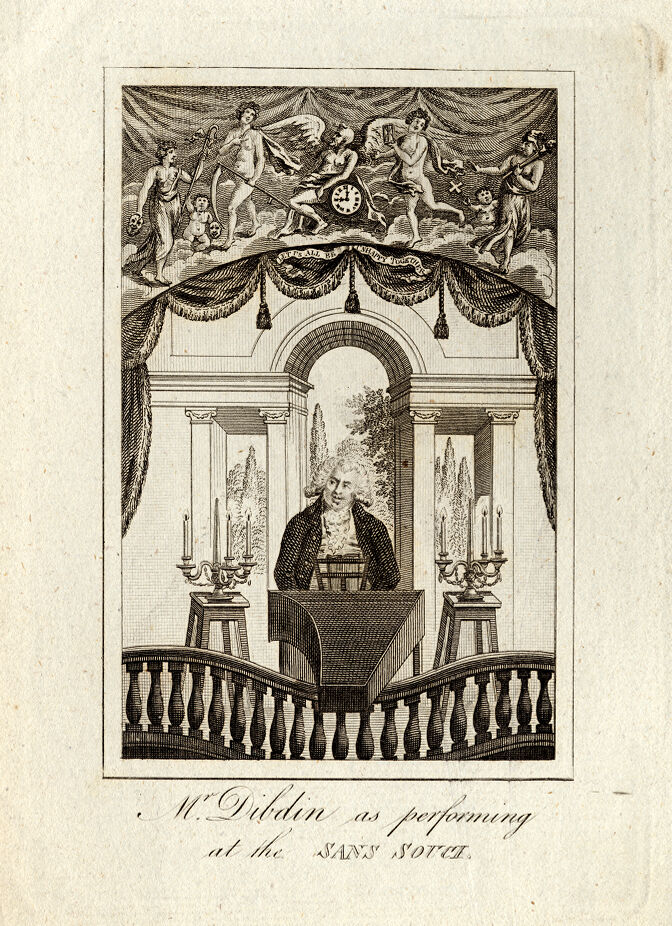
An engraving on paper illustrates an 18th-century man playing an early piano.
Charles Dibdin performing at the Sans Souci. [n.d.] University of Illinois at Urbana-Champaign Library. Portraits of Actors, 1720-1920. Courtesy of the University of Illinois at Urbana-Champaign Library.
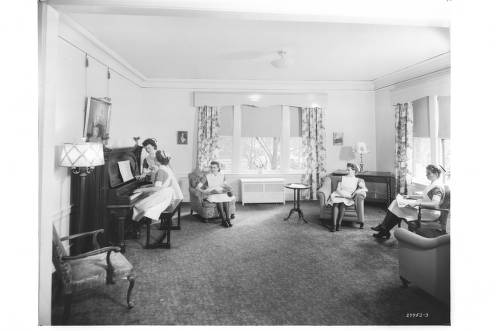
A group of nurses on a break sit on chairs in an open room while another nurse plays a piano
Green Street, Folder 59, Sheet 6. [n.d.] Photographed by Burke and Dean. University of Illinois Chicago. Chicago – Photographic Images of Change. Courtesy of the University of Illinois Chicago.
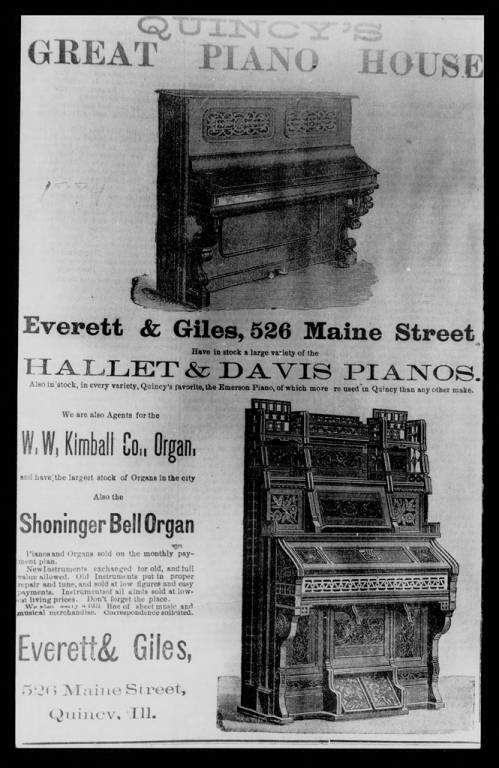
A 19th-century print advertisement for a piano shop called "Quincy's Great Piano House."
Quincy’s Great Piano House. 1884. Quincy Public Library. Quincy Area Historic Photo Collection. Courtesy of the Quincy Public Library.

Want to see more? 

Visit the IDHH to view even more items related to pianos.

St. Patrick’s Day

Happy St. Patrick’s Day! The Illinois Digital Heritage Hub celebrates by highlighting collections at the Lake Forest Academy and the Quincy Public Library.

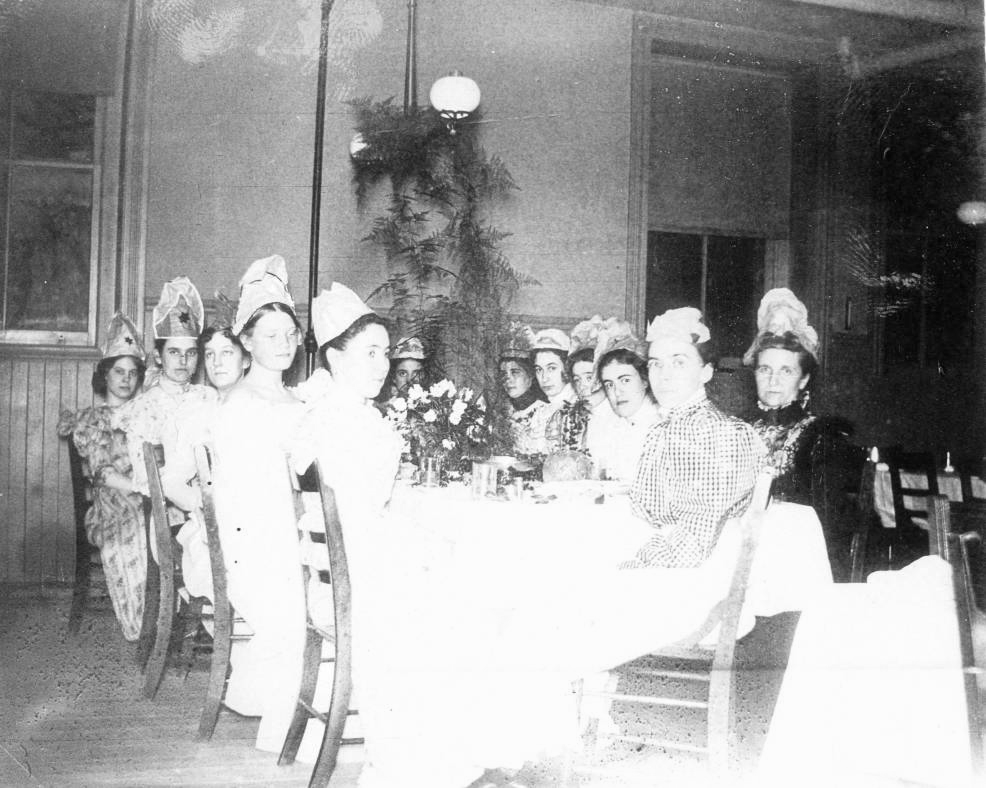
Lake Forest Academy has a long and fascinating legacy that encompasses the history of Ferry Hall, which merged with the Academy in the 1970s. In the image below, students in costume gather for a St. Patrick’s Day dinner and festivities.

black and white photo of Ferry Hall Students and Faculty gathered around a table for dinner on the Feast of Saint Patrick.
Saint Patrick’s Day Dinner, Ferry Hall, circa 1895. Lake Forest Academy. Lake Forest Academy and Ferry Hall Archives. Permission to display was given by the Lake Forest Academy.

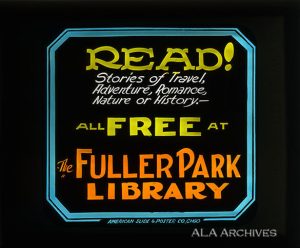
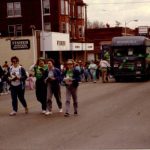
The Quincy Public Library has long been a cornerstone of its town and community. The images below capture the library’s participation in Quincy’s celebration of St. Patrick’s Day in the early 1990s.

In addition to the Quincy Public Library and the Lake Forest Academy, check out other St. Patrick’s Day themed items contributed by IDHH institutions, including a rich set of items provided by the University of Illinois Chicago.

Winter in Illinois

December marks the beginning of the meteorological Winter; however, in Illinois, the cold weather and snow that are part and parcel with the Winter months often get underway as early as October. Now, the winter is just properly starting, with December being the first of the three coldest and usually snowiest months of the year.

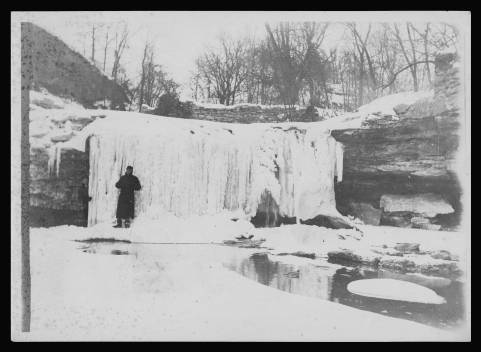
Black and white photo of a person standing in front of a frozen waterfall
Winter at Homan Falls. Circa 1916. Quincy Public Library. Permission to display was given by Quincy Public Library.

As cold as temperatures can be during recent seasons, historical records, including data and photographs, demonstrate that winters in Illinois and across the country were colder and often snowier in the not-so-distant past. The Quincy Public Library’s Quincy Area Historic Photo Collection includes many photos that help provide historical records of winters past as well as capture the sublime beauty of some of Illinois’ harshest weather.

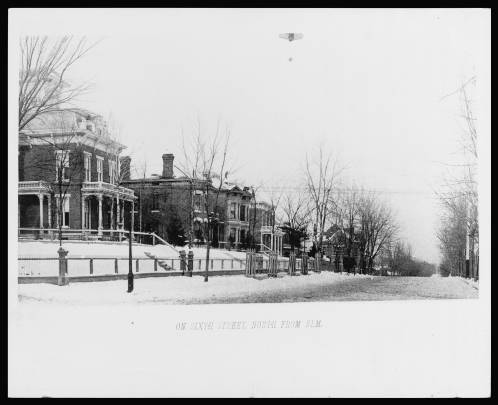
Bkack and white photograph of a snowy street next to multi-story houses
West side of 6th street North of Elm. Late 1800s. Quincy Public Library. Permission to display was given by Quincy Public Library.

Far beyond its impressive set of winter and weather-related images, the Quincy Area Historic Photo Collection shows the history of a remarkable town, with records dating back to the 1830s, just a decade after the town’s founding. Quincy is a significant location in the history of the Mormon faith as well as being the site of one of the Lincoln-Douglas debates.

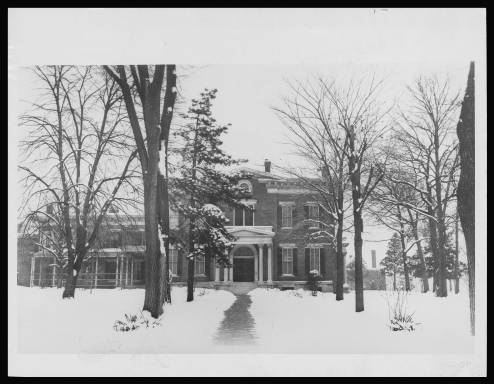
Two-story brick home with snow-covered yard in trees in the foreground
Orville H. Browning Family Home. Date unknown. Quincy Public Library. Permission to display was given by Quincy Public Library.

See all of the Quincy Public Library’s items in the IDHH. See all of the items contributed by IDHH institutions that relate to winter or snow.