It’s the middle of summer and with the warm weather and school vacations, it’s peak season for outdoor activities. This time of the year, kids in Chicago take advantage of the city’s more than 500 parks, over 90 of which are featured in the Chicago Public Library’s Chicago Park District Records Photographs collection.
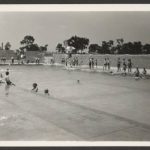
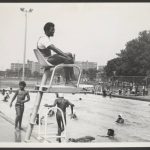
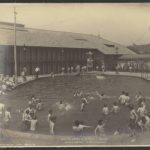
What better way to keep cool during the summer heat than at the pool? Chicago’s parks boast more than 70 pools across the city, just three of which are pictured below. As these photos suggest, pools have been an integral part of outdoor summertime activities in Chicago at least since the turn of the twentieth century.
Riis Park (0123) Activities – Swimming. 1936-07-01. Chicago Public Library. Chicago Park District Records-Photographs collection. Permission to display was given by the Chicago Public Library.
Madden Park (0028) Activities – Swimming. 1976-07-27. Chicago Public Library. Chicago Park District Records-Photographs collection. Permission to display was given by the Chicago Public Library.
Armour Square Park (0003) Features. C.1905. Chicago Public Library. Chicago Park District Records-Photographs collection. Permission to display was given by the Chicago Public Library.
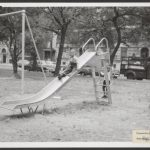
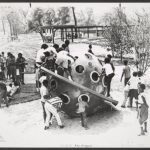
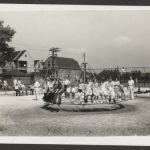
On cooler days or when kids would prefer to stay dry, there are the Chicago Park District’s more than 300 playgrounds around the city. Beyond the slides, swings, merry-go-rounds, and more unusual features, the playground has long been a central place for after-school and summertime activities.
Washington Park (0021) Features – Playgrounds. 1956-06-11. Chicago Public Library. Chicago Park District Records-Photographs collection. Permission to display was given by the Chicago Public Library.
Avondale Park (0081) Features – Playgrounds. 1935-07-16. Chicago Public Library. Chicago Park District Records-Photographs collection. Permission to display was given by the Chicago Public Library.
July 21 marks the 120th birthday of Illinois-born, internationally-acclaimed author, Ernest Hemingway (1899-1961). To celebrate, the IDHH highlights collections that include materials on several Illinois literary giants, including Gwendolyn Brooks, Carl Sandburg, and Hemingway himself.
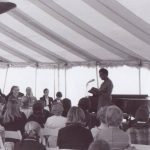
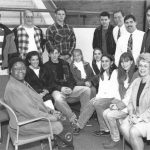
Gwendolyn Brooks (1917-2000) is one of the most celebrated U.S. poets, poet laureate of Illinois, and longtime Chicago resident. In 1949, She became the first African American writer to win a Pulitzer Prize. Brooks has a deep connection to African American history and culture, public life, and academics in Illinois. Throughout her life, Brooks spoke at libraries and campuses throughout the state, as demonstrated below in the photographs from the Lake Forest Academy and Ferry Hall Archives collection and Elgin Community College’s campus history collection. Gwendolyn Brooks came to Ferry Hall in 1969 and Lake Forest Academy in May of 1994 to speak to classes and give a reading of her poems. She visited Elgin Community College in 1995 to speak to high school and college English students. Brooks has perhaps the strongest connection to Illinois Wesleyan University, visiting the campus five times from 1972-1999, receiving an honorary doctorate there in 1973. See materials from her visits to Wesleyan here. See all of material in the IDHH on Brooks here.
Gwendolyn Brooks at the Centennial Celebration, Ferry Hall. 1969. Lake Forest Academy. Lake Forest Academy and Ferry Hall Archives collection. Permission to display was given by Lake Forest Academy
Poet Laureate Gwendolyn Brooks Participates in High School/College English Articulation Activity. 1995. Elgin Community College. Elgin Community College History collection. Permission to display was given by Elgin Community College
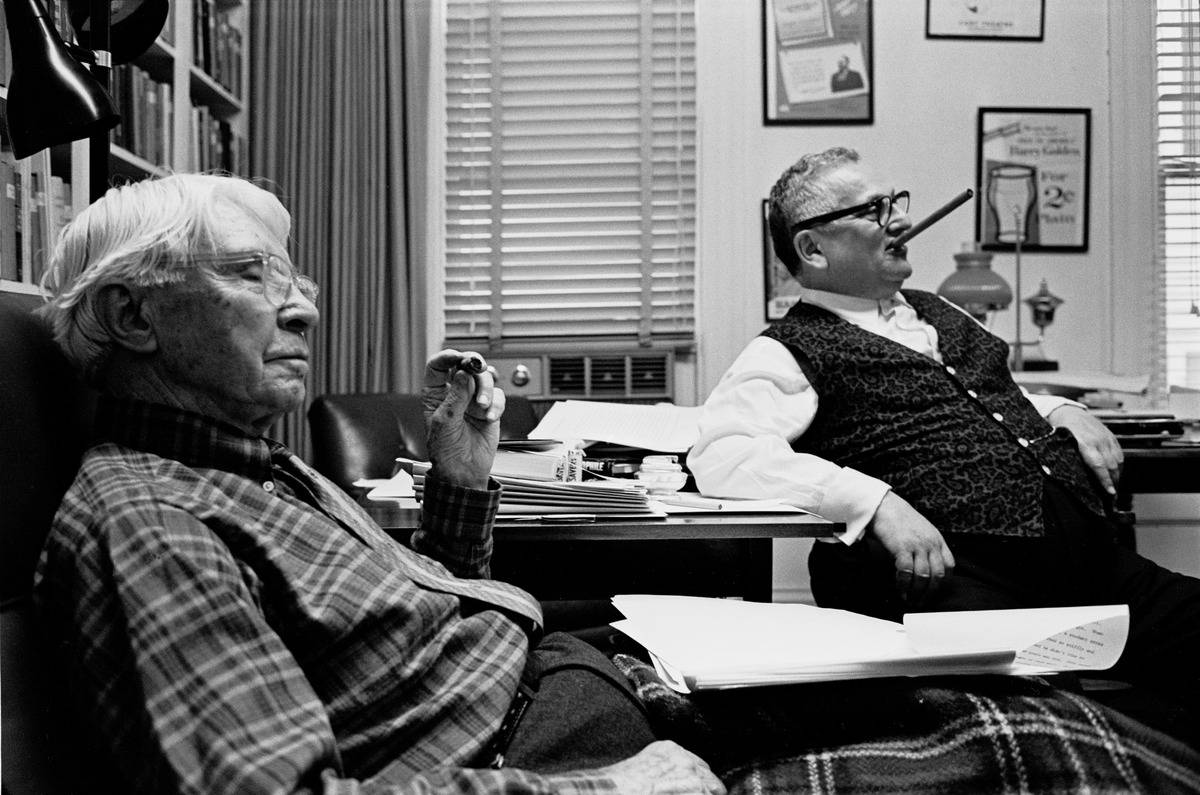
Coincidentally, July also marks the death of another of the most celebrated writers in the state and the U.S., Carl Sandburg (1878-1967). Though best known for his poetry, especially his breathtaking naturalist and modernist pieces on urban life in Chicago, he was also a musician, editor, and prose author. One of his three Pulitzers was awarded for a biography on Lincoln. Sandburg was an advocate for civil rights and received an award from the NAACP in 1965. In the photo below from the Chicago History Museum’s Prints and Photographs Collection, Sandburg sits with his biographer, Harry Golden. Sandburg lived most of his life outside of Illinois but occasionally returned to his home state, including a visit to Knox College in 1958. Search all of the materials in the IDHH relating to Sandburg here. Haun, Declan, 1937-1994 (photographer). Carl Sandburg and Harry Golden in Golden’s office. 1961. Chicago History Museum. Prints and Photographs Collection. Permission to display was given by Chicago History Museum.
Finally, the remarkable photographs below from the Ernest Hemingway Foundation, digitized by the Oak Park Librarycollection in the Illinois Digital Archive, showcase the early life of the author and his family in his hometown, a suburb of Chicago. Hemingway authored more than a dozen novels and short story collections throughout his life, receiving a Pulitzer for The Old Man and the Sea in 1953 and the Nobel Prize in Literature in 1954. He is pictured below with his siblings, two of whom, Marcelline and Leicester, also became talented writers. Check out all of the IDHH materials on Hemingway here.
Ernest Hemingway. May 1918. Ernest Hemingway Foundation of Oak Park in cooperation with the Oak Park Public Library. The Early Years –Ernest and Marcelline Hemingway in Oak Park collection. Permission to display was given by Ernest Hemingway Foundation of Oak Park and the Oak Park Public Library
Ursula, Madelaine, Marcelline, Ernest, Leicester, and Carol Hemingway in Walloon Lake. No date. Ernest Hemingway Foundation of Oak Park in cooperation with the Oak Park Public Library. The Early Years –Ernest and Marcelline Hemingway in Oak Park collection. Permission to display was given by Ernest Hemingway Foundation of Oak Park and the Oak Park Public Library.
Ernest and Marcelline Hemingway in winter attire holding hands. 1903. Ernest Hemingway Foundation of Oak Park in cooperation with the Oak Park Public Library. The Early Years –Ernest and Marcelline Hemingway in Oak Park collection. Permission to display was given by Ernest Hemingway Foundation of Oak Park and the Oak Park Public Library
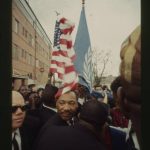
We commemorate the life and legacy of Dr. Martin Luther King, Jr. and the activism for justice and equality that his work is a part of and continues to be exigent to this day. The IDHH highlights collections from the Chicago History Museum that include photographs by DC-area journalist, Declan Haun, as well as an interview with an activist who participated in protests in Chicago in response to King’s assassination in 1968.
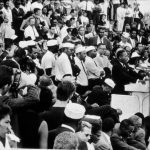
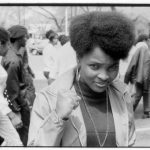
The Chicago History Museum’s Prints and Photographs Collection includes photographs from King’s “I Have a Dream” Speech on August 28,1963 (the first image below on the left), his involvement in the March 1965 protests against police brutality in Montgomery, Alabama (top right), and images from King’s Chicago Freedom Movement, including a march in 1966 (bottom right). King was a powerful voice in Civil Rights and inspired many others to stand up for equality for African Americans and all People of Color.
The Chicago History Museum’s Oral History Collection includes transcripts and audio from interviews conducted by the Museum’s Studs Terkel Center for Oral History. Hear from Marilyn Katz who was involved in protests in Chicago in the wake of King’s assassination. Dr. Martin Luther King’s words, ideas, and the people he inspires live on to work toward social justice.
Several IDHH Institutions have put together exhibits in honor of Dr. King, including the Chicago History Museum’s Remembering Dr. King, which focuses on King’s work in Chicago. Some of the exhibit’s images are online in the Chicago History Museum’s Digital Library and in the DPLA. See all of the Chicago History Museum’s materials relating to Dr. King. See all of the Illinois Digital Heritage hub’s items on King here.
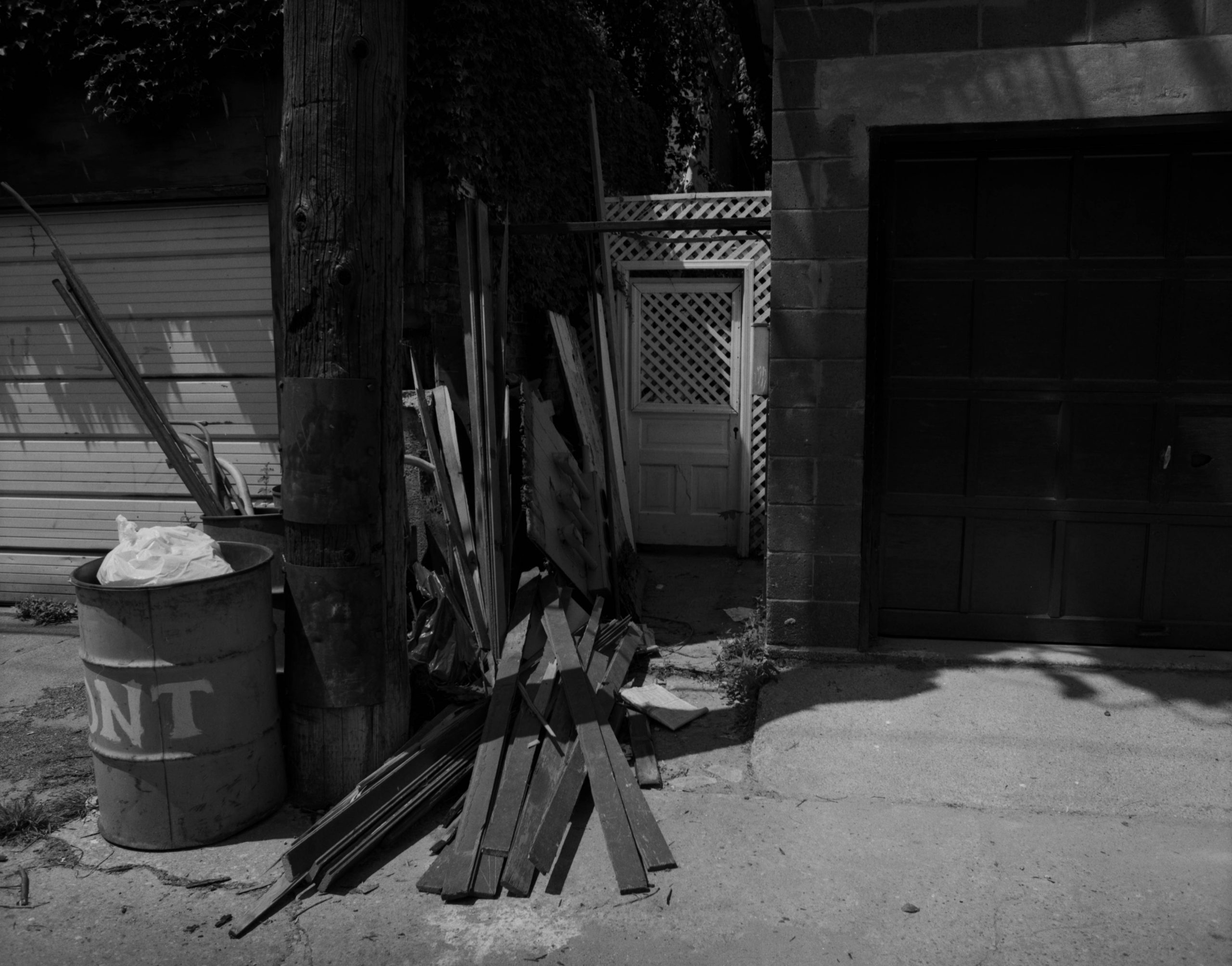
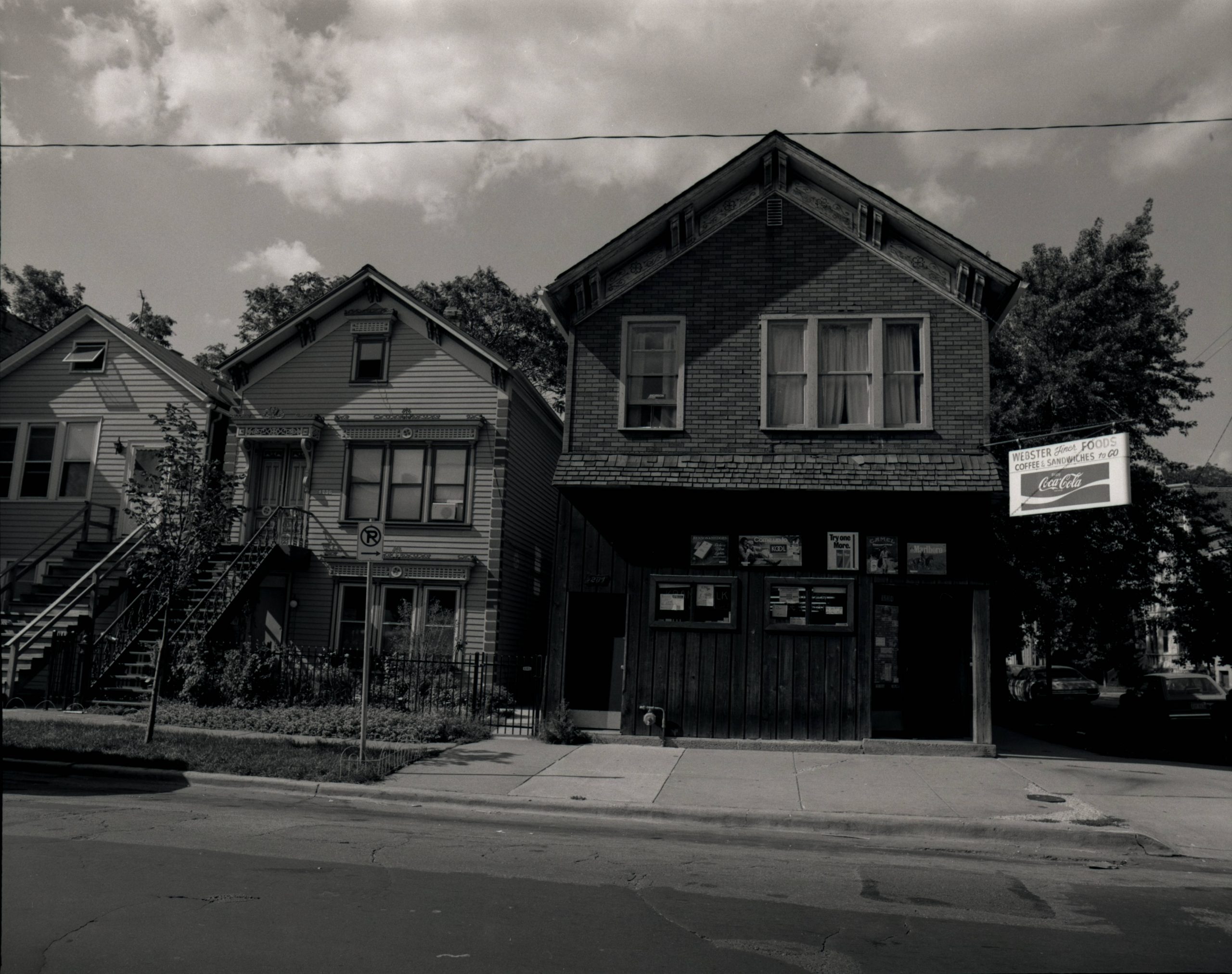
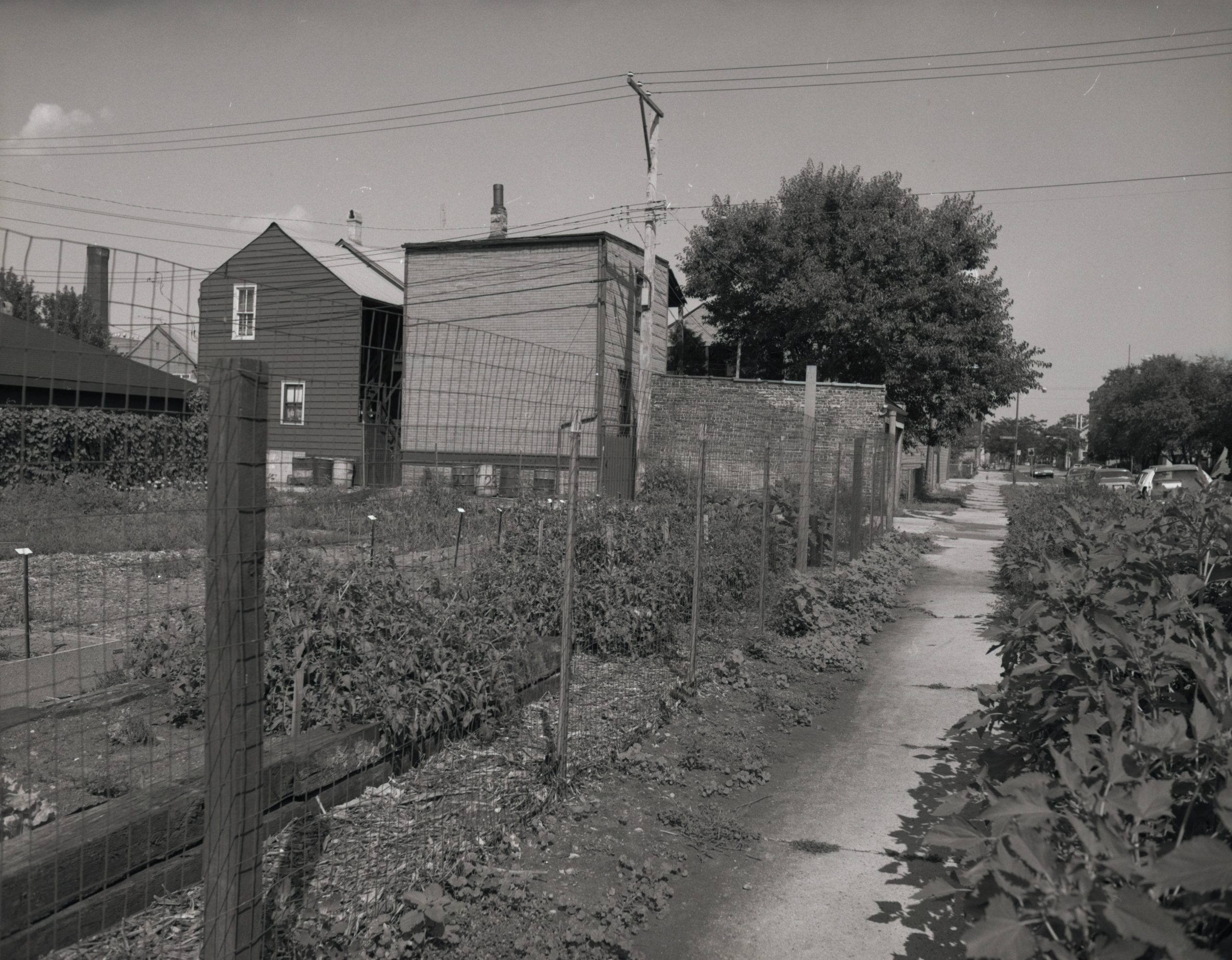
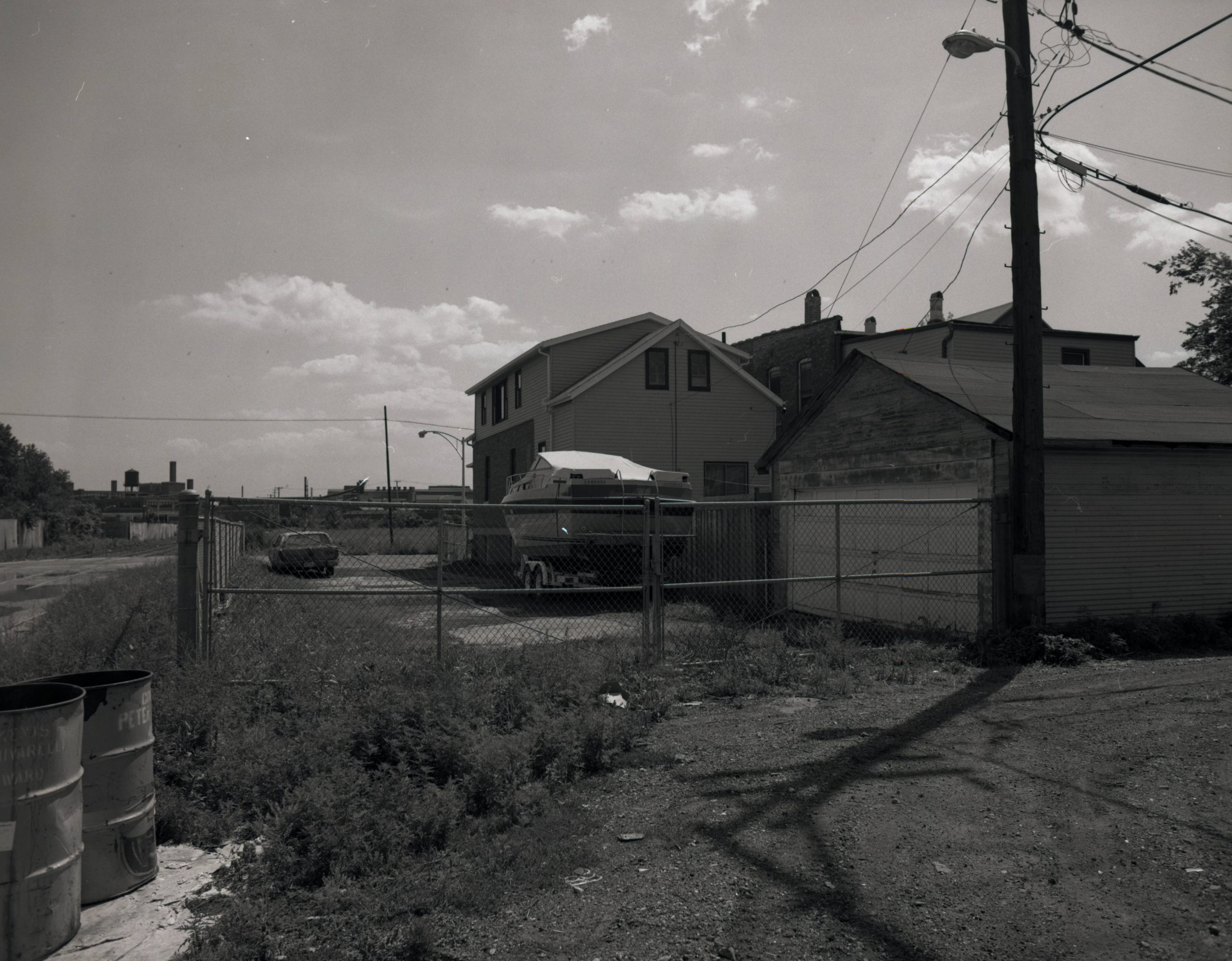
This month we welcomed DePaul University into the IDHH. DePaul University has shared the Deborah Bright Photographs collection, which includes 96 black and white photographs taken by the photographer, Deborah Bright, in 1985.
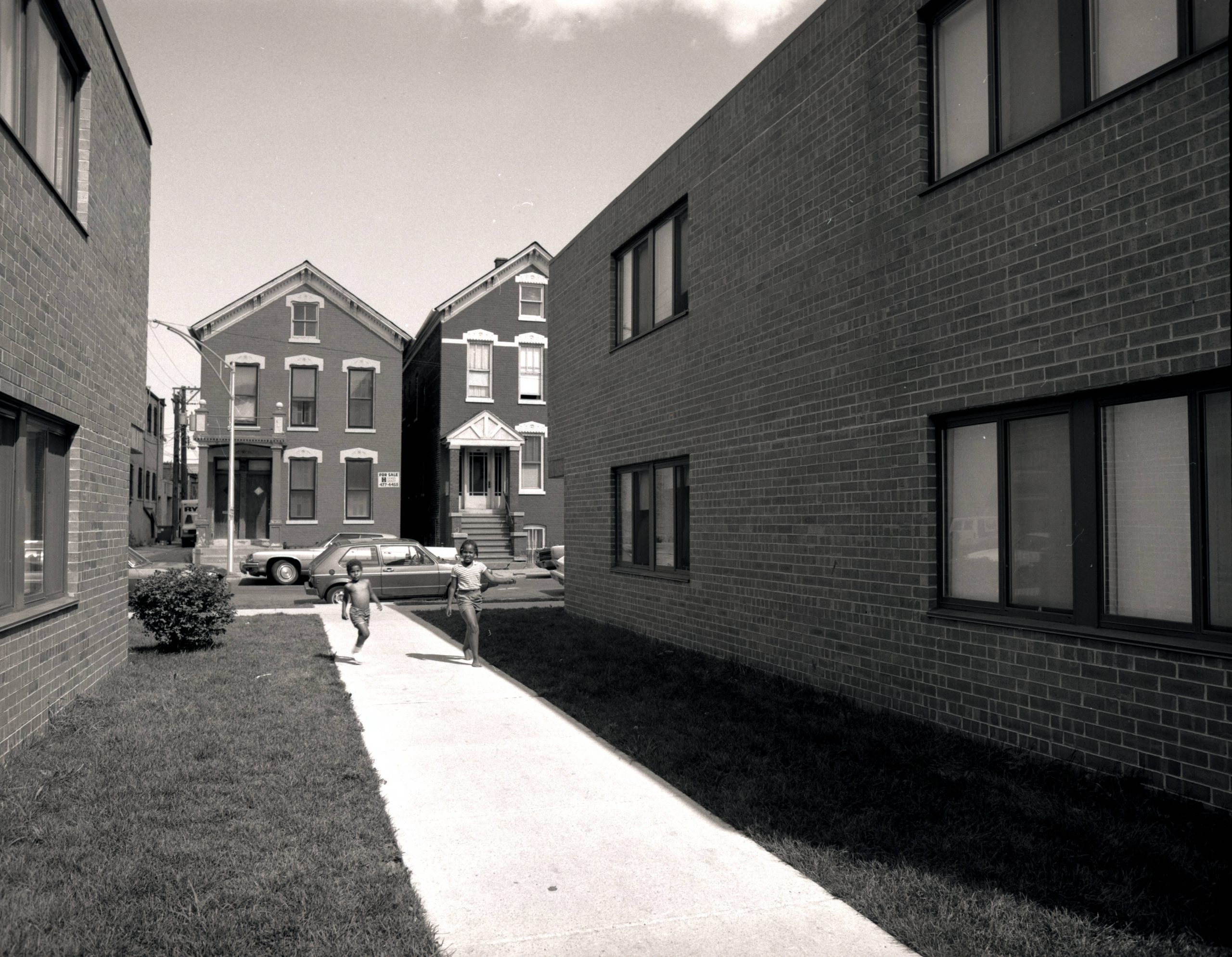
The images in the collection capture an eerily quiet side of Chicago in the Lincoln Park neighborhood, sparsely populated by people. Bright took these photographs as part of the Lincoln Park Study Group, which was a project directed by Dr. Charles Suchar, and involved many DePaul faculty in the College of Liberal Arts and Sciences. As part of this, a group was formed to conduct a historical and cultural study of Chicago’s Lincoln Park neighborhood, where DePaul is located. Bright’s photographs document the neighborhood as it was at the time, in a process of gentrification.
The collection was donated to DePaul by Bright in 2015 as thirty-seven strips of negatives, with ninety-six exposures, and thirteen 8″x10″ contact sheets containing ninety-eight photos in total.
Here is a sneak peek from the collection.
Deborah Bright, Courtyard of apartment building in Lincoln Park, Chicago, 1985. Deborah Bright Photographs, Special Collections and Archives, DePaul University, Chicago, Illinois.Deborah Bright. Alley in Lincoln Park, Chicago. 1985. Deborah Bright Photographs, Special Collections and Archives, DePaul University, Chicago, Illinois.Deborah Bright. Residential and commercial buildings along W. Webster Ave., Chicago. 1985. Deborah Bright Photographs, Special Collections and Archives, DePaul University, Chicago, Illinois.Deborah Bright. Garden in a residential lot in Lincoln Park, Chicago. 1985. Deborah Bright Photographs, Special Collections and Archives, DePaul University, Chicago, Illinois.Deborah Bright. House exterior in Lincoln Park, Chicago. 1985. Deborah Bright Photographs, Special Collections and Archives, DePaul University, Chicago, Illinois.
Permission to display here is granted by DePaul University Special Collections and Archives.
There are other many great collections in Illinois that document various aspects of the Lincoln Park neighborhood of Chicago, check them out in the IDHH!